


Newly released court documents reveal how Lt. Col. Aryeh Amidror, the Gaza Division intelligence officer on October 7, fought to remain in the IDF after military leaders moved to end his service, arguing that he had been discriminated against and unfairly singled out over the failures surrounding the Hamas massacre.
The documents were made public after Israel’s Supreme Court permitted publication of Amidror’s identity at ynet’s request. They include the administrative petition he filed, relevant appendices, requests for interim relief and a publication ban, the state’s response and the transcript of a June 22 hearing. The opinion written by Deputy Chief of Staff Maj. Gen. Tamir Yadai was not released.

Amidror argued that senior military officials had failed to treat him fairly and described the decision to terminate his permanent service as “arbitrary, discriminatory and selective.” His petition said he was “the only commander in the IDF who is paying a real price, in the form of lost rights, for the failures of the military and the state.”
A central part of his complaint concerned the loss of pension and other employment benefits. His representatives argued that other commanders held responsible for October 7 had retained their full social and pension benefits, while officers in positions comparable to his had either been promoted or continued serving.
‘I was the one who ordered the exercise to be analyzed’
Amidror also challenged the way the military portrayed his exchanges with a female noncommissioned intelligence officer identified only as V., who this week received a certificate of appreciation from the IDF chief of staff for what he described as “intellectual courage and professionalism.”
According to Amidror, when he became Gaza Division intelligence chief he discovered that the division had for some time neglected intelligence collection aimed at examining Hamas’ ability to carry out its operational plans. He said he therefore instructed a unit within the IDF’s Unit 8200 signals intelligence branch to analyze Hamas training exercises in order to assess the group’s tactical capabilities.
“Following the instruction given by the petitioner, and on the orders of her commanders, NCO V. carried out the analysis of the exercise and put the findings in writing,” his petition said.
Amidror argued that an email exchange later cited against him took place before the full analysis had been distributed and represented only an initial discussion. At first glance, he said, the exercise appeared to contain elements that were widely considered unrealistic at the time by Military Intelligence and the IDF more broadly.
He said that after V.’s findings were circulated, he sought to distinguish between capabilities Hamas could realistically execute and training designed primarily to create an impression or motivate its fighters.
Amidror also claimed that additional exchanges omitted from the deputy chief of staff’s assessment showed he was encouraging deeper examination rather than dismissing the warning. In one message, he said he wrote that “there seems to be quite a lot of gold here to mine.”
In another, he wrote: “For the avoidance of doubt, the purpose of my email was not to lower but to elevate,” adding that as more material was circulated, the area of agreement would grow. He also said he ordered additional Hamas exercises to be analyzed and sought to challenge assumptions held by the Gaza Division and Military Intelligence about possible Hamas courses of action.
‘A sense of a targeted killing’
The petition also disputed investigations into Amidror's conduct on the night of October 6-7. His lawyers challenged the significance of material gathered against him and complained that they had not been given access to all the investigations and documents underlying the decision to remove him.
The IDF announced on November 23, 2025 that Amidror would be removed from his post, and the process to terminate his permanent service formally began on February 14, 2026.
At the June 22 hearing, one of Amidror's lawyers sought a postponement, arguing that the defense still lacked access to material used by the deputy chief of staff.
“We are racing after materials that form the basis of the deputy chief of staff’s opinion,” the lawyer said. “We know for certain that there are additional materials on which he relied, and they have not been presented to us.”
The lawyer said some of those materials concerned the period before October 7, including emails involving V., who had warned Amidror about Hamas preparations and readiness for a scenario that ultimately unfolded during the massacre.
“Our feeling is that there is some kind of targeted killing here, and it seems no one is interested in transferring the material to us,” the lawyer said, adding that none of four investigations reached a specific conclusion personally against Amidror.
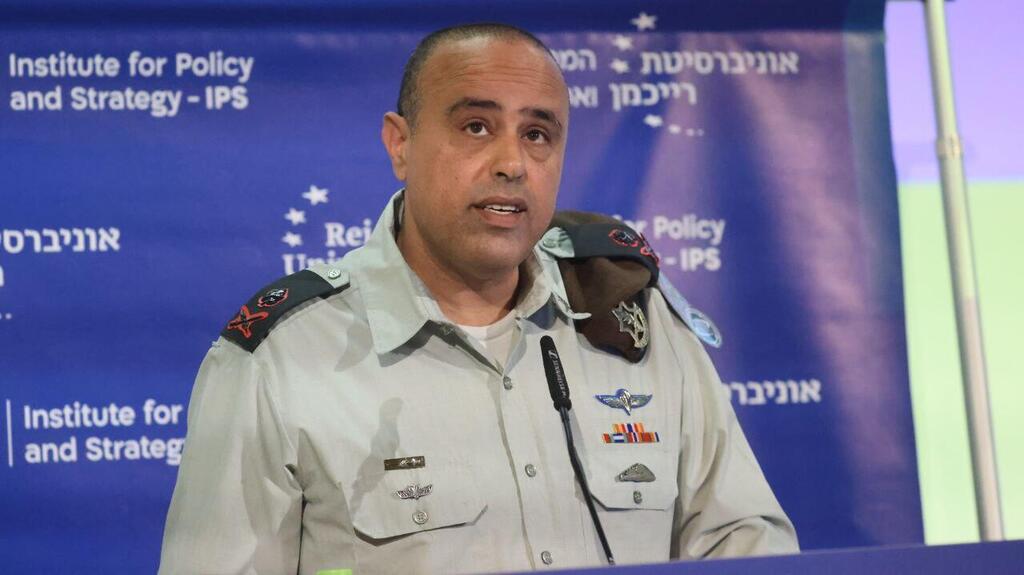
Deputy Chief of Staff Maj. Gen. Tamir Yadai
(Photo: Moti Kimchi)
The state rejected those arguments, saying the process had begun months earlier and that Amidror’s representatives had been shown the investigations forming the evidentiary basis for the administrative proceeding. Prosecutors stressed that it was an administrative, not criminal, process and said the petitioners could not expect access to every IDF investigation into October 7.
The state said the deputy chief of staff’s assessment contained “very concrete claims concerning a series of professional errors and failures in the officer’s conduct,” rather than a general allegation that his performance had been flawed.
Amidror also challenged the authority of the deputy chief of staff to prepare the professional assessment, arguing that the head of Military Intelligence, as his professional commander, should have done so instead.
“The deputy chief of staff is not his commander,” his representatives argued. “He does not know the petitioner and is not familiar with intelligence matters.”
Amidror further alleged that he had been personally targeted, saying that other officers described as bearing command responsibility for October 7 had not faced termination of their service contracts. The state responded that the allegations against him were reviewed at several levels, including by the head of the IDF Personnel Directorate and ultimately the chief of staff, and noted that Military Intelligence chief Maj. Gen. Shlomi Binder had himself received a command reprimand following another review.
State cites ‘significant professional and ethical error’
In its response, the state summarized the deputy chief of staff’s assessment as finding “a series of professional errors and failures in the officer’s conduct,” both during the night of October 6-7 and in the months preceding the attack.
According to the state, the recommendation to continue the process of dismissing Amidror was based in part on a “significant professional and ethical error” in his assessment of a document concerning Hamas’ elite Nukhba force training routine and an email exchange titled “Death in the kibbutz at any cost.”
The state said Amidror’s conduct fell “significantly short of what is expected of those engaged in intelligence work,” particularly the obligation to question assumptions, actively seek opposing views and give them a central place in intelligence analysis.
It also cited a series of professional errors on the night of the attack and Amidror’s command responsibility for the Gaza Division intelligence branch’s failure to issue a warning ahead of the Hamas assault.
The state rejected Amidror’s demand that the process be transferred to an independent senior reserve officer, saying such a demand had no basis in military regulations and would undermine the established chain of authority.
The court ultimately rejected Amidror’s petition and allowed the IDF process aimed at ending his permanent service to continue.