

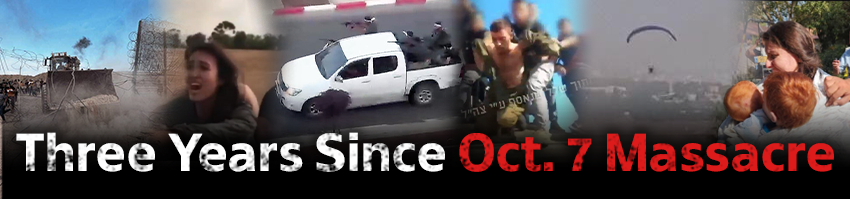

Three years after the October 7 Hamas-led terrorist attack on southern Israel, with the manhunt and targeted killings of its perpetrators still ongoing, Military Intelligence Directorate chief Maj. Gen. Shlomi Binder revealed Sunday night at a meeting of the Security Cabinet that most of the Gazans who crossed into Israel had been killed.
“Of the 6,000 who crossed the fence, 4,000 have been killed,” Binder said. “Two thousand remain — we will get every last one of them.”
Gallery
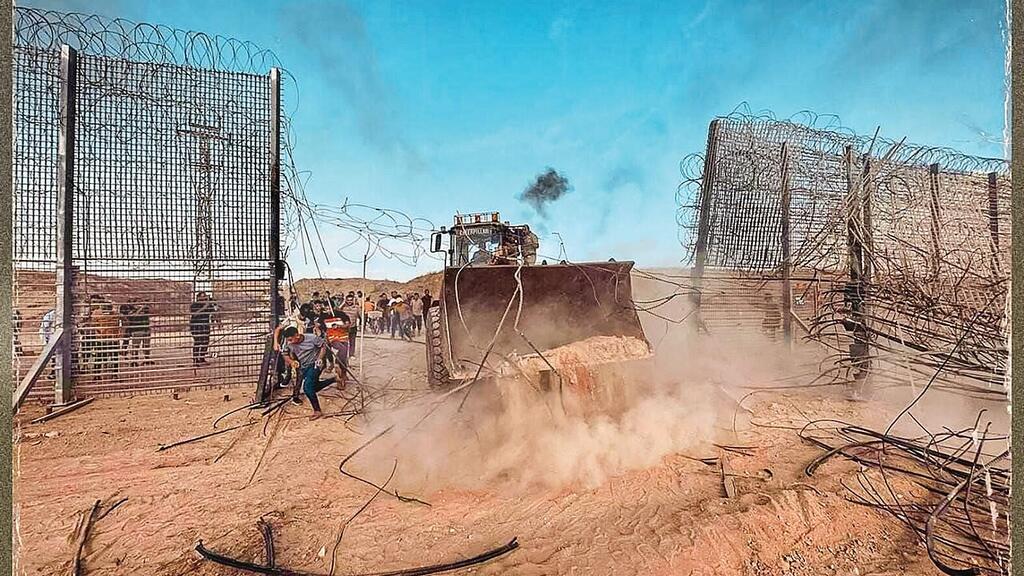
Gaza border fence breached during the October 7, 2023, Hamas-led terrorist attack on southern Israel
His remarks came in response to Heritage Minister Amichai Eliyahu, who asked how many terrorists remained from among those who had infiltrated Israel during the attack.
Ministers were told in a briefing Sunday night that intelligence officials have recently identified increased Hamas preparations for renewed fighting in Gaza. Shin Bet chief David Zini also told ministers that Hamas was planning an attack or a localized kidnapping attempt close to the elections or shortly afterward.
According to the assessment, Hamas was biding its time to recruit manpower and stockpile weapons, including moving arms into civilian areas, on the assumption that until the elections in Israel and the United States, Israel’s hands are tied and it will not receive a green light for a large-scale operation in the Gaza Strip. Ministers were also presented with a warning about a possible multi-front incident.
Senior officials assess that Hamas’ military wing still has tens of thousands of operatives, a figure they say is not dramatically lower than before the Oct. 7 attack.
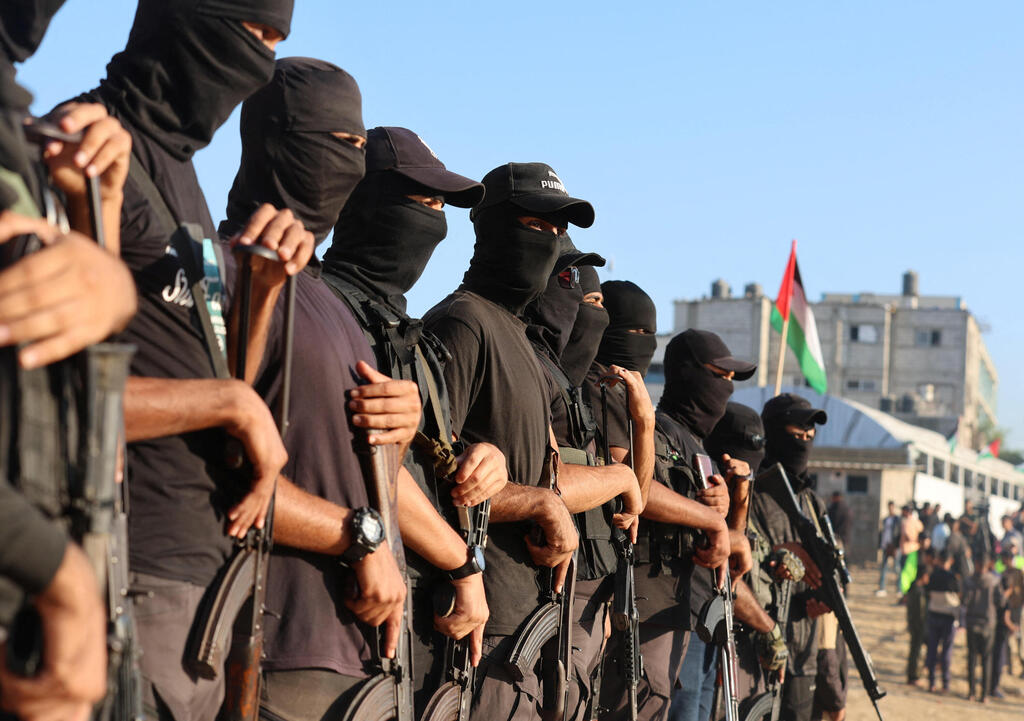
Archival: Hamas operatives in Gaza
(Photo: Ramadan Abed/Reuters)
Officials say that is largely to be expected as long as Hamas remains Gaza’s governing authority, allowing it to continue indoctrinating young people and drawing from a steady pool of recruits. Hamas also offers salaries far higher than many young Gazans could earn elsewhere.
As long as Hamas retains its governing structure, the officials say, it can sustain forces on that scale. But they assess that those forces are now far less skilled and poorly trained, with significantly diminished weapons and military capabilities compared with before the Oct. 7 massacre.
The decline in proficiency is also tied to Hamas’ inability to conduct practical field training without risking Israeli detection and strikes, officials say.
The group also faces serious command-and-control problems after extensive losses among its leadership ranks. Hamas has struggled to find experienced commanders, with operatives promoted to key positions often killed and replaced in rapid succession.
While the positions themselves do not remain vacant for long, each successive replacement generally brings less experience, authority and training, steadily eroding the organization’s command structure.
Hamas seeks a 'Lebanon model' in Gaza
The senior officials analyzed Hamas’ current situation compared with the period before the massacre according to three strategic dimensions: the extent of its isolation from Egypt, the loss of territory and its rocket capabilities.
First, the terrorist organization is physically cut off from Egypt, its smuggling capabilities have diminished and the Rafah crossing is under full Israeli control. The officials described this as a dramatic development that harms Hamas’ ability to rebuild its military strength.
Smuggling now consists mainly of dual-use materials brought in through humanitarian aid entering Gaza, but not on the same scale as before the war. According to officials, this strategic shift has cut Hamas off from its main pipeline for rearmament.
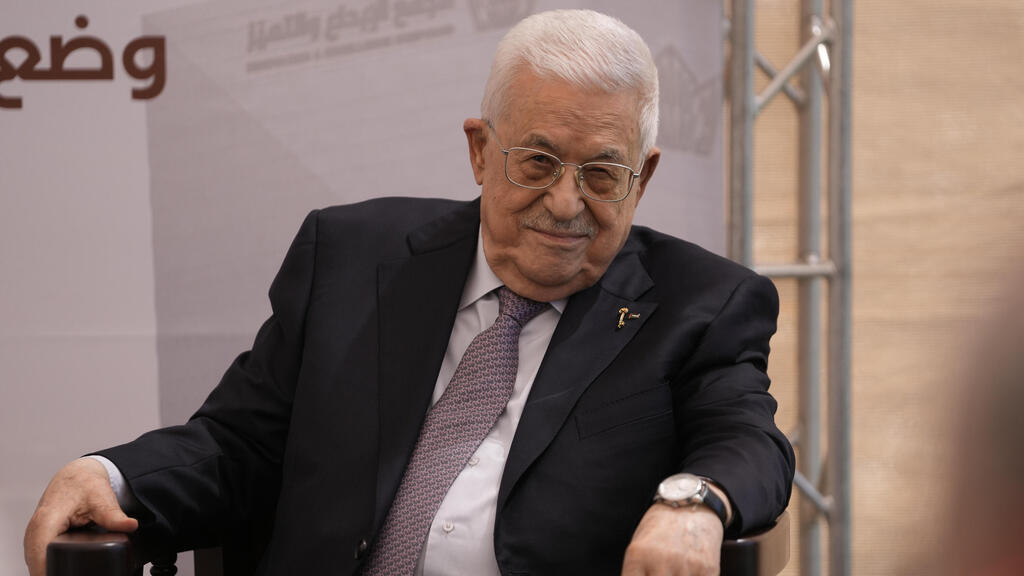
Hamas is working to form a political front against Palestinian Authority Chairman Mahmoud Abbas
(Photo: Mahmoud Illean/AP)
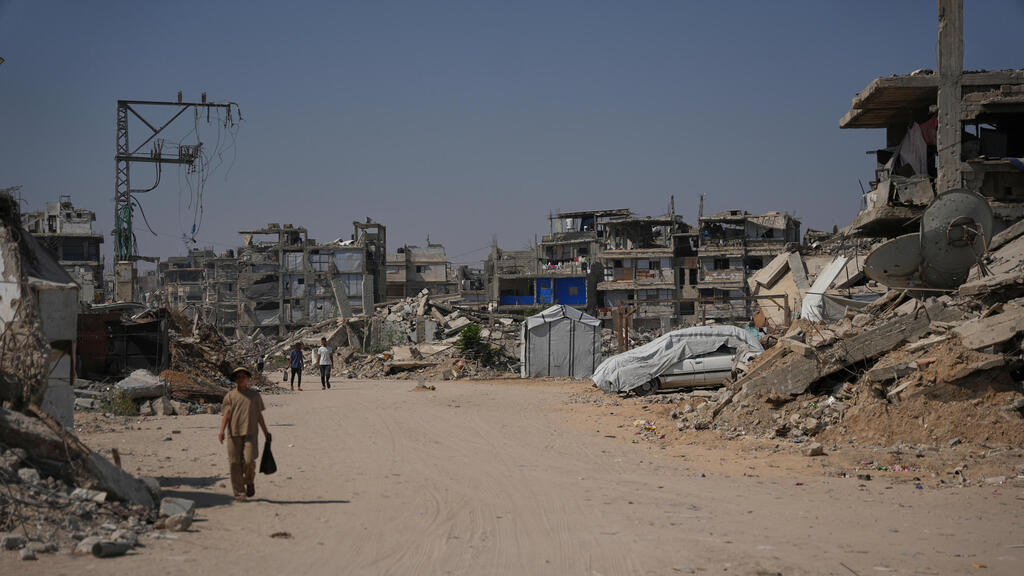
Second is the loss of territory, as more than 60% of Gaza is controlled by Israel. According to the officials, Hamas has lost the ability to invade southern Israel. Nearly all of Gaza’s agricultural land has been lost, while entire cities and villages have been leveled.
They say that, even if Israel withdraws, rebuilding would take decades, both in the cities and villages that were destroyed and in terrorist infrastructure such as tunnels and other facilities.
Taken together, the officials said, these factors present Hamas with a strategic challenge. Ultimately, the organization has only limited ability to provide for the population’s needs, rearm itself and exercise effective control.
Third is its rocket capability. According to the officials, that capability still exists, though in a limited form, and Hamas is preserving various stockpiles for future use.
As for surrendering its weapons, officials assess that Hamas will deceive inspectors, perhaps hand over some of its weapons, which are limited in any case, and claim that it has given up everything it possesses.
Israel believes Hamas is seeking to shift toward a model resembling Hezbollah’s in Lebanon: transferring formal responsibility for managing civilian life to a national committee for the administration of Gaza, while preserving influence over that body through its own operatives and officials who remain within governing institutions.
Under that model, officials assess, Hamas could retain a significant degree of civilian influence without formally bearing responsibility for running the enclave, while at the same time diverting resources toward rebuilding its military strength.
Senior officials also point to Hamas' efforts to form a political front against Palestinian Authority Chairman Mahmoud Abbas, together with additional Palestinian factions and the camp of former Gaza strongman and Abbas rival Mohammed Dahlan. They say this development could prove significant not only for the future of the Gaza Strip, but for the Palestinian political system as a whole.
In this context, Israeli officials believe Dahlan identified an opportunity after October 7 to return to the center of Palestinian politics amid the expected upheaval. According to them, he essentially had three options: move closer to Hamas and make use of his ties with the organization in Gaza, conclude that Hamas would not survive the war and move closer to Israel, or seek reconciliation with Abbas and return to Fatah ahead of the succession struggle that will follow.
Gaza
(Photo: Abdel Kareem Hana/AP)
Israeli officials believe Dahlan ultimately chose cooperation with Hamas, based on the assumption that the organization would remain a significant force in Palestinian politics.
As for the continued implementation of U.S. President Donald Trump’s plan for Gaza's reconstruction and the effort to disarm Hamas, senior officials assess that the identity of Israel’s next government will also be a decisive factor. They say that if a right-wing government takes office, Israel could sooner or later find itself in another round of fighting with Hamas.
A different government, they assess, might choose an arrangement instead, but even in that scenario Hamas would seek to preserve influence over civilian government and give up only part of its weapons. They say Hamas and the Arab world are also taking into account the possibility of a change in Israeli policy following a change of government.
The blow to Hezbollah — through Syria
As for Hezbollah, senior officials assess that its strength today is nothing like what it was on the eve of the October 7 attack. According to them, the organization has lost about 80% of its rocket potential, and its command structure has been severely degraded.
According to the assessment presented by the officials, of the roughly 20 senior figures who made up what they describe as “Hezbollah’s general staff,” only the current military commander remains, after the others were killed. Hezbollah’s elite forces have also been hit, especially the Radwan Force, which played a significant role in the fighting against the IDF. According to the officials, the rate of attrition among these forces is even higher than in the organization as a whole.
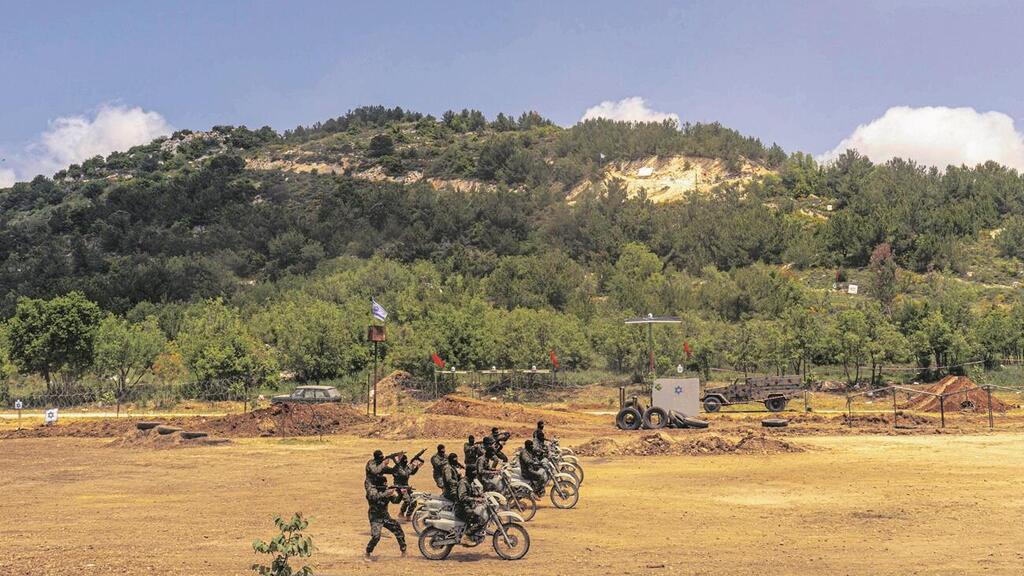
Hezbollah terrorists in a demonstration training simulating the kidnapping of an Israeli soldier
(Photo: Fatma Jomaa/IMAGO/APA images/Reuters)
Israeli officials also point to the change in Hezbollah’s political standing within Lebanon. According to the officials, in the past it would have been difficult to imagine a Lebanese government and state officials adopting decisions that outlaw Hezbollah’s military and security activity and demand that it hand over its weapons to the state.
They say that even if there remains a significant gap between those decisions and the ability to enforce them on the ground, the willingness to adopt them at all reflects a shift in the balance of power and Hezbollah’s weakening.
That has been compounded by the blow to the organization’s strategic rear following the fall of Bashar Assad's regime in Syria. Israeli officials say Hezbollah thereby lost the territorial continuity that for years served as a route for transferring weapons from Iran, alongside damage to its weapons supply lines.
The NAZA film controversy
Ministers also discussed the public opinion damage caused by the film “NAZA,” which presents disturbing testimony purportedly from soldiers in the IDF's elite SIGINT Unit 8200 who claim they were involved in “war crimes and genocide,” and describe policies regarding collateral damage, shelling and targeted killings.
At the meeting, IDF Chief of Staff Lt. Gen. Eyal Zamir said the military had not yet obtained the film’s materials, after Justice Minister Yariv Levin asked whether an investigation had begun into the identities of the soldiers who participated.
“We have not seen it yet. We are still examining the legal tools available to us, within the existing constraints,” Zamir replied.
Prime Minister Benjamin Netanyahu then added: “There must be an investigation. If you do not know whom to investigate, investigate in order to find out.”
Levin argued that “it has nothing to do with whether you have seen the film or not. This is terrible damage,” while Transportation Minister Miri Regev said: “The military must check whether there really are soldiers who spoke this way against the IDF, and if it is true, I do not accept that we are doing nothing.”