

For the first time since the war with Iran began, a U.S. government official confirms that the fighting has caused munitions shortages in the U.S. military's stockpiles. A first report issued Monday night by the Defense Department's inspector general on the war found that the extensive use of ammunition since the start of the campaign has created "strategic gaps in stockpiles" and exposed "bottlenecks in the industrial base" that are making it difficult to replenish them. NBC reported the findings.
The assessment is particularly notable against the backdrop of repeated attempts by President Donald Trump's administration in recent months to push back against reports that the war was rapidly depleting U.S. weapons stockpiles. Defense Secretary Pete Hegseth has denied reports that the United States is suffering from munitions shortages, while Trump himself claimed just two weeks ago that the U.S. military had "almost unlimited" quantities of ammunition.
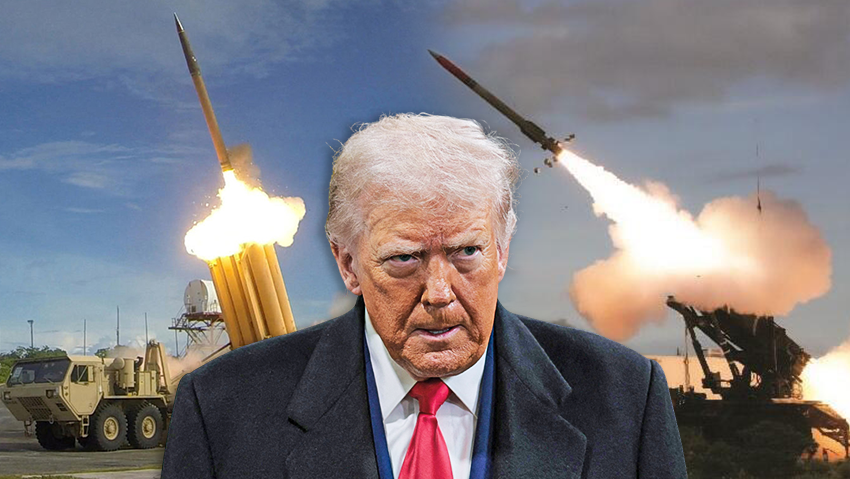
On Monday, Trump sought to convey the opposite message. In a post on his social media platform, Truth Social, he wrote that the United States is now producing "more and better weapons than at any time in our history," and that they are being delivered daily to U.S. forces in the Middle East and other theaters.
But the report, submitted to Congress, paints a more complex picture: The Office of the Under Secretary of Defense for Acquisition and Sustainment told the inspector general that munitions consumption in the war against Iran has already created gaps in strategic stockpiles, while exposing real limitations in supply chains and the defense industry's ability to replenish them at the required pace.
According to the report, the Pentagon is now trying to shorten procurement procedures and production times, increase stocks of critical raw materials and components and accelerate existing production lines. However, the Defense Department acknowledges that increasing production capacity requires "significant time." Among the main bottlenecks cited were the production of solid-fuel rocket motors, shortages of high-quality explosives and propellants and a shortage of skilled workers in the defense industry.

US Defense Secretary Pete Hegseth denied the US faces a weapons shortage, but the Pentagon has confirmed it
(Photo: Jeremias Gonzalez/AP)
The depth of the problem is also reflected in the emergency funding request the White House submitted to Congress on June 24: an additional $87.6 billion, including $67.1 billion for the Pentagon. No less than $21 billion of that amount was earmarked for munitions. Hegseth himself warned in congressional testimony in July that without additional funding, the Defense Department could face "critical shortages" that would impair its ability to replenish equipment and ammunition consumed in the war while maintaining essential military operations around the world.
$33.4 billion through the end of June
This is the first quarterly report by the Pentagon's inspector general on Operation Epic Fury, the American name for the campaign against Iran. It covers the period ending June 30 and also includes data from the beginning of the war on February 28. It is one of the first comprehensive official documents to reveal the toll the campaign had taken on the U.S. military by that point.
According to the Defense Department's estimate, the war had cost approximately $33.4 billion through June 29. Of that amount, no less than $22.3 billion was the cost of munitions fired or dropped during the fighting, another $3.7 billion was attributed to equipment losses and $7.4 billion to additional operational expenses. The figure does not include the cost of repairing damaged infrastructure and bases, meaning the actual cost is higher.
The figure is lower than estimates previously published by NBC, which said in July that the total cost of the war had already reached $80 billion to $100 billion. The Pentagon itself publicly estimated the cost at the time at approximately $37.5 billion, but that figure also did not include, among other things, the full costs of repairing bases, replacing aircraft and replenishing munitions stockpiles.
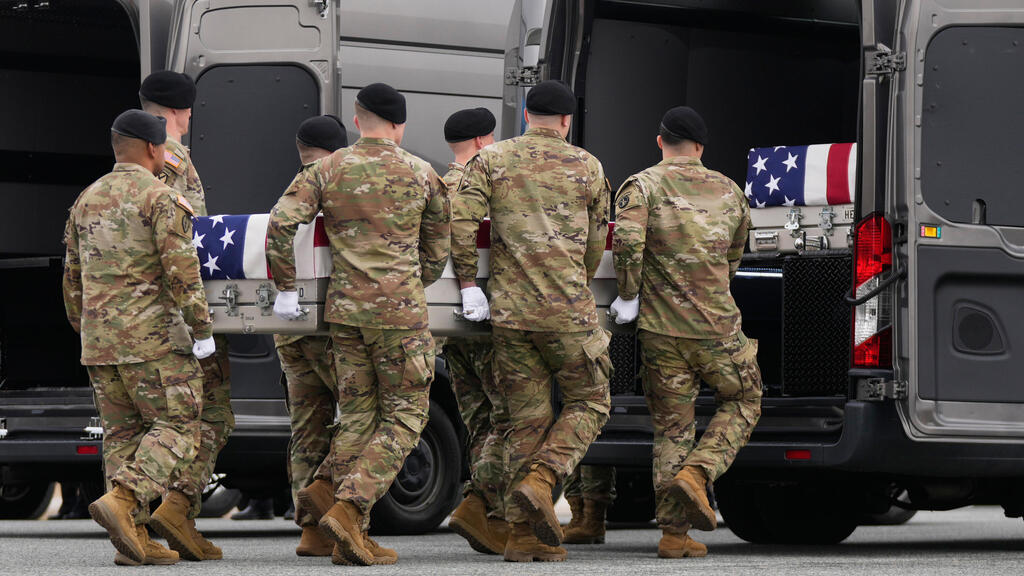
Ceremony to honor the fallen US military in March. The war also took a heavy toll on ground forces
(Photo: Mark Schiefelbein/AP)
The report also illustrates the enormous scale of operations required of the United States during the first months of the war. More than 50,000 U.S. troops were deployed across the U.S. Central Command (CENTCOM) area of responsibility, and during the main phase of the fighting, CENTCOM reported approximately 36,000 combat sorties and strikes against about 13,500 targets. Up to 5,000 support sorties were launched from bases in Europe.
According to the report, more than 20,000 U.S. military personnel and diplomats were relocated when the war began and in the days and weeks that followed, as part of preparations to protect U.S. forces and diplomatic missions in the region. In addition, U.S. and allied air defenses in the region intercepted more than 6,000 one-way attack drones and more than 1,500 ballistic missiles launched at U.S. and allied forces during the period.
Fighter jets and about 30 drones lost
The extent of damage to U.S. equipment was also revealed in the report. According to the data, Iran damaged or destroyed hundreds of buildings and infrastructure at U.S. bases in Kuwait, Bahrain, Qatar, the United Arab Emirates, Saudi Arabia, Iraq, Oman and Jordan, while dozens of U.S. aircraft were damaged or lost during the war.
The Iranian attacks were not limited to bases and aircraft. According to an earlier NBC report, Iran also caused extensive damage to U.S. intelligence, surveillance and reconnaissance assets in the region — on an unprecedented scale for U.S. intelligence agencies. The cost of restoring those systems is estimated at billions of dollars.
Among the aircraft destroyed were four F-15E fighter jets — three by U.S. forces and one by enemy fire. An F-35A was damaged by Iranian fire over Iran, while an A-10 was destroyed after being damaged during a rescue mission. Seven KC-135 tanker aircraft were damaged or destroyed, while the data also show that up to 30 MQ-9 drones were lost under various circumstances.
Trump: War on Iran will end immediately after midterm elections
(Photo: Reuters)


The report also reveals the human toll the war took on the U.S. military. By the end of June, seven U.S. service members had been killed in combat operations and another seven had died in incidents not caused by enemy fire, while 417 troops were wounded in combat. Four additional U.S. service members were killed in combat operations during July.
The report also provides official confirmation that Iran attacked Bahrain during the main phase of the fighting with one-way attack drones and ballistic missiles. Bahrain was then the U.S. Navy's main logistics hub in the Gulf. In response to the threat, the United States was forced to move part of its maritime supply network to alternative locations. In some cases, the longer supply routes created logistics cycles lasting 14 to 18 days.
The damage was not limited to the military. U.S. diplomatic facilities in Iraq, Kuwait, Saudi Arabia and the United Arab Emirates sustained an estimated $184 million in physical damage, in addition to tens of millions of dollars in costs and project delays.
The war also forced the military to alter its system for treating the wounded. After medical evacuation assets were moved from some bases due to fears of Iranian attacks, most medical evacuations were carried out by land — sometimes using local ambulances — to hospitals in countries across the region.
However, the report does not address several sensitive issues that have emerged since the beginning of the war. Among them, it does not address a possible U.S. strike on an elementary school in Iran during the opening hours of the campaign, which killed 175 people. The U.S. military has yet to release the findings of its internal investigation into the incident, although NBC reported in June that it was nearing completion.
The report comes as Trump has already backed away from assessments he made at the beginning of the war, when he said the campaign could end within weeks. Over the past weekend, the president said it could continue until "right after" the November midterm elections — and possibly end sooner.
As the campaign drags on, the official finding that munitions use has already created gaps in stockpiles is expected to intensify the debate in Washington over the U.S. military's ability to sustain a prolonged war with Iran while maintaining sufficient reserves for potential conflicts in other theaters.