

The war with Iran continues to rapidly erode the United States’ stockpile of missiles and interceptors, and the Pentagon is now increasing pressure on defense contractors to expand factories and dramatically accelerate production. In a memo obtained by The Washington Post and published overnight Saturday into Sunday, weapons manufacturers were ordered to present, within 21 days, plans for faster supply and expanded production capacity for weapons systems defined as critical.
The memo was sent Wednesday by Deputy Defense Secretary Steve Feinberg, who made clear to the industry that development processes that take years no longer match the needs of the U.S. military. According to him, the Pentagon wants to fundamentally change the way it develops, produces and fields military capabilities, and move to a model that allows production at a pace suited to a prolonged war. Pentagon spokesman Sean Parnell confirmed to the Post that the memo is authentic, and said its conclusions would also be used in shaping the defense budget for fiscal 2028.
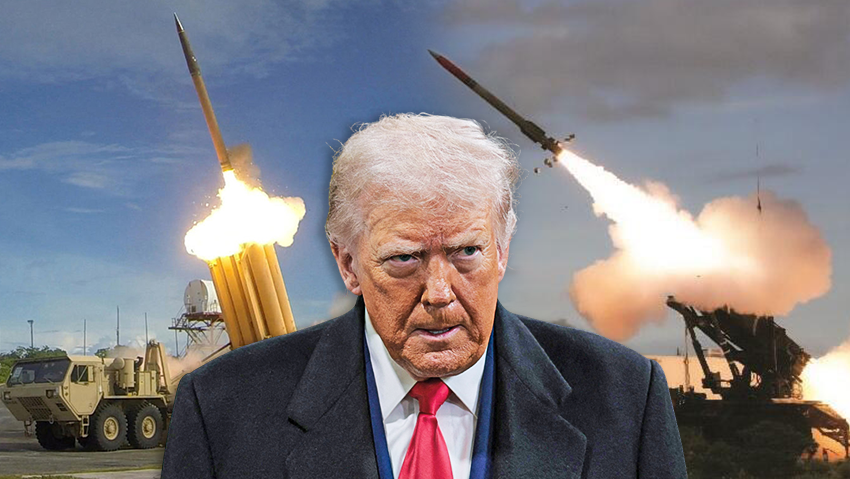
The reason for the pressure becomes clear when looking at the pace of weapons use since the start of the war. In the first month alone, the U.S. fired more than 850 Tomahawk cruise missiles and more than 1,000 Patriot and THAAD interceptors. In the first weeks of fighting, the U.S. military also used more than 1,300 tactical ballistic missiles from the Army.
According to an assessment by the Center for Strategic and International Studies in Washington, the U.S. stockpile of Patriot interceptors worldwide fell from about 2,200 on the eve of the war to fewer than 827 by the end of last month. The stockpile of THAAD interceptors, whose role is to intercept ballistic missiles at high altitude, fell from about 452 to fewer than 278. Another analysis by the institute found that the U.S. had already used about 65% of the Patriot interceptors it had at the start of the war, while the THAAD stockpile fell by at least 38%.
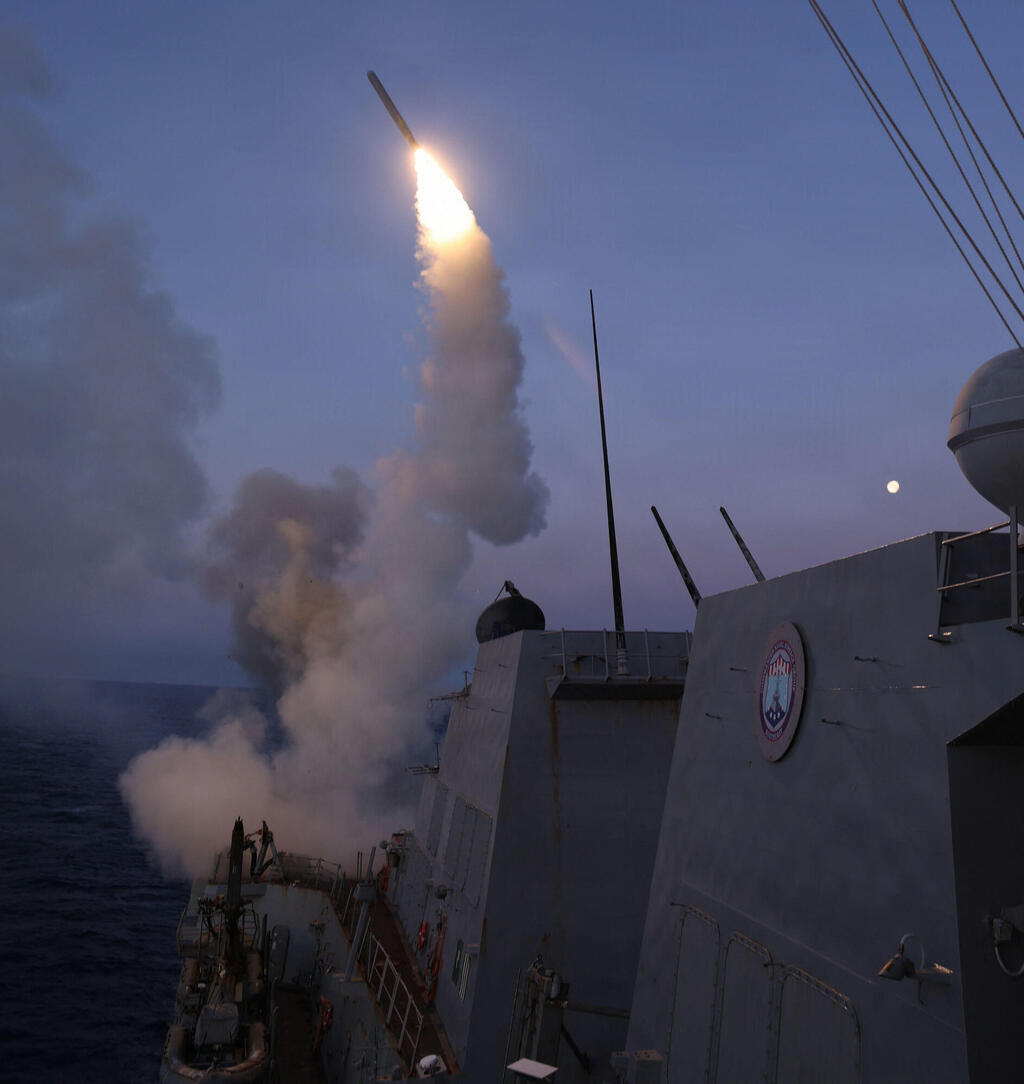
Tomahawk missile fired from the USS Thomas Hundertwasser
(Photo: AFP/ US Navy and US Central Command / Handout)
The erosion is not limited to defense systems. Reuters reported last week that over five months of fighting, the U.S. military used “almost all” of its global stockpile of long-range precision ATACMS and PrSM missiles. One source who spoke with the agency estimated that the U.S. had also used slightly less than half of its Tomahawk stockpile. Administration officials have therefore expressed concern that continued use at the current pace would damage the American ability to deal with another crisis elsewhere in the world, particularly a war scenario involving China or Russia.
The figure that perhaps best illustrates the scale of the challenge is the production rate for the Tomahawk. While more than 850 missiles of that type were fired in just one month of the war, the production rate for the U.S. military has until now stood at only about 60 missiles a year. Under a multiyear agreement with RTX, Raytheon’s parent company, the Pentagon plans to gradually raise production capacity to 1,000 Tomahawks a year — more than 16 times the current rate.
Unusual steps are also being taken with interceptors. Last week, the Army awarded Lockheed Martin a contract worth up to $58.6 billion to produce PAC-3 MSE interceptors for the Patriot system. The company plans to triple production capacity by 2030 and increase the workforce at its plant in Camden, Arkansas, by 50%. In addition, the Pentagon announced a framework agreement worth more than $3 billion with Lockheed Martin and Northrop Grumman, intended to allow production capacity for Patriot components to be tripled and THAAD component production to be quadrupled.
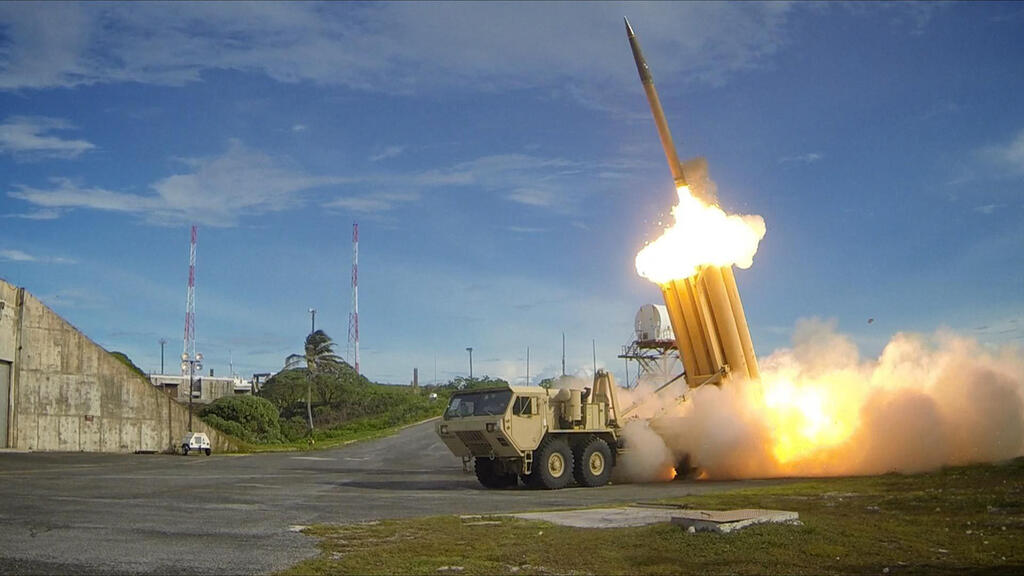
THAAD interceptor launch. Stocks have fallen by at least 38% since the start of the war
The problem is not only the number of missiles ordered. Production depends on complex supply chains and a limited number of factories and suppliers, so under the agreement the Pentagon plans, among other things, to establish a second production source for the solid rocket motors of PAC-3 interceptors and expand production of other critical components. In doing so, Washington is trying to reduce bottlenecks that could delay increasing the pace even if billions of additional dollars are injected into the industry.
The Pentagon to industry: Invest your own money, too
One of the unusual parts of the new memo concerns what the Pentagon is demanding from the companies themselves. Feinberg asked manufacturers to detail which capital investments they are prepared to make and which factories can be expanded to support large orders over time. In effect, he is demanding that they assume part of the risk and invest their own money even before Congress has guaranteed full funding for future orders.
Tom Karako, director of the Missile Defense Project at Center for Strategic and International Studies (CSIS), told the Post that some companies have already begun funding parts of their production expansion themselves, but from their perspective it is a gamble: These are publicly traded companies spending large sums based on a promise that the administration will later order large quantities of weapons from them. Such a promise, however, ultimately also depends on Congress.
And that is precisely one of the main obstacles in the plan. In recent months, the Pentagon has announced a series of “framework agreements” with weapons manufacturers, but those are not binding contracts to purchase the munitions. Turning them into actual orders requires money Congress has not yet approved. According to The Washington Post, a defense budget proposal totaling about $1.15 trillion remains stuck in Congress amid the dispute over the scope of spending.
Trump on armaments in May: 'We have more than ever before'


The situation led the White House to take another unusual step. In late July, senior executives from Lockheed Martin, Northrop Grumman and Boeing were summoned there, alongside next-generation companies Anduril and Palantir. They met with White House chief of staff Susie Wiles, Defense Secretary Pete Hegseth, Office of Management and Budget director Russell Vought and White House congressional affairs director James Braid. According to three sources who spoke with the Post, the company executives were asked to personally approach lawmakers and pressure them to approve an increase in defense spending.
At the same time, the Pentagon is trying to break its dependence on the veteran weapons giants and bring younger technology companies into the picture. In May, framework agreements were signed with Anduril, Castelion, CoAspire, Leidos and Zone 5 in an effort to buy large quantities of relatively low-cost missiles and quickly expand U.S. strike capabilities. The administration also recruited senior figures from Silicon Valley, including Emil Michael, a former senior Uber executive who was appointed undersecretary of defense for research and engineering as part of the effort to change the Pentagon’s procurement and development system.
Feinberg’s memo also identifies a series of systems whose purchase or development the Pentagon is considering accelerating as part of the 2028 budget. They include the next-generation interceptor for ballistic missile defense, the NASAMS air defense system, a mobile air defense radar, an advanced pilot training system and a space-based missile tracking system.
Even if the war stops, refilling the warehouses will take years
But even a dramatic acceleration of production will not solve the problem quickly. According to a CSIS analysis, at the expected delivery pace, it would take three years or more to restore Tomahawk, Patriot and THAAD inventories to their prewar levels. Restoring stocks of SM-3 and SM-6 missiles is expected to take about two years, while in the case of JASSM and PrSM missiles, it would take months to about a year.
With the Tomahawk, for example, the problem stems not only from production capacity, but also from the long delivery time. The Navy requested the purchase of 785 additional missiles as part of the 2027 budget, but under the current forecast the first of them will not reach operational stocks until March 2030 because of a production time of nearly three years. According to CSIS, only toward the end of 2030 is the U.S. expected to replenish the number of Tomahawks fired in the war.

US Secretary of War Pete Hegseth: Trump reportedly confronted him about missile stockpile, president denies
(Photo: Anna Moneymaker/Getty Images/AFP)
There is also additional pressure on the production lines: The U.S. does not manufacture missiles only for itself. It must simultaneously meet commitments to its allies, including Ukraine, Japan, Australia and European countries. CSIS warned that demand exceeding supply is already causing friction over the question of who will receive the new munitions first. Japan, for example, is supposed to receive hundreds of Tomahawk missiles, but delivery could be delayed if the Pentagon decides to prioritize replenishing American stocks.
Beyond the current war, Washington is especially concerned about the implications for a possible confrontation in the western Pacific. CSIS warned that the erosion has created a “window of vulnerability” in terms of preparedness for war with China. The shortage of Patriot and THAAD interceptors may also force U.S. forces and their allies to take greater risks in deciding which Iranian missiles to intercept and which not to, because there is currently no full substitute for those systems against ballistic missiles.
The shortage has also become a political issue within the Trump administration. According to reports, senior military officials warned for weeks that interceptor stocks were shrinking, and concern over continued erosion was among the considerations presented to the president against launching another massive attack in Iran. Reuters reported that the shortage of long-range missiles could even force the U.S. to rely more on fighter jets and crewed bombers, and take greater risks to hit targets that could otherwise have been attacked from a distance using precision missiles.
The inventory crisis has also become a focus of tension inside the Trump administration in recent days. According to a report a few days ago in The Washington Post, the president confronted Defense Secretary Pete Hegseth at Camp David and demanded to know why he had been presented, according to him, with a picture suggesting that the munitions problem had already been dealt with. Trump himself rejected claims that the U.S. was approaching a dangerous point, writing Thursday that his country has “massive” quantities of munitions and that additional weapons are being produced and sent to it as needed. The Pentagon also insists that the military has all the capabilities it needs to carry out its missions.