


IDF reservists stationed along the yellow line — the security boundary inside the Gaza Strip — say they are frustrated and constrained by current rules of engagement that prevent them from firing at Hamas terrorists inside the territory, even when individuals are clearly identified.
Troops and commanders speaking to ynet described a growing sense of uncertainty and frustration among soldiers who report daily incursions and activity by terrorists just west of the yellow line but are permitted only to relay information to intelligence units rather than act directly.
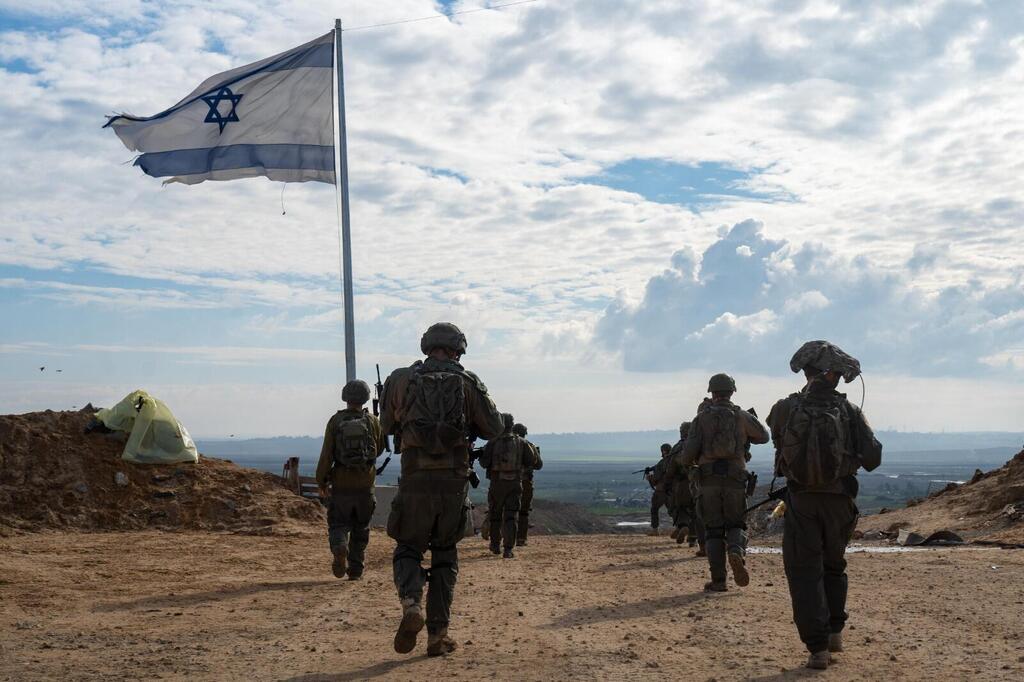
A reserve lieutenant colonel who served in the sector about two weeks ago said units regularly detect Hamas terrorists “wearing vests” and observe activities such as planting explosive devices and rebuilding infrastructure deeper in the enclave. “We collect this and pass it to intelligence,” he said. “We do not open fire into the Strip except in cases involving a specific identified suspect and only with approval from command and higher. That creates frustration among troops, but they understand it’s the situation for now.”
Reservists also said two assumptions have taken hold in recent weeks: that the full task of disarming the Strip will ultimately fall to the IDF, and that U.S. approval is required for virtually every step. “There’s a growing belief in the army that only the IDF can act to disarm Gaza, not any other actor, and it’s also very hard for us,” one reservist said. “In practice, control over the Strip was ceded to the United States. Without approval from the American command — you can’t do anything.”
Another reservist who arrived on the line about a week ago echoed similar concerns. “We’ve seen very few incidents of terrorists crossing,” he said, “but they come among civilians, set up tents near the yellow line and try to establish infrastructure — it’s a known pattern of operation. We control the area east of the yellow line with observation and fire, we’re physically in the zone — but west of the yellow line there’s no IDF ground hold, and that’s where Hamas terrorists in vests are moving around. That’s troubling, without question.”
A staff sergeant in reserve told ynet that “nothing happening beyond the yellow line is permitted for us to act on — we simply can’t do anything about it.” He said the frustration is compounded by what he described as “a missed political opportunity.” “Now that Hamas is weakened, we’re not pushing for a diplomatic change. What’s happening with full disarmament of the Strip? Where’s progress on the Trump plan? We sacrificed more than 300 days for this, to enable a sane future for the country — we reached a point where we could push political change,” he said. “Instead, we’re going in place, going nowhere. I don’t know who we’re waiting for. Meanwhile Hamas recovers and grows stronger. We’ll find ourselves in endless cycles again. We’re missing a golden opportunity that’s unlikely to return soon.”
The complaints from reservists come amid a broader debate in the military about rules of engagement. Last Friday, an apparent breach of those rules led to heavy artillery fire on a school in the Dajr Tuffah neighborhood of Gaza City, near Shuja’iyah. A preliminary investigation indicated that the strike was ordered without required approval from a regional commander or the chief of staff because the target was designated a “sensitive identification.” The building was struck and burned; at least three children were killed, and several other civilians were wounded. Southern Command is still investigating the incident.
(Photo: Meir Even-Hen)
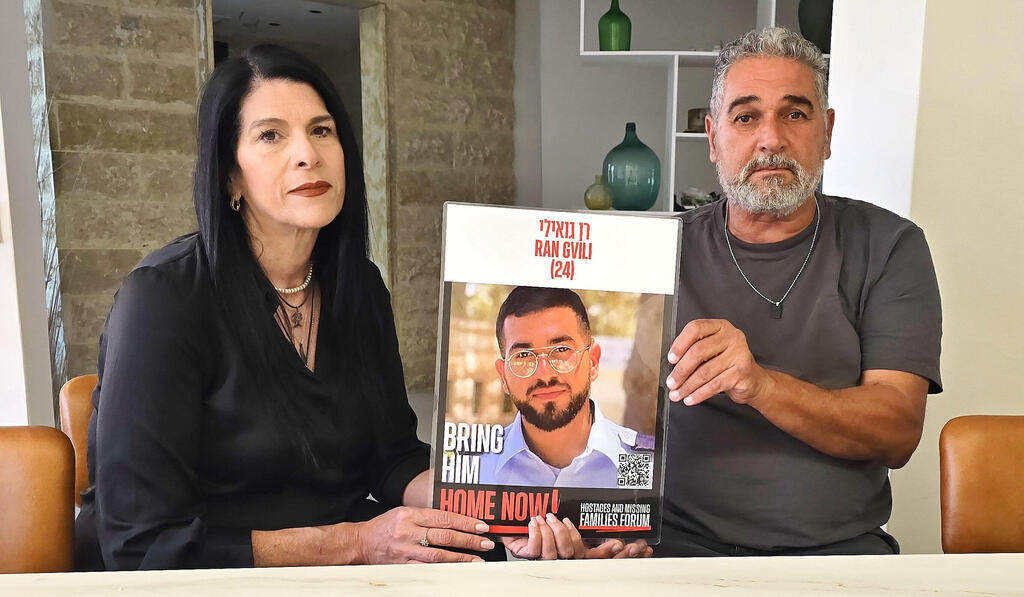
Meanwhile, there are few signs that Hamas is moving to disarm itself, even symbolically. Efforts to resume searches for the last remaining hostage, Ran Gvili, were reportedly postponed this week due to weather and other operational issues. The fact that most of the hostages — particularly those still alive — are now believed to be back home has reduced pressure on both sides to compromise or advance toward a future Gaza without Hamas control.
Military assessments suggest senior Hamas leaders remain at large and directing operations from underground, while lower‑level operatives are increasingly visible above ground, often under the guise of civilian life and performing internal administrative tasks. In many parts of the territory from Jabalia to Rafah, checkpoints and patrols controlled by Hamas are increasingly active, asserting a semblance of governance despite extensive war damage.
At the same time, Hamas appears to be injecting significant funds — reportedly tens to hundreds of thousands of shekels daily — into its recovering treasury, leveraging increased humanitarian aid flows allowed by Israel of around 4,200 truckloads per week. Aid shipments, including food and other goods, have been entering at between 600 and 800 daily, and Hamas is reportedly extracting revenue from private sector trade to tax or impose levies on Gazans.