

The ambitious aspirations of the U.S. administration for Gaza’s future are colliding daily with a volatile reality on the ground that is becoming increasingly entrenched, and above all with a cool indifference on the part of both Hamas and Prime Minister Benjamin Netanyahu toward advancing to Phase II of the ceasefire agreement, which would require concessions from both sides.
Israel would be required to grant a series of significant easements to Gaza’s two million residents, including allowing the entry of dual-use materials such as concrete, cement and steel for the real reconstruction of the Strip; opening the Rafah crossing in both directions; and carrying out a further IDF withdrawal toward the border fence.
Gallery
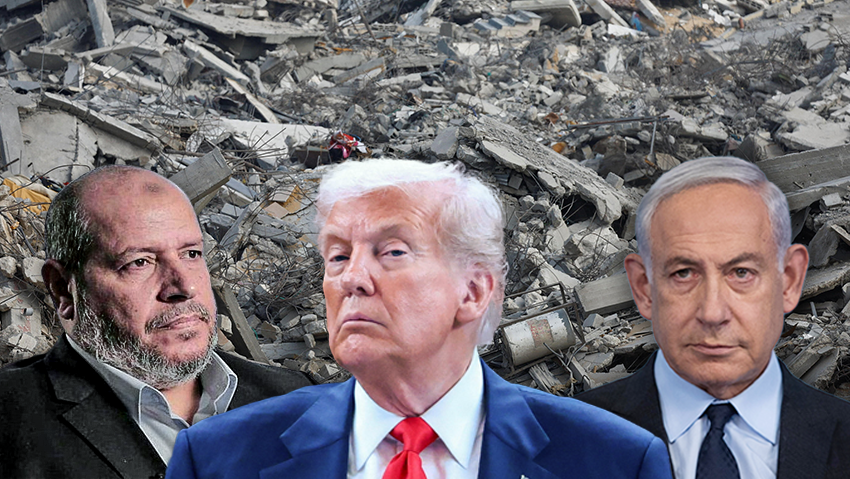
The major players: Khalil Al Hayya, Donald Trump and Benjamin Netanyahu
(Photos: Evelyn Hockstein/Reuters, Jehad Alshrafi/AP, Alex Kolomoisky, Mahmoud Issa/Reuters)
Hamas, for its part, would be required to relinquish control of the Gaza Strip for the first time since it seized power by force in 2007, and also to give up its weapons: thousands of Kalashnikov rifles, machine guns, sniper weapons, mortars, several hundred rockets and numerous explosive devices, and above all its central military asset: large, sprawling underground terror bases stretching for many kilometers, which the IDF has yet to uncover. Some of them are reportedly still located on the Israeli side of the so-called yellow line, despite optimistic assessments. The army has not yet found and destroyed them all.
Meanwhile, on the ground, reserve soldiers holding the https://www.ynetnews.com/opinions-analysis/article/bjndpk00fbedescribe a surreal reality: every day they identify armed Hamas operatives deep inside the territory, among more than 10,000 terrorists still belonging to the organization, but are not authorized to open fire.

Presentation of the American program to rebuild Gaza, 'Project Sunrise'
(Photo: The Wall Street Journal)
“You only hear on the news about the few who cross the yellow line, and even there there are quite a few restrictions, despite attempts to create an image of free fire at suspects,” said one officer currently deployed on operational duty in the Strip. “Ground forces, such as infantry and armor, are authorized to shoot only if there is an immediate danger and an ongoing infiltration after warning shots have been fired, and if lethal fire is used against those crossing, it is mainly carried out by the Air Force to ensure precision.”
The IDF on Saturday criticized the force that shelled a school on Friday in the Daraj Tuffah neighborhood of Gaza City, near Shijaiyah, after an initial inquiry found that the required approval from the regional commander or the chief of staff had not been granted, since the target was defined as a “sensitive site.” The unit, for its part, claimed it had identified suspicious lookout activity from the compound, which is close to the Israeli border in the northern Strip. The building caught fire, and some of those inside were burned alive beneath the rubble. At least three Gazan children were killed and several other uninvolved civilians were wounded.
Southern Command is still investigating the Daraj Tuffah incident. So far, the soldiers on the ground have said the fire resulted from identifying observers in a structure near the yellow line, similar to the shooting that caused an uproar several months ago at a hospital in Khan Younis. Only hours later, a fictional AI-generated rendering released by the Trump administration was published in the United States, depicting Gaza’s bloodied ruins as a futuristic landscape with luxury towers, a new airport and hotels—another expression of the American disconnect.
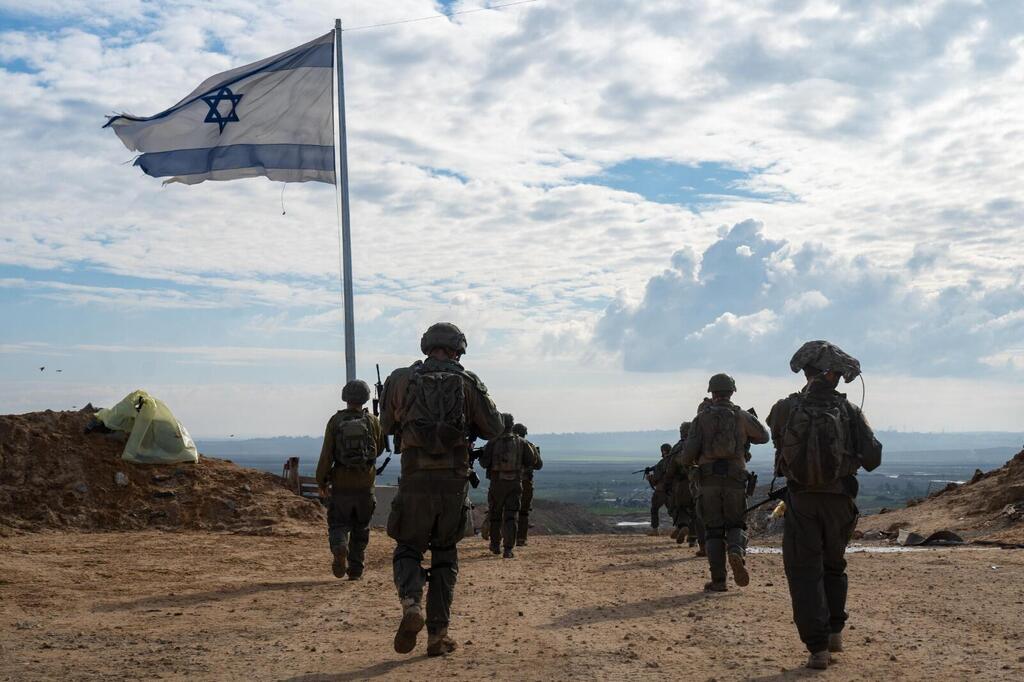
IDF soldiers near the yellow line in Gaza
(Photo: IDF Spokesperson's Unit)
In a statement Sunday evening regarding the Daraj Tuffah incident, the IDF Spokesperson said: “During operational activity by IDF forces to mark the yellow line in the northern Strip, several suspects were identified in dominant structures located dozens of meters west of the yellow line. The forces perceived a threat and, after conducting warning fire, fire was directed at the structures in order to remove the threat. The incident is under investigation and lessons will be learned. The IDF regrets any harm to uninvolved civilians and acts as much as possible to minimize such harm.”
Military sources said Saturday that this is the price of a prolonged stalemate, which dulls the behavior of the forces and restricts them in enemy territory. “These incidents reach Washington and Doha, with difficult footage that sometimes even Trump himself condemns, and they erode the remaining legitimacy we have ahead of Phase II and the difficulties expected in it,” according to a source.
'No one would fall off their chair if Hamas takes revenge for Ra'ad Saad’s killing'
According to those same sources, Hamas’ relative silence following the dramatic killing eight days ago of the organization’s No. 2, Raad Saad, should not be seen as a positive sign. “No one would fall off their chair if they take revenge. They will just patiently wait for a local operational weakness on our side to snipe or plant explosives near an IDF force. Hamas also knows that we are prepared to respond forcefully to any retaliation, so for now they are holding back,” a source said.
Sources familiar with the planning discussions of foreign teams at the U.S. headquarters for Gaza’s future, established in Kiryat Gat, describe a sense of foot-dragging by both Israel and Hamas. IDF officers are full partners in the details of the plans being formulated, from the removal of millions of cubic meters of construction debris to comprehensive master plans for building new Palestinian neighborhoods, initially on the Israeli side of the yellow line.
For example, ynet has learned that discussions have begun not only about the companies that would handle—apparently at the expense of the Israeli taxpayer—the massive removal of construction debris from the Strip, but also about clearing the many unexploded ordnance left behind by the IDF across the vast area, likely by an American company specializing in the field, as another prerequisite for launching any reconstruction projects. According to sources familiar with the Kiryat Gat headquarters, these discussions are taking place and making progress, but slowly, mainly on the Israeli side.
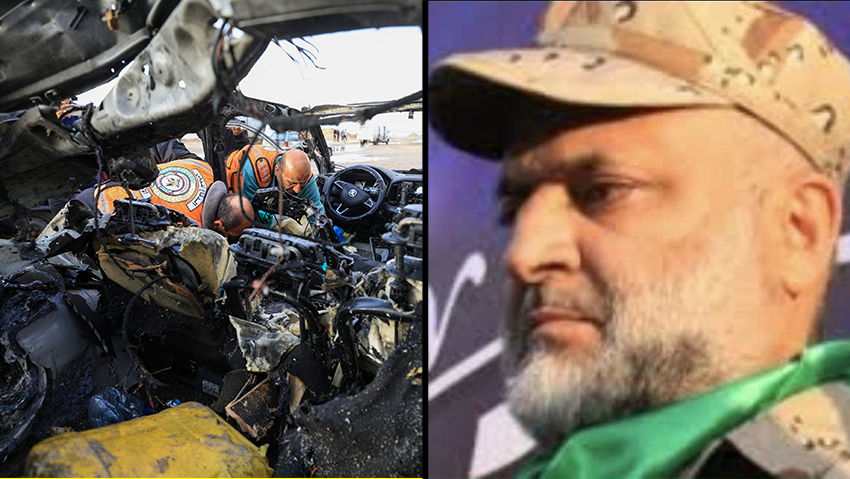
Scene of the assassination of Raad Saad in Gaza City
(Photos: Dawoud Abu Alkas/Reuters)
Hamas shows no signs of planning to disarm, even symbolically in front of cameras, and is even delaying the renewal of searches for the last fallen hostage, Ran Gvilly, which was supposed to take place around this time with improving weather conditions. The fact that almost all the hostages, and especially the living ones, are already home has eased significant pressure on both sides to compromise and move toward a Gaza future without Hamas.
In Israel, officials see that senior Hamas figures are operating as fugitives and managing the organization from the tunnels, while lower-level operatives are active above ground under civilian cover and on more internal tasks. Each week, more and more Hamas checkpoints are being set up across the extensive areas under its control, from Jabalia to parts of Rafah; Hamas police patrol daily to demonstrate governance; and more and more municipal departments in the Strip are resuming operations, despite the massive damage to infrastructure left by the war.
Trump, earlier this month: 'Phase two will happen soon'
(Video: From the X platform)


Hamas has also begun channeling large sums—tens to hundreds of thousands of shekels per day—into its recovering treasury thanks to the increased humanitarian aid that Israel allows into Gaza daily, totaling 4,200 trucks per week, between 600 and 800 each day, some of them already from the private sector. These are goods and food of all kinds, which Hamas exploits through private trade by taxing them and thus extracting money from the public.
Kindergartens and schools reopen, weddings allowed: 'Everyone in Gaza is Hamas'
“This is a good period for Hamas, which is in no rush,” security officials say. “It is investing in the population and operating municipal departments to remove garbage and rubble and provide services, even if minimal, to civilians. The population, for its part, is occupied with itself and the hardships of winter. It is hard for Hamas to rebuild militarily and it will never return to the strength it had on October 7, but even now it is trying to smuggle weapons and does not give up its identity as a terror organization. All civilian governing bodies—government ministries, clerks, teachers, doctors, municipal workers—are all Hamas in Gaza. There is no other familiar reality.”
According to security officials, “Hamas could compromise on a ‘technocratic’ governing committee that would gradually take from it civilian control over Gaza and operate in practice under the same international peace council, but it is already clear that its members would be figures from Hamas and the Palestinian Authority, or people identified with both. So it no longer matters how this idea is marketed. No one would be surprised if the governing committees and peace council turn out to be a show to satisfy Trump, while in practice Hamas elements continue to rule the Strip.”
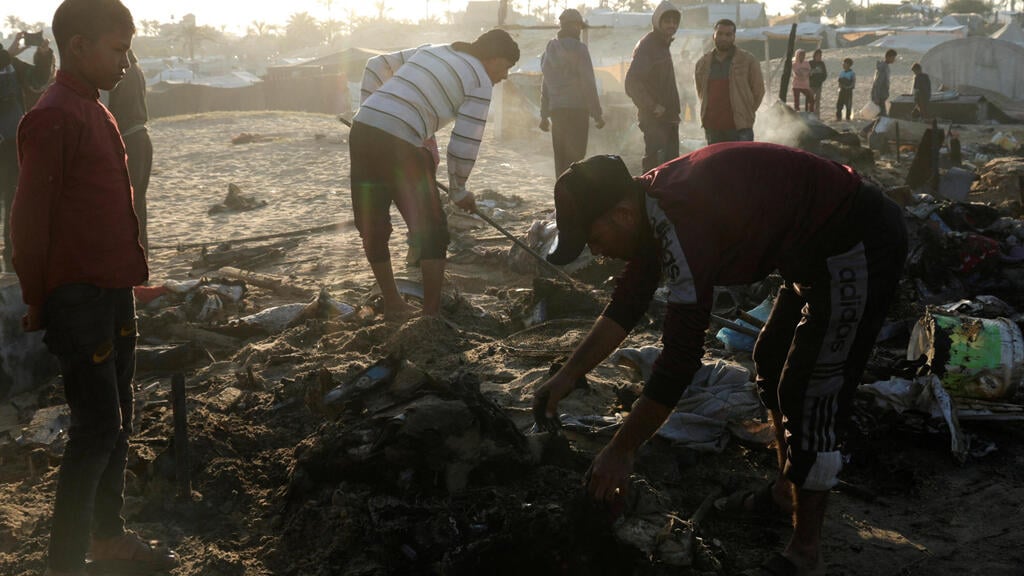
The destruction in Khan Younis in Gaza
(Photo: Hatem Khaled/Reuters)
The military also sees how Hamas’ absolute control over the population in Gaza for a decade and a half is now paying off: not only has the population not rebelled against it despite the devastation inflicted because of its murderous invasion of Israel on October 7, but even the roughly 300,000 tarpaulin tents that Israel brought in for displaced people for the winter have been taken over by Hamas operatives and distributed to civilians. Hamas has also begun setting up pirate kindergartens and schools and allowing family events such as weddings under the ceasefire with Israel.
“There is no shortage of water in Gaza, and certainly not of food, and there is also sufficient fuel and electricity flowing after lines were repaired in recent weeks,” security officials say. “It is already clear that even if there is a foreign stabilization force, it will operate only on the Israeli side of the yellow line and will not enter into confrontation with Hamas.”