

Talks resumed Tuesday in the Egyptian resort city of Sharm el-Sheikh over U.S. President Donald Trump’s proposal to end the war in Gaza, coinciding with the second anniversary of the October 7 massacre by Hamas terrorists.
While Israeli officials have signaled that the negotiations will be limited to just a few days, the overall timeline for the current round remains unclear. The discussions are taking place under the looming threat of renewed military action should the efforts collapse.
Trump: 'This goes beyond Gaza. This is about peace in the Middle East'
(Video: Reuters)


Egyptian media, reflecting a more optimistic tone, reported Tuesday that senior Trump advisers Steve Witkoff and Jared Kushner had already arrived in the country and were expected to formally join the negotiations. An Egyptian official familiar with the proceedings told the Associated Press that the parties had already agreed on most terms for the first phase of the plan, which calls for the release of all hostages held in Gaza and the establishment of a ceasefire.
Trump appeared confident Monday evening, telling reporters in the Oval Office, “There’s a great chance for a deal. I truly believe this will happen.”
In contrast to the upbeat tone from Cairo and Washington, Qatari officials struck a more cautious note. Speaking to reporters, Qatar Foreign Ministry spokesperson Majed al-Ansari said, “Negotiations yesterday in Sharm el-Sheikh lasted four hours and focused on the obstacles to reaching a ceasefire agreement in Gaza.” He added that discussions were continuing Tuesday and that it was “too early to talk in terms of optimism or pessimism.”
Al-Ansari confirmed that Qatar remained committed to Trump’s proposal, which he said includes 20 key points but also many unresolved technical details. “There are still many issues that require agreement,” he said. “We are committed to ending the war in Gaza, to ending the Israeli occupation, and to ensuring the delivery of aid. There is a firm American commitment to achieving a ceasefire.”

According to him, the disagreements are not necessarily about the 20 points themselves but about how each would be implemented. “We are working with the American side to find a plan that can be implemented quickly on the ground,” al-Ansari said.
A Hamas official involved in the closed-door meetings in Egypt said the terror group had requested clarification regarding the timeline for an Israeli withdrawal from the Gaza Strip and had also sought guarantees for a permanent end to the war.
Back in Washington, Trump reiterated his belief that a deal could be reached. “The people of Israel want this to happen,” he said. “You see tens of thousands calling for the return of the hostages and an end to the war. I think Hamas is okay with it, too. It seems they want this.”
Trump also claimed the United States had received a strong signal from Iran in favor of ending the conflict. “Everyone is on our side. This has never happened before,” he said. “This goes beyond Gaza. This is about peace in the Middle East. Every Arab state wants this. President Erdoğan is fantastic, a strong man pushing hard for a deal. Hamas respects him, as well as Qatar, the UAE, and Saudi Arabia.”
Israeli officials have allocated only a few days for the current negotiations. Prime Minister Benjamin Netanyahu instructed his negotiating team not to allow Hamas to deviate from Trump’s plan or the accompanying withdrawal map. He also directed the team not to let the terror group introduce new topics, on the basis that Israel has already agreed to the U.S.-backed proposal.
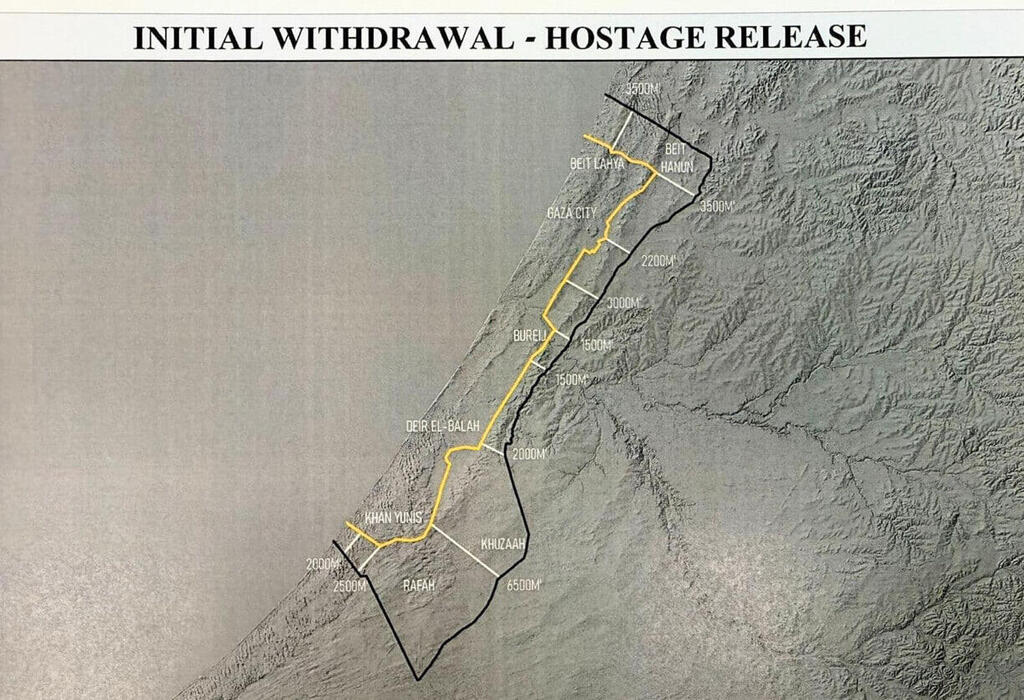
Talks that began Monday are still in their initial stages and have so far focused on coordinating technical aspects. U.S. envoys are expected to increase pressure on both parties to move toward an agreement. Israeli Minister Ron Dermer, who is leading the Israeli delegation, is expected to arrive in Egypt within the next day.
If no progress is made, American officials may present a final compromise proposal. Israeli sources say they sense a rare level of determination from the American side and other mediators, but it remains uncertain whether Hamas shares that urgency.
Officials fear Hamas may raise problematic demands concerning the release of convicted terrorists, the routes of Israel Defense Forces withdrawal, and the timeline for the release of hostages. Unlike previous rounds, mediators this time appear prepared to apply direct pressure on Hamas, including issuing an ultimatum that failure to accept Trump’s plan could lead to the expulsion of Hamas officials from Qatar and Turkey — both mentioned by Trump in his remarks Monday.