

Iran on Tuesday announced that parts of the Strait of Hormuz would be closed for several hours due to what it described as “security measures,” as indirect nuclear negotiations with the United States resumed in Geneva under the shadow of American threats of possible military action.
The semi-official Fars news agency reported that the temporary closure was intended to ensure the safety of maritime traffic in the area during a military exercise. Iranian authorities said the move was part of a broader drill launched a day earlier to prepare forces for what they described as potential security and military threats. According to Iran’s state broadcaster, the “main phase” of a naval exercise by the Islamic Revolutionary Guard Corps began Tuesday.
Iran closes Strait of Hormuz for drills


The Strait of Hormuz is considered the most strategically important oil transit chokepoint in the world. It connects major Gulf oil producers, including Saudi Arabia, Iraq and the United Arab Emirates, to the Gulf of Oman and the Arabian Sea, and is a critical route for global energy exports.
The developments come as Tehran and Washington conduct indirect talks in Geneva aimed at reaching a new nuclear agreement. U.S. President Donald Trump has warned that failure to reach a deal could result in military action.
In Tel Aviv, former Home Front Command chief Maj. Gen. (res.) Eyal Eisenberg addressed the ongoing tensions at a defense high-tech conference hosted by ynet and Yedioth Ahronoth in cooperation with the Engineers, Architects and Academics Association in Technological Professions.
“It is no secret — all citizens are aware that Israel is covered by a missile threat from north to south,” Eisenberg said. “If we were looking for any form of equality, perhaps in a future constitution, then we received equality in threat.” He described the civilian home front as an “Archimedean lever” in the country’s operational capabilities.
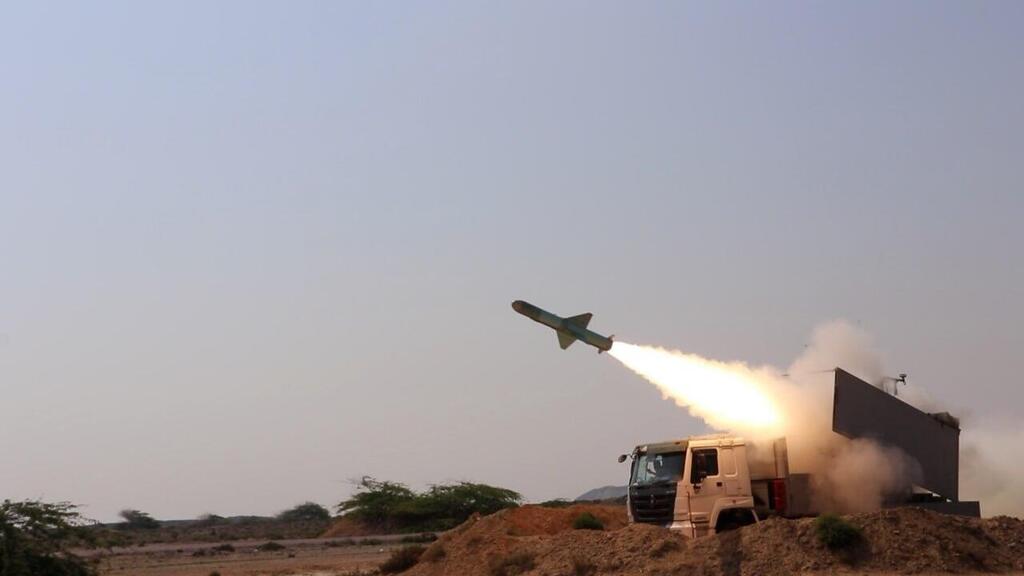
Iran closes Strait of Hormuz for drills
Eisenberg stressed the need for continuous investment in the home front and the steady development of defensive capabilities, similar to the development of offensive ones. He said national resilience refers to the ability to cope with emergencies, adapt and return quickly to routine.
He added that resilience is measured at multiple levels — the individual, the family, the community, local authorities, government ministries and ultimately state institutions — and that all depend on a central component: public trust. “When you know that the leadership above you is making the right decisions based on facts and not rumors, you can say, ‘I will create my own circles of resilience,’” he said.
Also speaking at the conference was Brig. Gen. (res.) Itzik Bar, head of the National Emergency Authority. He said the country is in a unique situation of fluctuating between routine and war while maintaining a high level of preparedness.
“This is a new reality. I’m not sure how many countries live in such a situation — either in routine or at war — and we are in a state of readiness,” Bar said. “At the moment, the readiness is for another campaign involving Iran. We will not elaborate too much, but from that, quite a few things must be derived.”