

Iran said Sunday that the United States had responded to its 14-point proposal through Pakistan and that Tehran is reviewing the response, according to state media, as Al Jazeera reported new details of the plan submitted to Washington.
Iran’s Foreign Ministry said the plan is focused on ending the war and is conditional on that goal. The ministry added that “at this stage, we do not have nuclear negotiations.”
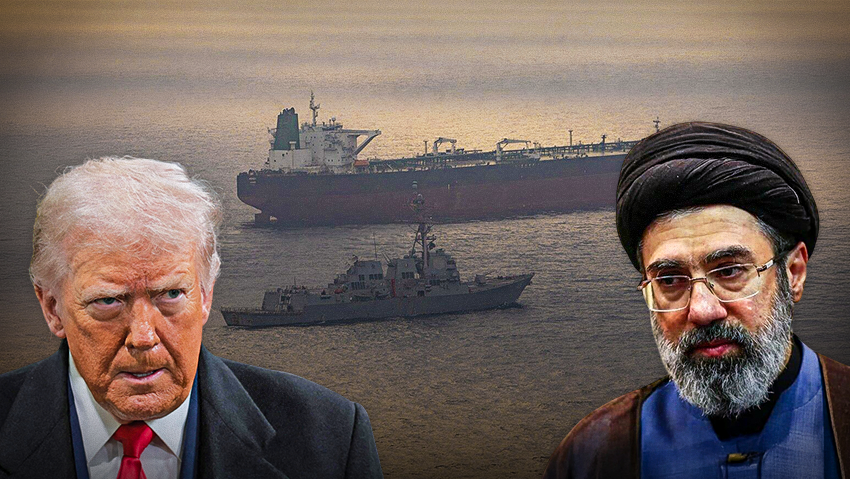
(Photo: Anna Moneymaker / AFP, CENTCOM)
Al Jazeera reported Sunday that it obtained new details of the proposal Iran sent to the United States and that President Donald Trump is reviewing it, though he has signaled he is unlikely to accept it.
According to Al Jazeera, the proposal includes three stages: stabilizing the ceasefire and turning it into an end to the war, temporarily freezing uranium enrichment and building a regional security framework.
The report said the proposal calls for a ceasefire across the region and on all fronts, as well as a commitment by Iran and its allies not to attack U.S. forces in the region or Israel, in exchange for a commitment by Israel not to attack Iran.
Trump wrote on Truth Social that he would soon review the plan Iran sent to the United States, but said he could not imagine it would be acceptable because Tehran has “not yet paid a big enough price” for what it has done “to Humanity, and the World, over the last 47 years.”
Asked earlier by reporters about a possible resumption of strikes on Iran, Trump said, “There is a possibility that could happen.”
The first stage, according to the report, includes establishing an international body to ensure there is no return to war; a mutual U.S.-Iran commitment to nonaggression, including Iran’s allies and Israel; the opening of the Strait of Hormuz; and the gradual lifting of the blockade on Iran’s ports.
It also includes a compensation clause, the withdrawal of U.S. forces from waters near Iran, Tehran’s control over mine-clearing in the strait and an end to the military buildup. The first stage would last at least 30 days.
The report did not say how the strait would be reopened. Iran has publicly insisted that any agreement leave it in control of the strait and allow it to demand payment from ships and tankers crossing it, a demand the United States strongly opposes and that runs counter to international law guaranteeing freedom of navigation in natural straits.
Iran has continued to enforce the closure of the strait with its fleet of small boats. The British maritime agency UKMTO said a cargo ship was attacked Sunday afternoon by several small boats about 20 kilometers west of Sirik, Iran, in the Strait of Hormuz area.
The U.S. blockade on Iran’s ports also remains in place. Adm. Brad Cooper, commander of U.S. Central Command, visited the destroyer USS Milius and the USS Tripoli in the Arabian Sea on Saturday. CENTCOM said 49 commercial vessels have been turned around so far as part of enforcement of the blockade and that the United States remains fully committed to enforcement.
In the second stage, the sides would discuss a full temporary freeze of uranium enrichment for up to 15 years. After that period, Iran would be allowed to resume enrichment to 3.6%. Iran refused in the proposal to dismantle any nuclear infrastructure or destroy any facilities on its territory.
The proposal also addresses Iran’s stockpile of highly enriched uranium. Tehran proposes exporting it or diluting it, but does not specify where it would be sent.
The second stage would also include discussions on a clear mechanism for lifting sanctions in exchange for nuclear steps. Sanctions relief would include the gradual release of frozen assets according to a defined timetable.
In the third stage, according to Al Jazeera, Tehran proposes entering a strategic dialogue with Arab and regional countries to build “a security system covering the entire region.”
Iran is also preparing for the possibility that no agreement will be reached. Ali Akbar Velayati, an adviser to Iran’s supreme leader, criticized Trump on Sunday, writing that the Strait of Hormuz is under Iran’s control and that Trump’s threats show ignorance of the global economic and political situation.