

About nine weeks after the start of the Roaring Lion war, and about three weeks after the declaration of a ceasefire and the failure of negotiations between the U.S. vice president and the speaker of the Iranian parliament in Pakistan, the deadlock in contacts between the two countries continues, and it is hard to see whether and how a way out can be found. At this stage, it appears that neither side is prepared to give up its main bargaining chip: Iran’s closure of the Strait of Hormuz and the U.S. naval blockade.
Tehran’s control of the strait allows it not only to influence the global energy market, but also to exploit the war as an opportunity to turn its control there into a significant political and economic asset. Majles (Iranian parliament) member Mohammad-Taqi Naqdali expressed this view when he declared that the Strait of Hormuz is a key component of Iran’s bargaining power and that its importance even exceeds that of a nuclear bomb.
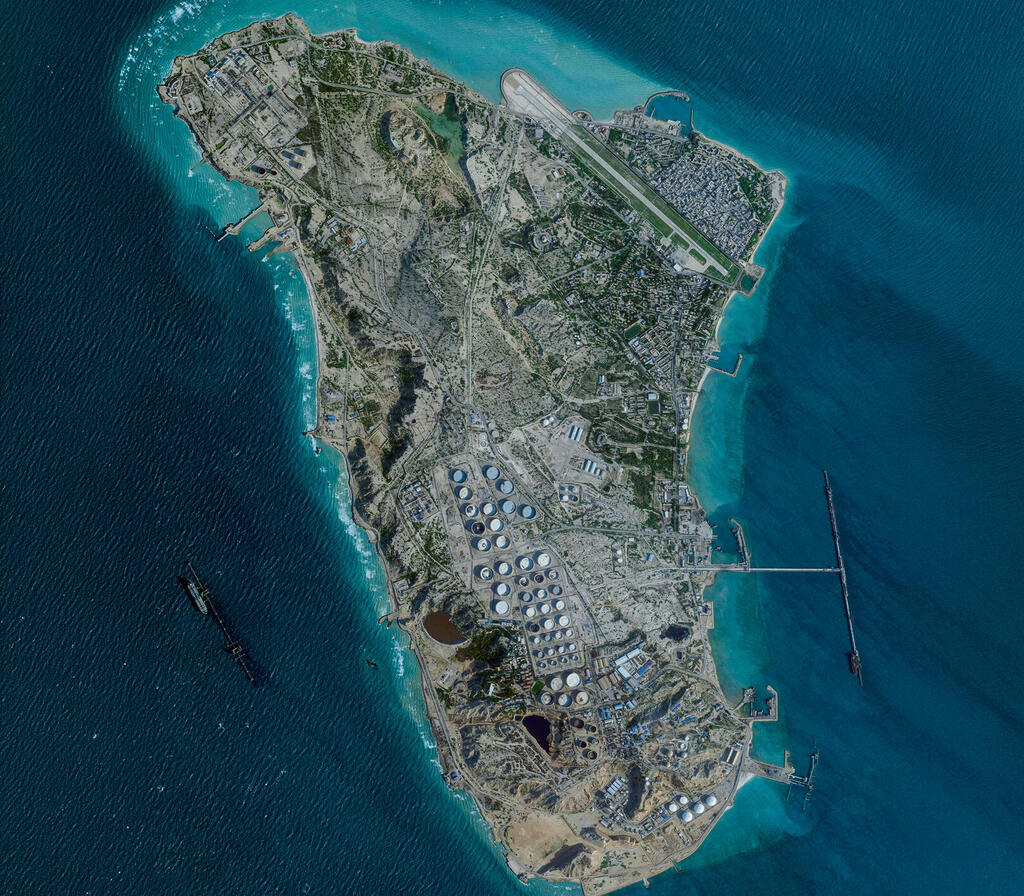
From Washington’s perspective, the naval blockade allows it to continue exerting heavy pressure on Tehran without returning to military moves whose effectiveness, after weeks of fighting, is doubtful. Both countries still believe their capacity to endure exceeds that of the other side. U.S. President Donald Trump declared last week that Iran’s oil reserves are “going to explode soon,” but expert assessments indicate that Iran’s oil storage capacity is not expected in the short term to reach a level that endangers facilities, and even then it is doubtful whether the damage would be irreversible.
Iran, meanwhile, can take encouragement from rising oil prices and reports of global difficulties in coping with the growing shortage of oil, fuel and other products such as fertilizers, aluminum and helium. At the same time, both sides believe additional escalation rungs are available to them. Trump has threatened renewed fighting and strikes on infrastructure and power plants, while Iran is threatening to close the Bab el-Mandeb Strait through the Houthis and attack strategic targets in Gulf states.
Even if a way is found to return to the negotiating table, it is doubtful whether a solution can be reached on the nuclear issue. Iran is currently refusing to discuss it, and has proposed opening the Strait of Hormuz in exchange for easing the naval blockade and ending the war, while postponing discussion of the nuclear issue to later stages. The proposal was rejected by Trump, who insists on resolving the nuclear issue as a condition for ending the war, including zero enrichment and removing highly enriched uranium from Iran.
A unified rejectionist position
Meanwhile, the new leadership in Tehran is stabilizing, despite contradictory reports about the health of leader Mojtaba Khamenei. Reports have recently increased about disagreements at the top of Iran’s leadership between more radical circles, including Revolutionary Guards commander Ahmad Vahidi, and more pragmatic circles such as parliament speaker Mohammad Bagher Ghalibaf and President Masoud Pezeshkian. Disagreements also characterized the Iranian political system under the elder Khamenei, but it can be assumed that Mojtaba Khamenei’s limited ability to exercise governing authority makes effective decision-making more difficult.
Even if disagreements have emerged over negotiation policy, senior Iranian officials are presenting a unified rejectionist position in their public statements despite the continued deterioration of the economic situation. The Iranian currency this week reached a historic low of more than 1.8 million rials to the dollar, and the government is considering expanded aid, including electronic food vouchers and aid packages for businesses hurt by the ongoing internet restrictions.
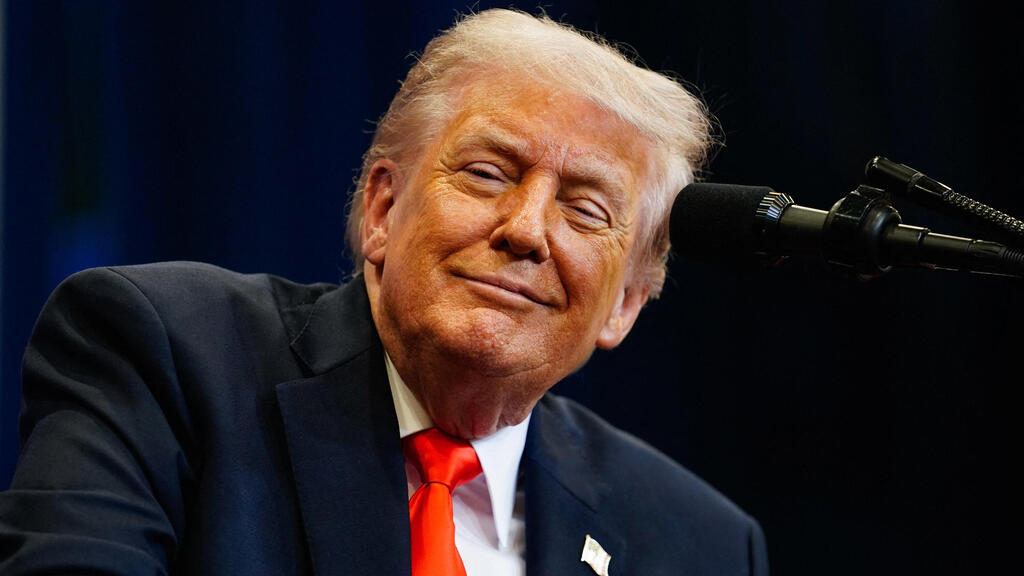
Trump has threatened renewed fighting and strikes on infrastructure and power plants
(Photo: Nathan Howard/Reuters)
Nevertheless, for now there is no evidence of willingness by the leadership in Tehran to soften its positions, although it is clear that the economic crisis may at some point lead to renewed protests. Moreover, even if they resume, it is doubtful whether the security forces have lost their ability and determination to brutally suppress demonstrators, as they did at the height of the protests in January 2026.
Iran is approaching the moment of decision, when, as in 1988, its leadership will have to choose whether to “drink the poisoned chalice” and agree to far-reaching compromises. Back then, Khomeini decided in favor of a ceasefire with Iraq after eight years of war under the influence of politicians who warned that the economy was on the verge of collapse, despite opposition from the Revolutionary Guards. Today, when many of those who served as commanders in the Revolutionary Guards in the late 1980s play a central role in the leadership, it is doubtful whether Ghalibaf and Pezeshkian are strong enough to exert similar pressure, and it is not clear whether the current leader is capable of such a decision.
Meanwhile, Iran continues to hold significant nuclear capabilities. Its refusal to discuss the nuclear issue may strengthen the assessment that its current leadership views preserving these capabilities as a vital means of obtaining nuclear weapons. The war appears to have strengthened the strategic logic of such a move, whether as a guarantee of the regime’s survival or as a deterrent against future attacks. Therefore, if no solution is found that leads to the removal of critical nuclear components from the country or their destruction, the regime, no longer committed to the concept of a nuclear threshold state, may try to break out to nuclear weapons despite the risks involved.
 Dr. Raz Zimmt
Iranian commentator Mostafa Najafi, considered close to regime circles, stressed in this context that true nuclear deterrence requires actually possessing such weapons. At the same time, Iran renewed its efforts to rebuild its missile array, and IDF assessments indicate that without an arrangement, it could once again accumulate thousands of missiles within a few years.
Some in Israel believe the current status quo is the preferred solution, since economic pressure may soften Iran’s positions, while an agreement would involve sanctions relief that would give it a lifeline. But this assessment ignores two main factors: First, there is serious doubt whether the current situation can continue for long, given the danger of escalation and the growing economic cost to all sides. Second, the current situation means Iran continues to preserve its nuclear capabilities and rebuild its missile array, thereby increasing the risk of a breakout to nuclear weapons and a renewal of fighting under more difficult conditions in the future.
Dr. Raz Zimmt is director of the Iran and Shiite Axis Program at the Institute for National Security Studies
First published: 18:09, 05.03.26