

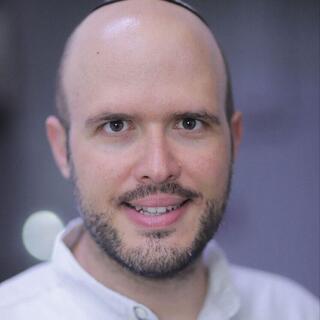
Nearly two years after his father was killed in battle in southern Lebanon, IDF soldier Yehuda Moyal returned to the exact site of his death and recited Kaddish, the Jewish mourner’s prayer, in a moment captured on video that quickly spread across social media.
“My life changed on the Sabbath of Parashat Bereshit at 2 p.m.,” Cpl. Yehuda Moyal, 21, said of the day he learned that his father, Warrant Officer Shaul Moyal, had been killed.
Gallery
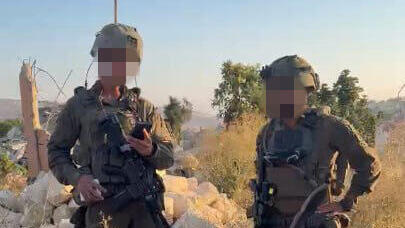
Yehuda, son of the late Shaul Moyal, recites Kaddish at the spot in Lebanon where his father was killed
Shaul Moyal, 47, was a father of 10 and a combat operative in the IDF’s 8207th Battalion. He was killed in southern Lebanon in October 2024.
Last week, his son stood with fellow soldiers at the spot where his father fell. Beside a mound of stones topped with an Israeli flag, Yehuda recited Kaddish in his memory.
“There is a part of me in this ground that changed the moment my father was killed,” he said. “But we continue with the mission my father left us.”
The visit also marked roughly a year since Yehuda began his own combat service.
Before his battalion crossed the border into Lebanon, he called his mother to ask whether she was comfortable with him going.
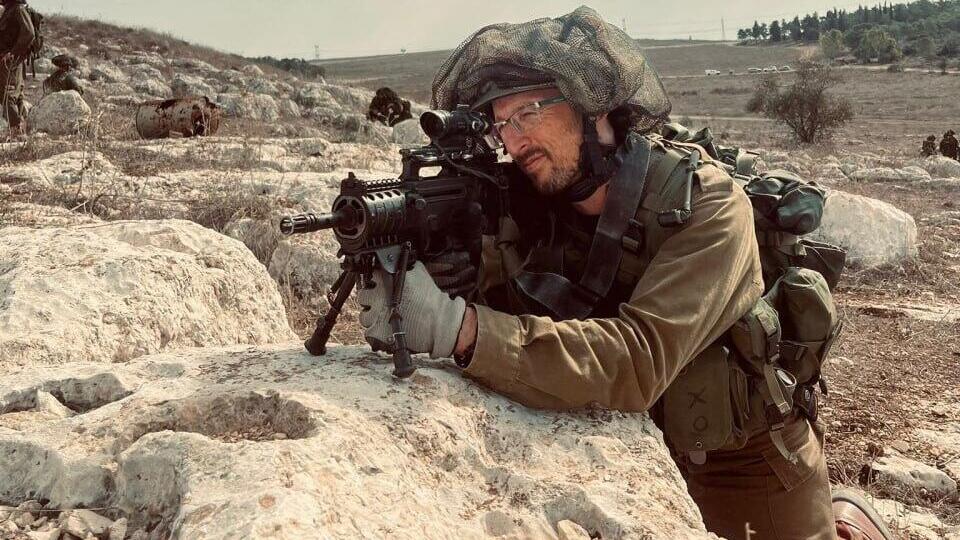
Warrant Officer Shaul Moyal
“Before the battalion entered combat across the border, I called my mother and asked her if it was okay for me to enter Lebanon, and without hesitating she gave me her blessing and told me that I had a mission to finish. My father left it to me,” he told ynet and Yedioth Ahronoth.
For Yehuda, reaching the site was not an accidental stop.
“We try to continue my father and the mission he left behind, and to give as much of myself as possible for the people of Israel,” he said. “It wasn’t by chance that we passed through there with a group of 10 men. It was very important to me that when I reached that point, I would say Kaddish, to close that circle.”
“I had the privilege of reaching the place where my father and his fellow fighters were killed and gave their lives in sanctification of God’s name. I said Kaddish and a few words in his memory.”
‘Why are you going? You have 10 children’
Yehuda recalled a conversation his father had with one of his brothers before leaving for combat.
“My brother asked him, ‘Dad, why are you going? You have 10 children, you’re leaving a family here,’” Yehuda said.
“My father answered him: ‘What are you talking about? I’ve accomplished a lot in life and I’ve left a lot behind. Let the young ones stay.’”
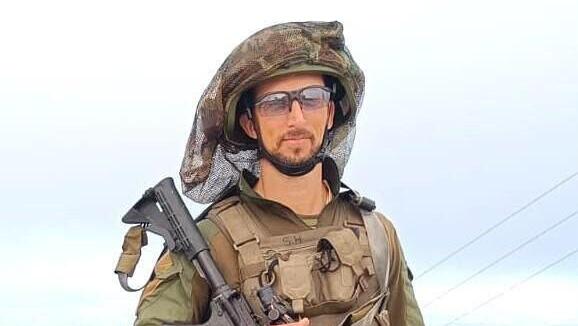
Shaul Moyal
Yehuda said his father deliberately chose to serve at the front even though he had 10 children, while many of the soldiers around him were younger and unmarried.
“My father chose to be at the front even with 10 children, knowing there were generations that would continue after him,” he said.
When Yehuda arrived at the place where his father had been killed, he found that the landscape had changed dramatically since the deadly clash in October 2024.
At the time, he said, the area was filled with buildings that concealed terrorist infrastructure. Now, much of it had been flattened.
“The real joy for me is that you come to the place and simply see that everything is flat,” Yehuda said. “They put up a mound of stones with an Israeli flag on top. It expresses something much stronger, that the people of Israel are here.”
He said he used the moment to speak directly to his father.
“I wanted to say thank you, and I said: Dad, all of this is because of you and because of your friends, who gave your lives for the people of Israel.”
Before entering Lebanon for the first time, Shaul had told his son that his mission was to help return residents of northern Israel to their homes after months of displacement.
“My father told me before he left for the first ground operation in Lebanon that he had a mission to bring the residents of the north home,” Yehuda said. “And that is what happened, thank God.”
“Even if he isn’t here with us to see it, I’m sure he sees it from heaven. The communities are flourishing again and children’s laughter can be heard there once more. My father Shaul isn’t here with us to see it, but we had the privilege of seeing his final wish fulfilled.”
‘There is a part of me here’
Standing amid the dirt, shattered concrete and fragments of metal at the site where his father and fellow soldiers were killed was emotionally difficult, Yehuda said, but also gave him a sense of coming to terms with what had happened.
“I felt that I was standing in a place where there is a part of me,” he said.
Yehuda studied for two years at the Tefahot yeshiva in a hesder program, which combines religious study with military service.
Two weeks after his father was killed, he reported for induction. Eight months later, he formally joined the IDF’s Kfir Brigade and was assigned to the Netzah Yehuda Battalion.
His family has also recently marked a new beginning. Yehuda’s sister gave birth to a daughter, making his mother a grandmother.
“I still haven’t met my niece, but I saw her in pictures they sent me on the phone and she is so sweet, and she is a sign for all of us, a sign of continuity,” he said.
“That is the real victory. We keep going, we keep building and being rebuilt, and the family keeps growing. My father’s path was not cut short. We are the ones continuing it.”