

Recent discussions about strikes on nuclear facilities during the ongoing war with Iran have sparked alarm across the Arab world, where some fear a scenario in which radioactive fallout could affect civilians following an attack on nuclear sites in either Iran or Israel.
On June 22, while exchanges of fire were still ongoing, concern grew in Jordan over comments made by Dr. Khaled Toukan, chairman of the Jordanian Atomic Energy Commission. In a radio interview, he said that the possibility of a strike on Israel's Dimona nuclear reactor had increased due to the escalation.
He added that if Israel’s underground nuclear facilities were attacked, a radioactive cloud could form. However, he reassured the public that the impact on Jordan would be limited, since such a cloud would likely drift toward the desert in southern Jordan, far from major cities and population centers.
Toukan also said that Jordan is prepared for potential radioactive leaks. He explained that potassium iodide (KI) tablets are used in radiation emergencies to protect the thyroid gland from absorbing radioactive iodine.
These tablets would be distributed to residents in specific regions if necessary, he said. He noted that Jordan has specialized teams capable of decontaminating soil and water, and models are in place to monitor the movement of any radioactive cloud. Jordan also has 30 automated monitoring stations tracking air, soil and water quality, supported by monthly manual sampling. Even Jordan’s own research nuclear reactor, inaugurated in 2016, is routinely monitored to ensure safety.
Following Toukan’s remarks, many questions were raised in Jordan about potassium iodide and its use. The Jordanian website Khabarni explained that the compound fills the thyroid with stable iodine, preventing it from absorbing radioactive iodine during a nuclear emergency, thereby reducing the risk of thyroid cancer. The article emphasized that the tablets are preventative, not curative, and must only be used under official guidance—specifically timed around the moment of exposure to be effective.
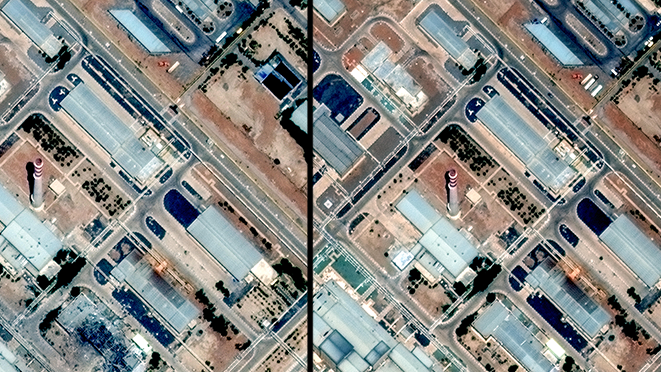
Isfahan facility, on the right is before the bombing, on the left is after
(Photo: Maxar Technologies/Handout via REUTERS )
A Jordanian pharmacist named Yara Youssef addressed the growing concern by posting short videos on Instagram, warning: “Potassium iodide is not a vitamin. People have started taking it as a preventive measure, and that’s dangerous. It should only be taken in a radiation emergency and under instructions from official health authorities. The World Health Organization has made it clear—no emergency, no need.”
Social media as a ‘nuclear disaster’
In Lebanon, Hezbollah-affiliated newspaper Al-Akhbar published an article last week warning of radioactive panic and opportunistic profiteering. It argued that any regional crisis tends to create chaos in the pharmaceutical market and exposes the fragility of regulatory systems.
The author wrote that with the Iran-Israel escalation and the possibility of radiation leaks—especially from the Dimona reactor, which is geographically close to Lebanon—concerns quickly turned into an opportunity for “crisis merchants” to push the sale of iodine and potassium iodide as protective agents, despite their limited and highly specific medical use. The article said social media played a key role in spreading panic, with influencers publishing misleading information and overstepping into the realm of doctors and pharmacists.
Get the Ynetnews app on your smartphone: Google Play: https://bit.ly/4eJ37pE | Apple App Store: https://bit.ly/3ZL7iNv
It added that this misinformation led to a rush on pharmacies for drugs “no one knows how to properly use.” While some pharmacists refused to participate in this “game,” others exploited the demand for personal profit. The author warned that the surge in potassium iodide purchases nearly deprived thyroid patients of their necessary medications. She emphasized that in any radiation emergency, the public should follow Ministry of Health safety guidelines on whether these substances are necessary, when to take them, and at what dosage.
Satellite images show nuclear damage
In Saudi Arabia, the Al Arabiya network addressed public anxiety with a calming segment. A short video posted by the network stated that, despite alarming headlines on social media about a “nuclear disaster,” the region is not on the brink of such an event.
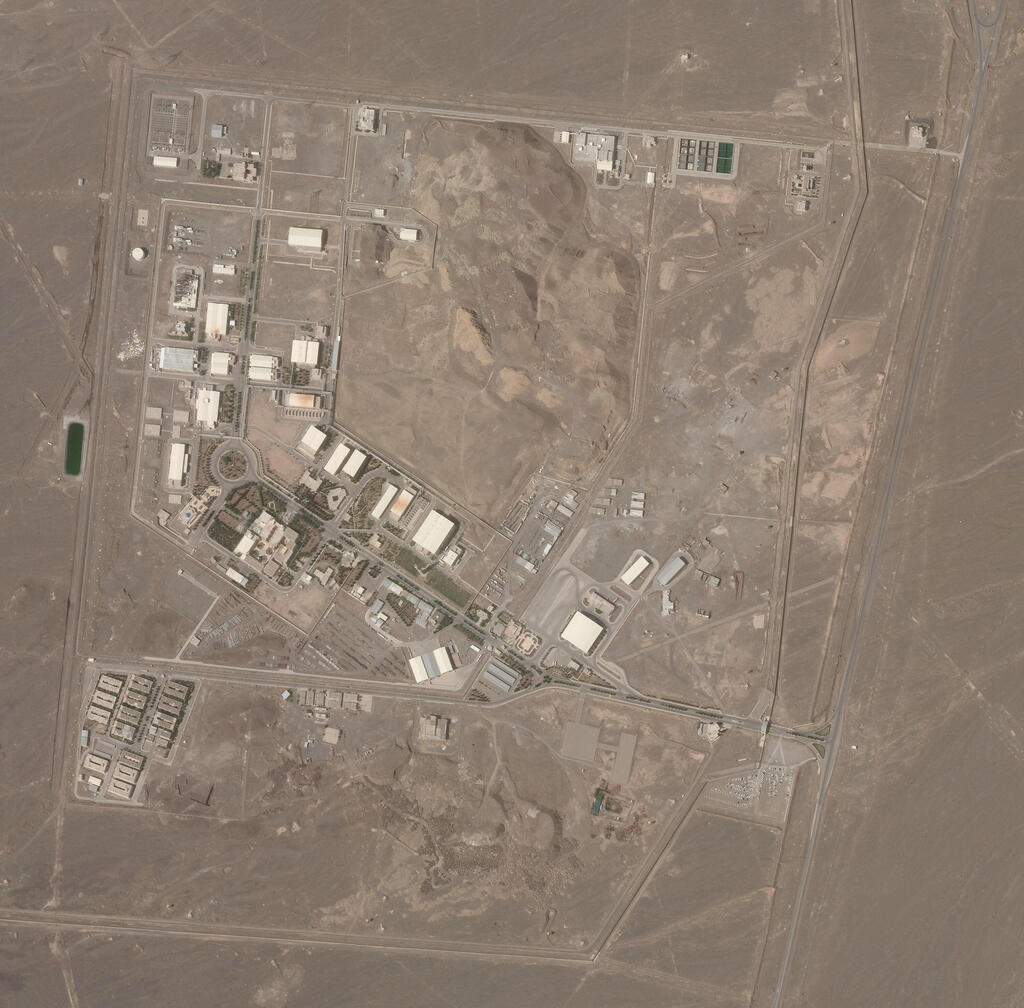
Satellite picture showing the Natanz nuclear facility in Iran
(Photo: Planet Labs Inc)
In Iran itself—the primary target of nuclear-related strikes—state-affiliated media also discussed radiation risks during the conflict. In the second week of fighting, one Iranian outlet published a piece titled “How to know if you’ve been exposed to nuclear radiation?” It listed symptoms such as sudden shutdown of electronic devices, mass animal deaths, unexplained heating of metal objects, and widespread reports of nausea, headaches, fatigue, and a metallic or burning taste in the throat.
On Friday, the International Atomic Energy Agency (IAEA) reported that radiation levels in the Persian Gulf region remained normal at the conclusion of the "12-Day War," which included Israeli airstrikes on Iranian nuclear facilities.
First published: 22:18, 06.30.25