


James “Fergie” Chambers’ hopes that Spain’s government would stop his extradition to the United States before the case reached court suffered a major setback Tuesday, after Madrid allowed the American request to proceed to Spain’s National Court.
The Council of Ministers authorized the next stage of the proceedings against the 41-year-old multimillionaire and pro-Palestinian activist, leaving the Audiencia Nacional to determine whether he can legally be extradited to the United States. The Spanish government stressed that the move was procedural and did not amount to a final decision to surrender him.
The government could have halted the process at this stage, including if it concluded that the U.S. prosecution amounted to political persecution, as Chambers’ lawyers argue. Instead, it allowed the judicial phase to begin. If the court ultimately approves extradition, the case is expected to return to the government before any surrender takes place.
The decision came despite opposition from within Prime Minister Pedro Sánchez’s governing bloc. Sumar and other parties on the Spanish left had urged the government to reject Washington’s request, arguing that Chambers is being targeted because of his support for the Palestinian cause.
Enrique Santiago, a lawmaker associated with Sumar and spokesman for the United Left, has described the case as “political persecution” and argued that Spain should not cooperate with it.
Spain’s government, however, did not accept that argument at this stage. Its spokeswoman emphasized after the Cabinet meeting that the decision merely opens the judicial phase and does not determine Chambers’ guilt or guarantee that he will ultimately be handed over to U.S. authorities.
Chambers is an heir to the Cox family fortune, built through Cox Enterprises, the U.S. communications, automotive and media conglomerate whose holdings include Axios. He separated from his interests in the family business in 2023 in a deal he has said was worth hundreds of millions of dollars.
Since then, he has become an unusual figure among America’s wealthy heirs. Chambers identifies as a Marxist-Leninist, has publicly expressed anti-capitalist and anti-American views and has donated substantial sums to left-wing causes and Palestinian projects.

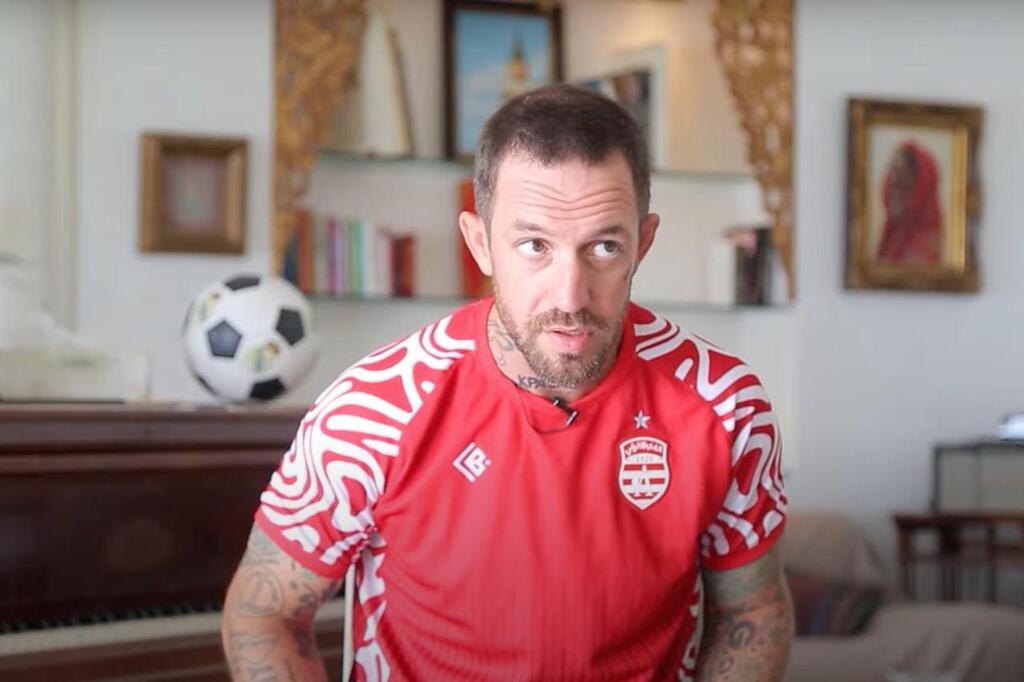
Chambers. Invested money in a Tunisian soccer club
(Photo: Club Africain)
He was arrested on July 10 in Ibiza, where he had traveled with his wife, Jewish actress Stella Schnabel, and their son. The couple said they were on their way to visit a school as they considered moving to the island when police vehicles blocked their car and Chambers was detained on an international warrant issued at the request of the United States. He has remained in custody in Spain since then.
At the heart of the American case is a $7.5 million transfer from the United States to Tunisia, where Chambers had lived for a period. U.S. authorities allege the transaction formed part of conduct connected to money laundering and support for organizations linked to Hamas.
The case also involves allegations linked to protests targeting U.S. facilities belonging to Israeli defense contractor Elbit Systems. Chambers had supported activists involved in some of those actions, including by paying bail and legal costs, according to reporting on the case.
Chambers and his defense team reject the U.S. account. They say money transferred to Tunisia was used in part for investment in Club Africain, one of the country’s best-known soccer clubs, including debt payments and investment in facilities, while other funds sent to Gaza were intended for humanitarian projects.
His defense team, led by former Spanish judge Baltasar Garzón, argues that the Trump administration has turned Chambers’ pro-Palestinian activism into a criminal case and is portraying humanitarian assistance as terrorism financing. Chambers has also begun seeking asylum in Spain, arguing that he would face political persecution if returned to the United States.
His lawyers still have several avenues to fight the extradition. One issue is Spain’s requirement of dual criminality, under which extradition generally depends on the alleged conduct also constituting an offense under Spanish law. His defense argues that at least one U.S. allegation connected to conspiracy to riot does not have a direct equivalent in Spain.
Money laundering, however, is an offense under Spanish law, leaving the U.S. request with another potential legal basis.
For Chambers, Tuesday’s decision changes the immediate trajectory of the case. His family and lawyers had spent weeks hoping Sánchez’s government, which has repeatedly clashed with the Trump administration and taken a strongly pro-Palestinian diplomatic line, would stop the extradition request before it reached court. Instead, the battle now moves to the Audiencia Nacional, with Chambers still behind bars and the prospect of extradition to the United States a step closer.