


IDF Ground Forces Commander Maj. Gen. Nadav Lotan has approved the full retirement of dozens of aging armored personnel carriers known as Achzarit, ynet learned on Saturday, marking the end of service for vehicles that played a supporting role in the war in Gaza.
The decision affects large, heavily armored carriers that have been used by the IDF for decades, particularly by reserve units. The Achzariyot were deployed extensively during the prolonged ground fighting in the Gaza Strip that began in October 2023 and ended in October last year.
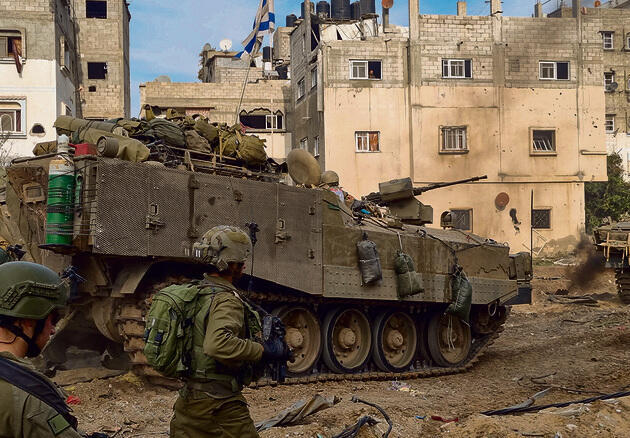
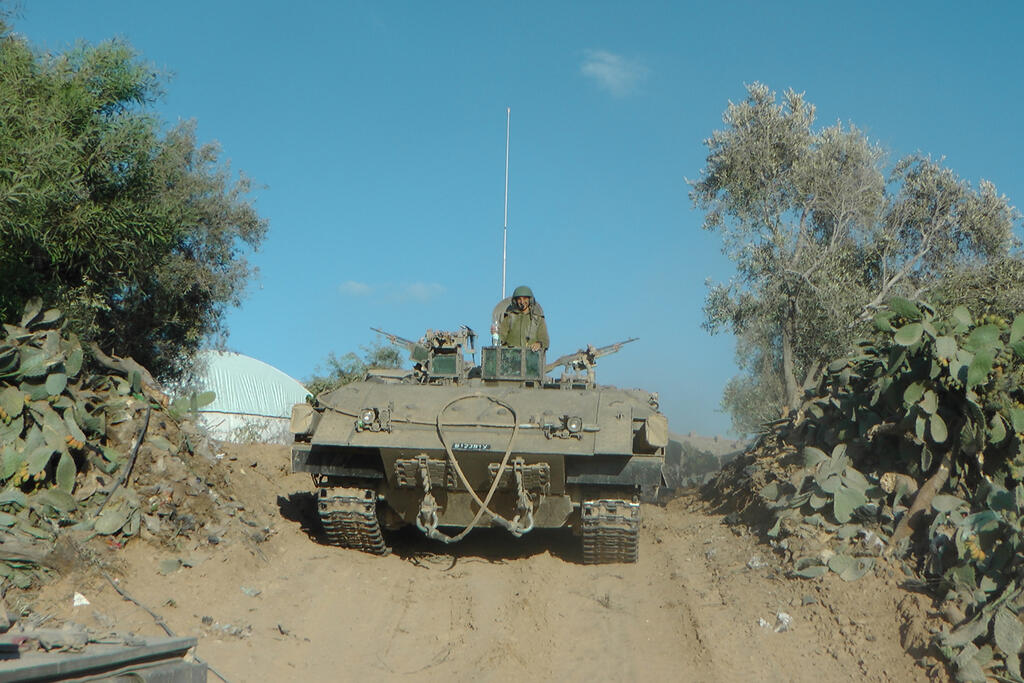
The vehicles can carry eight to 10 soldiers and are built on the chassis of Soviet-made T‑55 tanks captured by Israel in wars with Arab states in the 1970s. In the 1980s, Israel removed the tanks’ turrets and converted the hulls into armored personnel carriers, replacing key components with American-made parts and adding upgrades from Israeli defense industries.
Israeli defense contractor Rafael and others reinforced the Achzariyot with heavy armor, including protection against anti-tank missiles similar to that used on the Israeli-made Merkava tanks. The vehicles were also fitted with weapons systems based on machine guns operated from inside the crew compartment.
Over the years, the Achzariyot were used by regular army units, including mechanized infantry brigades such as Givati and training formations, as well as by reserve brigades like Alexandroni. They saw operational service across multiple fronts — from Israel’s former security zone in southern Lebanon, through the second Palestinian intifada and major West Bank operations in the early 2000s, to the most recent fighting in Gaza.
During the latest war, the vehicles were used mainly for evacuating wounded soldiers, transporting commanders and staff, and carrying out logistical and administrative tasks such as moving troops and equipment. They were used less frequently in frontline assault roles.
The aging carriers suffered from repeated mechanical problems due to years of heavy use. Still, until recently, many commanders viewed them as reliable, especially for short-distance missions in dense combat zones like Gaza.
(Photo: Yoav Zitun)
Some senior officers had recommended keeping the Achzariyot in service, arguing that a renewed outbreak of fighting in Gaza, particularly in the near term, could again require relatively well-protected vehicles for moving forces. One battalion commander who used the vehicles during the war told ynet that while the Achzarit lacked air conditioning and modern ergonomics and was less comfortable than newer armored vehicles, “for the short distances in Gaza, it did the job.”
Critics of the decision to retire the vehicles point to the slow production rate of Israel’s newer armored personnel carriers, including the tracked Namer and the wheeled Eitan. Even at peak output, the Defense Ministry’s procurement directorate produces only a few vehicles a month. Some officers warn that infantry units have yet to be fully equipped with modern carriers and argue that removing older vehicles from reserve service could leave gaps in future emergencies.
They also note that reservists invested heavily in maintaining the Achzariyot, installing threat-detection systems and 360-degree cameras to improve crew safety.
The Ground Forces command, however, says the vehicles have become increasingly difficult to maintain because spare parts are no longer available on the global market. Officials say the high cost of upkeep is no longer justified given the limited operational role of the carriers.
Israel has previously retired other armored personnel carriers considered insufficiently protected, including the U.S.-made M‑113, which was phased out of maneuvering units in the late 2010s. During the 2014 Gaza war, an M‑113 was destroyed in Gaza City's eastern Shijaiyah neighborhood, killing seven Golani Brigade soldiers and leading to the capture of the body of one of them, Staff Sgt. Oron Shaul. His remains were recovered from Gaza in January 2025.
The IDF said it is conducting a professional review of its armored vehicle fleet “as part of a broad process to adapt platforms to updated operational needs.” The military said the review includes consolidating the use of Achzarit vehicles and converting surplus units for other purposes.