


U.S. President Donald Trump on Wednesday claimed credit for Prime Minister Benjamin Netanyahu's stronger-than-expected showing in Israel's parliamentary elections, saying his endorsement had helped turn what appeared to be a likely defeat into a close contest or even a potential victory.
Trump's remarks came as Netanyahu's right-wing and religious bloc continued to outperform preelection polling, first in Tuesday night's exit polls and then by an even wider margin in preliminary official vote counts. The results remain fluid, however, with most ballots still being counted and neither of Israel's main political blocs assured of the 61 seats needed to form a government in the 120-member Knesset.
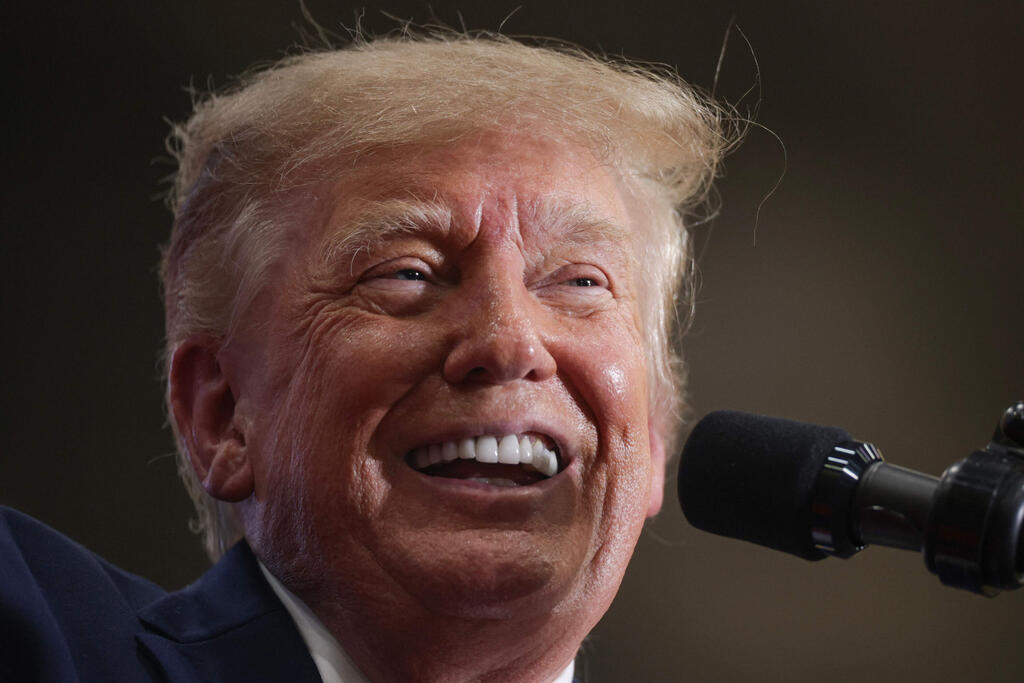
US President Donald Trump
(Photo: ALEX WONG / GETTY IMAGES NORTH AMERICA / AFP)
"I hear he did very well. It's pretty close, very good," Trump told reporters while returning from a campaign rally in Texas. "When the endorsement came out, it helped him a lot."
"But actually, I heard he did pretty well. He's probably winning or tied. But I heard he's doing pretty well," he added.
Trump acknowledged that the results were far from final but suggested Netanyahu had significantly exceeded expectations.
"It's still a little early. But I hear in Israel, I mean, top people are saying, 'Wow, he did much better.' Something like a tie, maybe even a win. We'll see what happens."
The comments followed an election campaign in which Trump publicly backed Netanyahu, lending the Israeli leader the support of a U.S. president who remains popular among much of Israel's political right.
Before the election, several opinion polls had suggested Netanyahu's governing bloc was headed for defeat against an opposition alliance led by former military chief Gadi Eisenkot. Tuesday night's exit polls indicated a considerably tighter race, with Netanyahu's bloc performing better than many preelection surveys had anticipated.
As the official count progressed overnight, the prime minister's position improved further.
By 6:02 a.m. Wednesday, with 41.09% of votes counted, Netanyahu's Likud party was projected to win 28 seats, compared with 21 for Eisenkot's Yashar party, according to figures from the Central Elections Committee.
The updated projections gave Netanyahu's right-wing and religious bloc 57 seats, compared with 47 for the rival pro-change bloc. Predominantly Arab parties were projected to hold the remaining 16 seats.
Although Netanyahu's bloc had established a lead over its principal rival, it remained four seats short of a parliamentary majority. The figures were preliminary and subject to change as additional ballots were counted and the final distribution of seats became clearer.
The results have raised the prospect of difficult coalition negotiations, with neither Netanyahu nor Eisenkot enjoying a straightforward path to forming a government.
Trump also amplified claims about the impact of his endorsement in a post on Truth Social, sharing a statement attributed to Irving C. Schwartz that credited the U.S. president with reversing Netanyahu's electoral fortunes.
"When President Trump endorsed Bibi Netanyahu, the whole tide turned, and now, rather than a decisive defeat for a Great Prime Minister, it looks like a big come-from-behind stalemate, or even a WIN for Netanyahu," the statement read.
"It all took place AFTER the Endorsement by President Trump, who only wants what is good for the Middle East, Israel, and the United States of America!"