

Nearly six months into the war with Iran, the Trump administration is signaling to allies that, at least for now, it does not intend to launch another round of strikes against the Islamic Republic, shifting the focus of its campaign from military action to economic pressure and control of shipping through the Strait of Hormuz.
Secretary of State Marco Rubio has told several foreign counterparts in recent days that the United States is not expected to initiate new strikes against Iran “for the time being,” Axios reported overnight Wednesday.
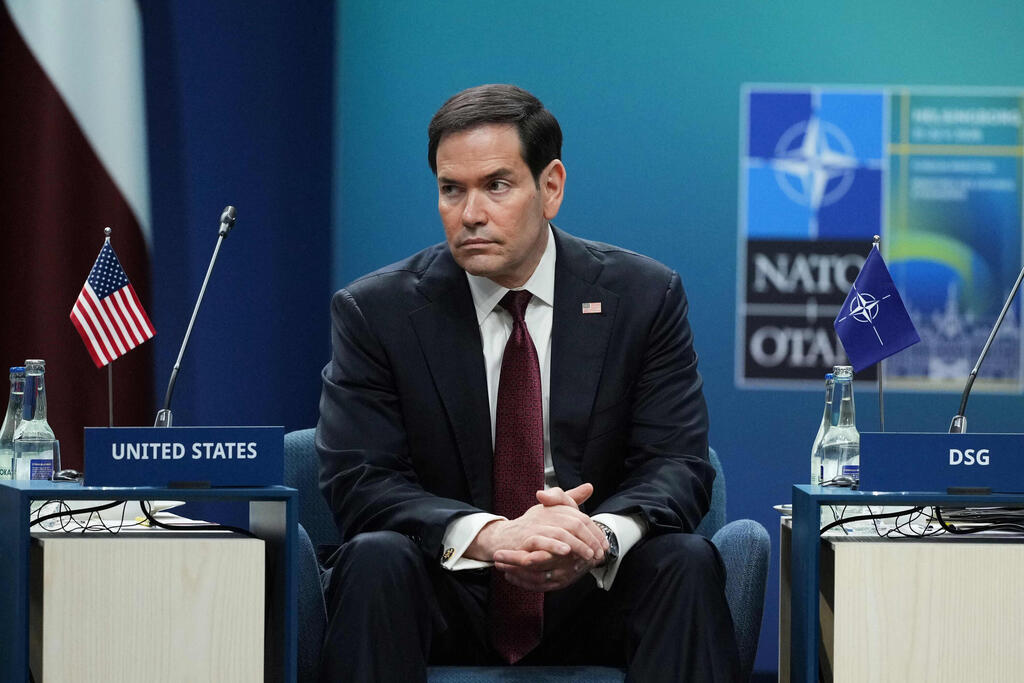
The message, however, does not mean Washington considers the conflict over. An American official told Axios that while Rubio indicated the United States is not currently planning to resume major combat operations, he did not rule out a military response if Iran attacks first.
Another U.S. official said the approach is expected to remain in place at least until after the U.S. midterm elections in November, after which the possibility of a renewed military campaign could return to consideration.
From airstrikes to economic pressure
Instead of further strikes, the Trump administration is seeking to intensify pressure on two fronts: economically squeezing Iran through sanctions and a maritime blockade while increasing the amount of Gulf oil moving through the Strait of Hormuz to global markets.
The strategy is intended both to reduce Tehran’s revenue and weaken its ability to use the strategically vital waterway as leverage over the global economy.
U.S. President Donald Trump said Tuesday that he had been briefed that all mines placed in international waters in the Strait of Hormuz had been “removed and/or detonated.”
Washington is portraying the clearing of mines from large portions of the strait as a turning point in the conflict. U.S. officials say that, combined with a growing number of tankers using the strait’s southern route, the operation has sharply reduced Iran’s leverage.
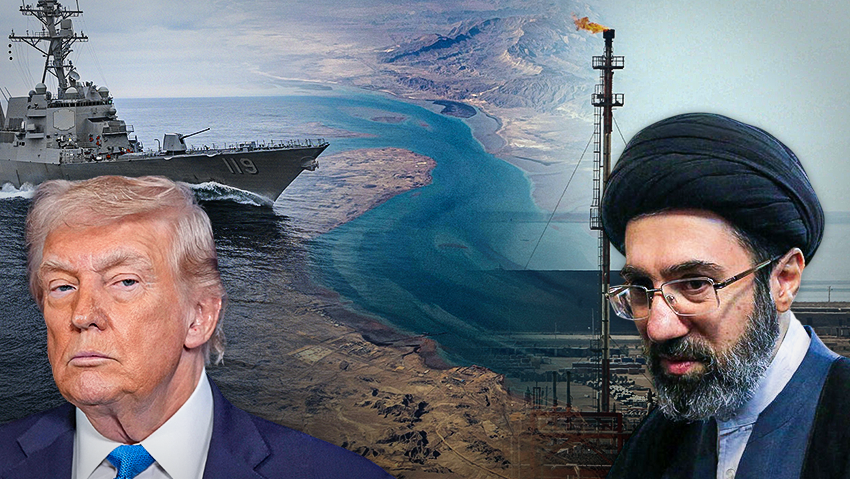
US President Donald Trump, Iranian Supreme Leader Mojtaba Khamenei
(Photo: AP/Alex Brandon, Atta KENARE/AFP, REUTERS/Stringer, Lance Davis/United States Navy/Huntington Ingalls Industries)
“The Iranians have lost control over the strait. Now the U.S. controls it,” one American official said.
Administration officials also said almost no tankers have been observed at Kharg Island, Iran’s main oil export hub, over the past two weeks, which they cited as evidence that the maritime blockade is working.
The shift was also reflected in a new sanctions campaign announced this week by Treasury Secretary Scott Bessent. Under an initiative the administration calls “Operation Economic Outcast,” Washington imposed sanctions on more than 60 people, companies and vessels it says help Iran generate oil revenue, acquire nuclear and missile technology and conduct cyber operations.
The measures also extend to gold, aviation, shipping, technology and digital assets.
Bessent warned companies and governments outside Iran that continued business with Tehran could carry consequences.
“No one is above the reach of U.S. sanctions,” he said, warning that those helping Iran launder money could be cut off from the U.S. dollar system.
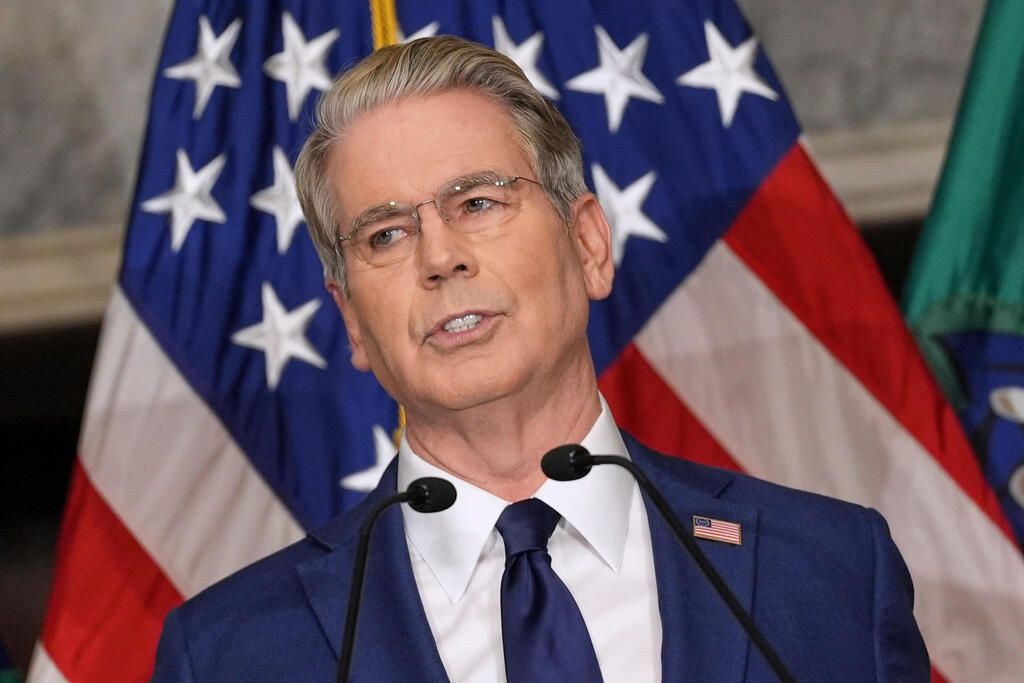
US Treasury Secretary Scott Bessent
(Photo: AP Photo/Julia Demaree Nikhinson)
CNN described the strategy as a shift from military action toward a prolonged economic “strangulation” campaign ultimately intended to force Iran back to negotiations.
Iran has dismissed the threats. Foreign Minister Abbas Araghchi said Tehran had already endured “crippling sanctions” and Trump’s previous “maximum pressure” campaign, describing the latest effort as the “same movie” under a different name.
Iran’s president, however, said in recent days that his country “cannot continue the war forever,” highlighting differing voices within the Iranian leadership over how Tehran should respond to American pressure.
Iran and Oman move toward Hormuz arrangement
Iran and Oman, meanwhile, announced progress Tuesday in negotiations over the future of the Strait of Hormuz.
Omani Foreign Minister Badr Albusaidi traveled to Tehran and met Araghchi, with the two discussing a phased framework to restore safe shipping through one of the world’s most important maritime energy routes.
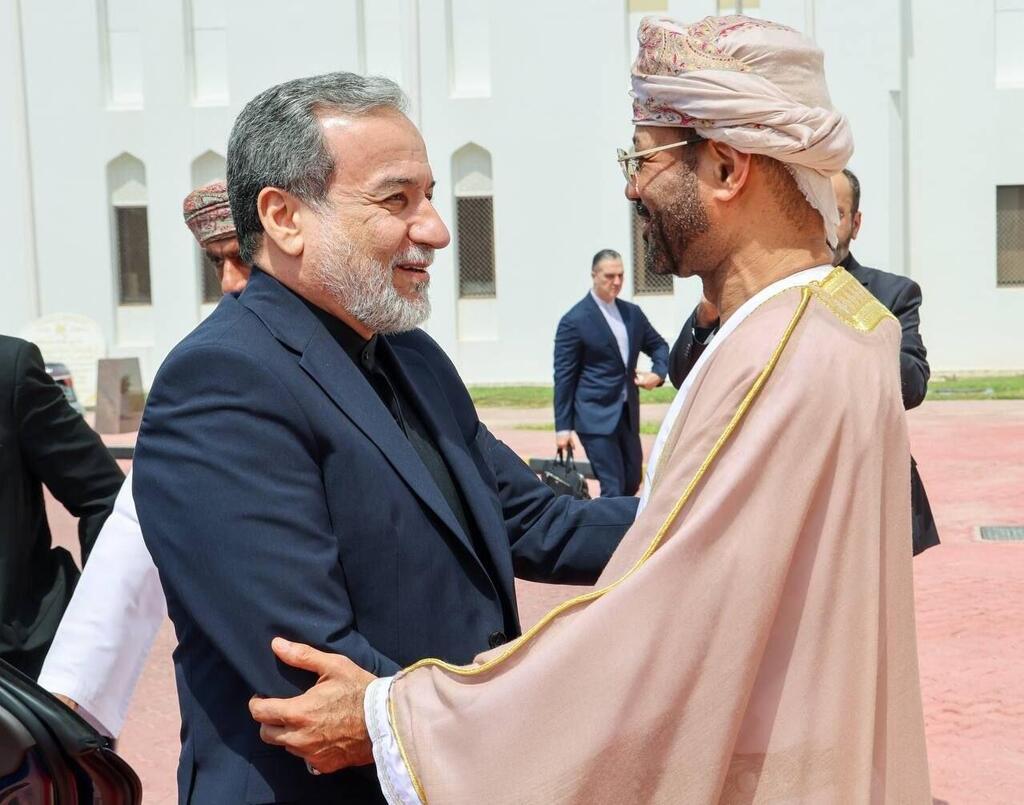
Iranian Foreign Minister Abbas Araghchi and Omani Foreign Minister Badr Albusaidi
According to a joint statement, the proposal includes establishing a temporary joint navigation corridor through the strait and a joint mine-clearing project.
Technical negotiations would follow on a permanent corridor, management of maritime traffic, information sharing and navigation and security services. The two countries also called for other Gulf states to participate in the talks.
Albusaidi said he hoped the temporary corridor and practical arrangements for restoring safe navigation could be announced soon.
Tehran, however, stressed that agreeing to a temporary route would not amount to an immediate and complete reopening of the Strait of Hormuz. Iran maintains that a permanent solution must be part of a broader agreement addressing sanctions and its other demands of Washington.
Iranian Deputy Foreign Minister Kazem Gharibabadi said the understandings with Oman did not mean the strait would immediately reopen, saying it would “remain closed” as long as the war continues.
He said Iran and Oman had agreed on a temporary route about 11 kilometers, or nearly 7 miles, wide, with vessels entering the Persian Gulf through Iranian waters and leaving through Omani waters. The sides are expected to negotiate a new permanent route within 30 to 60 days.
Gharibabadi said reopening the strait would come only “in exchange for ending the war on all fronts, lifting the blockade and determining the fate of Yemen.”
He also claimed only Iran knows the precise locations of mines in the strait and warned that U.S. Navy minesweepers entering the area “will be primary targets for us.”
If Washington wants the strait reopened, he said, it must “correct its mistakes and return to its commitments.” He also threatened Iranian retaliation against U.S. economic interests and said Tehran would reveal “new capabilities” if pressure continued.
Washington has sought to play down the significance of the Iran-Oman talks. U.S. officials told Axios that mine-clearing operations and increased oil shipments through the southern route had already sharply diminished Tehran’s ability to use Hormuz as a bargaining chip. One official described a possible Iran-Oman agreement over the strait as effectively “irrelevant.”
Diplomatic efforts continue
Efforts at mediation are continuing despite the absence of active U.S.-Iran negotiations.
Pakistan’s army chief, Field Marshal Asim Munir, visited Tehran on Tuesday after Pakistan played a significant role in carrying messages between the sides in recent months.
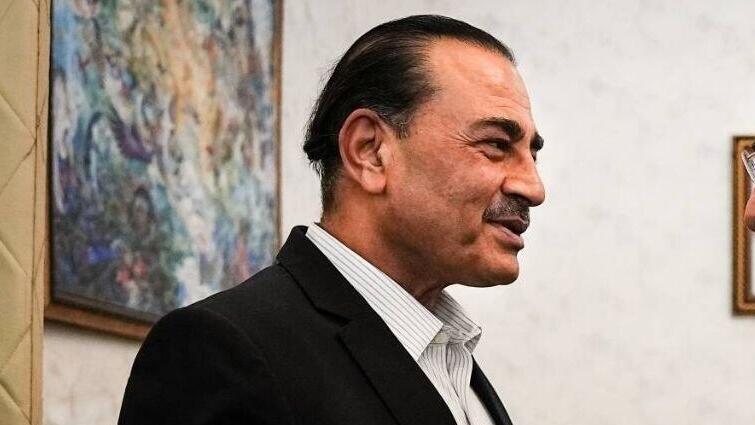
Pakistan’s army chief, Field Marshal Asim Munir
Al Arabiya reported that Munir spoke with Trump before traveling and presented a new initiative to the Iranians. The White House did not deny that a conversation took place but said there are currently no active or planned negotiations with Tehran.
U.S. envoys Steve Witkoff and Jared Kushner, who previously led contacts with Iran, are expected to visit U.S. Central Command on Wednesday for a briefing on conditions in the region.
Saudi nuclear deal tied to Israel normalization
A separate but potentially significant development is also taking shape elsewhere in the region, with Trump submitting a U.S.-Saudi civil nuclear cooperation agreement to Congress.
An administration official told Reuters that despite sending the agreement to lawmakers for review, Trump’s position has not changed: The deal will not move forward unless Saudi Arabia joins the Abraham Accords and establishes relations with Israel.
The civil nuclear agreement was signed July 22 by U.S. Energy Secretary Chris Wright and his Saudi counterpart, Prince Abdulaziz bin Salman.
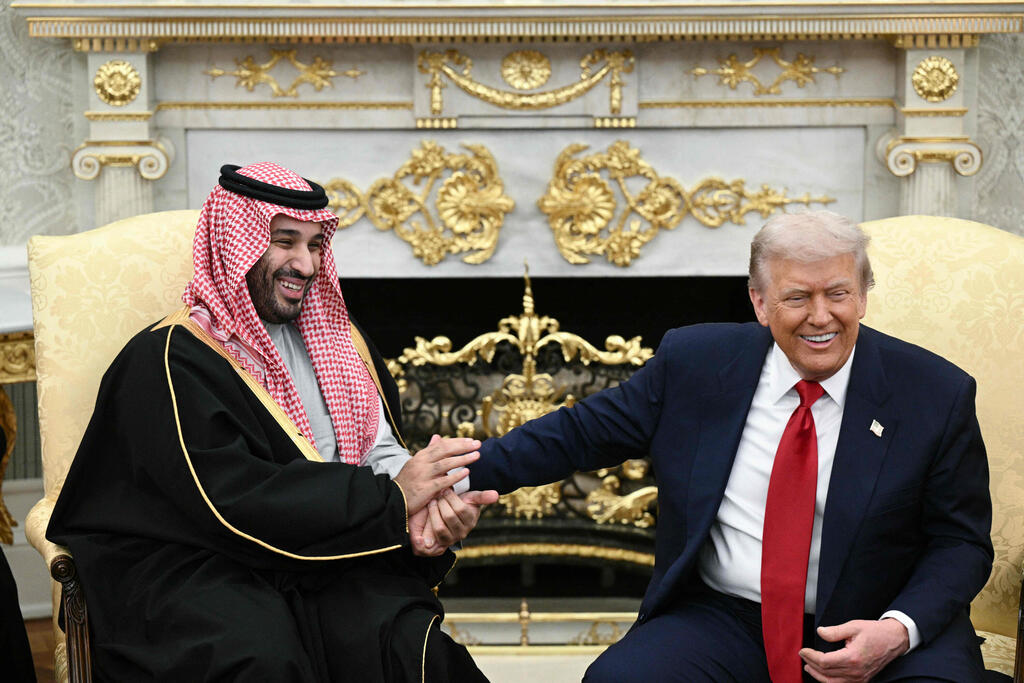
Saudi Crown Prince Mohammed bin Salman and Trump
(Photo: Brendan SMIALOWSKI / AFP)
Known as a “123 Agreement,” it would provide the legal framework for U.S. cooperation with Saudi Arabia’s civilian nuclear program. Washington has portrayed the agreement as the foundation for a partnership lasting decades and giving American companies a major role in building the Saudi nuclear industry.
The deal has nevertheless raised nuclear proliferation concerns. According to reports, it does not contain some of the stringent restrictions Washington has sought in previous agreements and could eventually allow Saudi Arabia to move toward uranium enrichment, subject to additional conditions and inspections.
The issue is particularly sensitive because Crown Prince Mohammed bin Salman has previously said Saudi Arabia would seek a nuclear weapon if Iran acquired one.
Trump added another condition after the agreement was signed, saying last month that he would not proceed unless Riyadh normalized relations with Israel.
Saudi Arabia, for its part, continues to link recognition of Israel to meaningful progress toward establishing a Palestinian state, making an immediate breakthrough on normalization unlikely.