


The world's financial press is treating Libya as one of North Africa's quiet success stories, and the numbers make it easy to understand why. The country is pumping oil at 1.4 million barrels per day, its highest rate in more than a decade. Revenues hit 22 billion dollars last year, up 18 percent. TotalEnergies and ConocoPhillips signed a 20 billion dollars, 25-year deal to expand the Waha oil fields. Eni, Chevron, BP, and Repsol have followed with their own commitments. Libya completed its first public oil and gas licensing round in seventeen years just months ago, awarding blocks to international majors who have been circling for years. The Hormuz crisis, which disrupted Gulf oil transit and sent European refiners scrambling for alternatives, has made Libya's light sweet crude the most strategically valuable barrel in the Mediterranean almost overnight. Every energy company with a North Africa desk is suddenly very interested in Tripoli.
Gallery
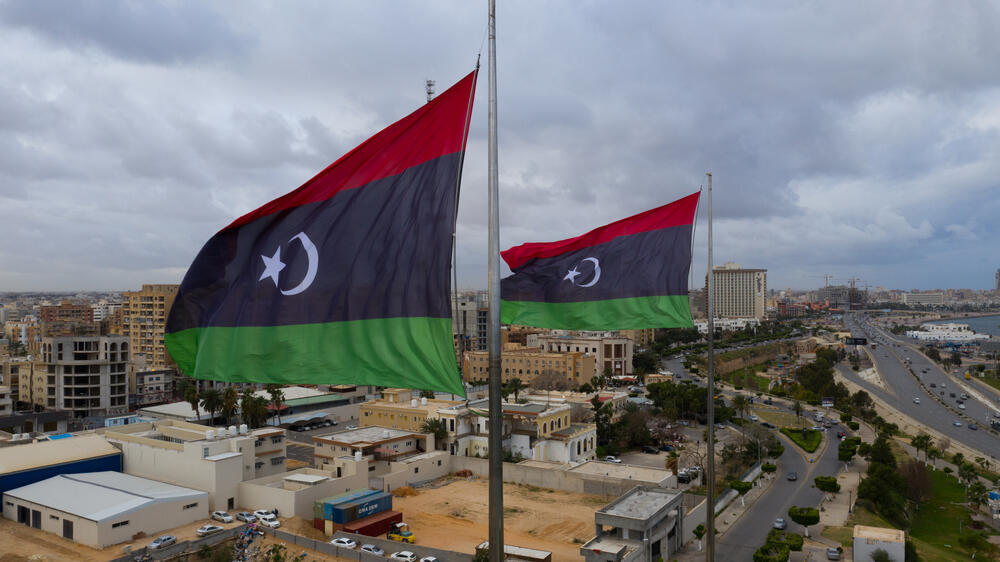
The world's financial press is treating Libya as one of North Africa's quiet success stories
(Photo: Hussein Eddeb / Shutterstock)
Libya still has two rival governments. Field Marshal Khalifa Haftar controls the territory, the eastern oilfields, and the military infrastructure that makes production physically possible. Prime Minister Abdulhamid Dbeibeh controls the National Oil Corporation, the Central Bank, and the internationally recognized financial architecture through which revenues are formally processed. Neither side can function without the other. Neither side will merge with the other. The result is a permanent negotiated stalemate, sustained by one shared interest: the oil must keep flowing, because the oil is what finances both sides of Libya's division simultaneously. Democracy would require one side to risk losing its position. The incentive structure points entirely in the other direction.
Into this architecture stepped Arkenu Oil Company, established in Benghazi in early 2023 by people the United Nations Panel of Experts on Libya has since identified as proxies of Saddam Haftar, son of the Field Marshal. In less than three years, Arkenu secured upstream access and a formal partnership with the state-owned Arabian Gulf Oil Company, the NOC subsidiary responsible for operating two of Libya's largest oilfields. The mechanism was elegant: rather than receiving cash payments for its production-enhancing work, Arkenu was compensated in crude oil, which it then sold independently on international markets, effectively monetizing state-controlled hydrocarbons outside the official revenue framework. The UN Panel published its findings this past March. The estimate for Arkenu's export revenues between October 2024 and February 2026 was upward of 3 billion dollars. The report named Saddam Haftar as the indirect controller.
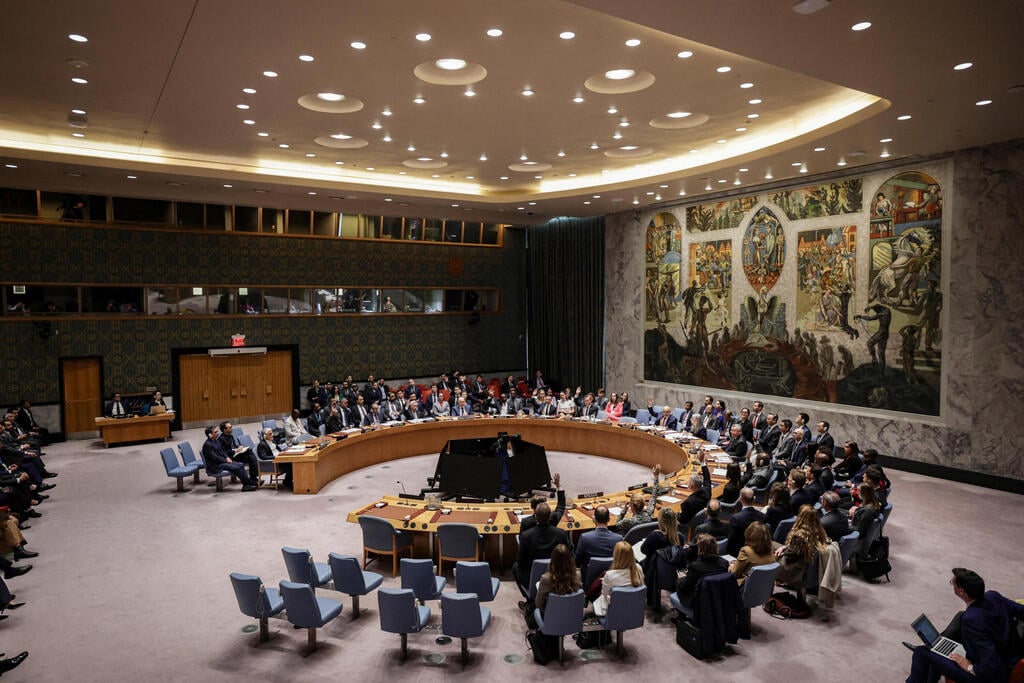
The UN Panel published its findings this past March
(Photo: REUTERS/Jeenah Moon)
Three billion dollars distributed over eighteen months is not simply a corruption figure. It is a strategic resource. Revenue captured through Arkenu funds the parallel institutions of Haftar's eastern administration: military salaries for the Libyan National Army, the tribal patronage networks that hold his territorial coalition together, and the operational costs of a parallel state that has governed roughly half of Libya for nearly a decade. A commander with independently captured oil revenue worth billions has no financial incentive to accept elections whose outcome he cannot predetermine. He does not need Tripoli's approval to pay his soldiers. He does not need the Central Bank to run his patronage system. The Arkenu mechanism made him, in the precise financial sense of the word, sovereign.
The public pressure following the UN report was enough that Dbeibeh issued a formal suspension order in April, blaming the entire arrangement on Haftar's camp despite having facilitated it himself. It was a performance of accountability in a country with no mechanism to enforce accountability. Reporting from April and May confirmed what analysts predicted: oil exports linked to Arkenu continued after the suspension was issued. The NOC processed the shipments, a European commodity trading firm received them, and Arkenu collected the proceeds. The decree changed nothing because decrees in Libya change nothing when neither side has the political will to absorb the cost of actual enforcement.
This is the Libya that TotalEnergies, ConocoPhillips, Eni, Chevron, and BP are investing in. Not the Libya of UN communiques, unified oil budget agreements, or AFRICOM military integration exercises. The real Libya is one where formal authority and actual control sit in different cities, operated by actors who deploy the language of sovereignty while running parallel extraction machines underneath it. Western energy companies have compliance officers who have read the same UN report that named Saddam Haftar as Arkenu's controller. They are investing anyway, because Libyan crude is profitable and the Hormuz disruption has made European energy security a domestic political crisis. The governance questions are somebody else's problem.
It was not always framed as somebody else's problem. The trial grinding through a Paris appeals court this year, in which former President Nicolas Sarkozy is challenging his criminal conspiracy conviction over alleged Libyan campaign financing for his 2007 presidential run, offers a precise historical illustration of where Gaddafi's oil revenues traveled when they left Tripoli. Prosecutors have sought a seven-year sentence. A verdict is due in November. Whatever the court decides, the structural dynamic it illuminates has not changed: Libya's oil wealth has always been accessible to those willing to conduct business with whoever holds physical control of it, regardless of what international law says about legitimate authority.
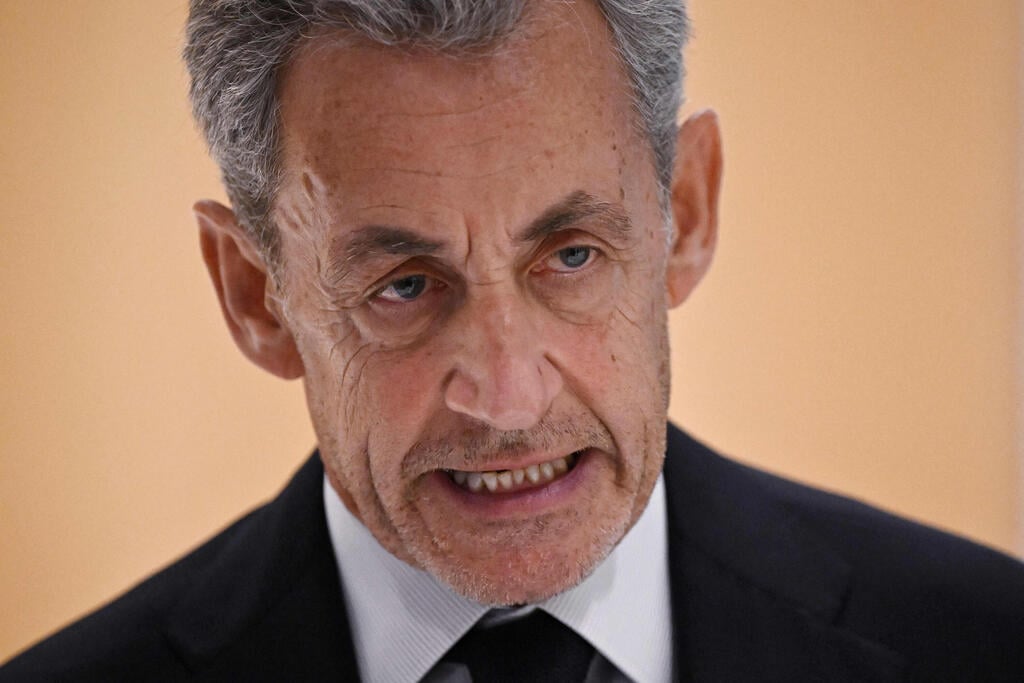
Former President of France Nicolas Sarkozy
(Photo: JULIEN DE ROSA / AFP)
The Hormuz crisis has sharpened this dynamic to a fine point. Libya produces light crude that European refineries prefer, ships it via routes that bypass the Gulf entirely, and now sits at the center of a supply diversification strategy that governments from Rome to Berlin are treating as a national priority. Pressing for political accountability in Tripoli risks disrupting production that energy ministries now budget around. The short-term calculation wins. Libya gets another year of funding for its permanent division.
Elections were supposed to take place in December 2021. They were delayed. New election frameworks were negotiated and discarded. Today there is no credible timeline for a vote that either side would accept. This is not a failure of process. It is the natural outcome of a system
where oil revenues are high enough to fund parallel governance indefinitely, where both sides of the division profit from continued paralysis, and where the international community's most pressing concern is keeping the crude flowing to markets that need it. The warlords understood the incentive structure before the diplomats did.
Libya is not a recovery story. It is a revenue story. The oil boom is the most important obstacle to political resolution the country faces, and the West, desperate for barrels, is pouring 20 billion dollars into deepening it.
Amine Ayoub, a fellow at the Middle East Forum, is a policy analyst and writer based in Morocco. Follow him on X: @amineayoubx