


After a day and a half in which a U.S. strike on Iran appeared imminent, and following the Islamic Republic’s decision to close its airspace ahead of what it described as “extensive missile launches,” Washington sought to cool war tensions and made clear — at least publicly — that the door to a deal had not closed.
“Maybe we’re going to make a deal. You’re going to be finding out over the next 10 days,” U.S. President Donald Trump said Thursday, at the height of the first gathering of the Board of Peace Council he established.
Trump: 'Maybe we’re going to make a deal. You’re going to be finding out over the next 10 days'


He said talks with Iran were “good,” but stressed that a “meaningful deal” must be reached. “It’s proven to be, over the years, not easy to make a meaningful deal with Iran. We have to make a meaningful deal, otherwise bad things happen,” he said.
In what appeared to be an ultimatum to Tehran, Trump added: “Now, we may have to take it a step further — or we may not. Maybe we’re going to make a deal.”
Trump also emphasized his efforts to promote peace worldwide, saying, “There's nothing more important than peace, and there's nothing less expensive than peace. You know, when you go to wars, it costs you 100 times what it costs to make peace.”
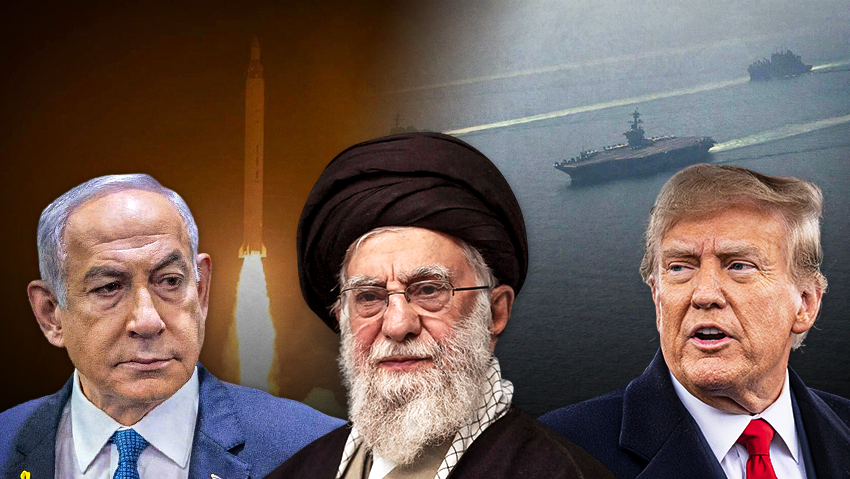
Shortly afterward, Trump was asked about a deadline for Iran and replied, “I would think that would be enough time — 10, 15 days, pretty much maximum.”
'A beautiful armada' vs. diplomacy
But the American president’s remarks were received with considerable skepticism across the Middle East. In fact, the contrast between his words and the actions the United States — under his leadership — has taken could hardly be sharper.
On one side were smiles and handshakes at the inaugural session of the Board of Peace in Washington, where Trump announced billions of dollars in funding for Gaza’s reconstruction, praised the prime minister of Qatar and declared: “There's nothing more important than peace.”
On the other side was the largest U.S. military buildup seen in the region in years — the “beautiful armada” Trump dispatched, including hundreds of fighter jets, more than 10 warships, submarines and aircraft carriers, already positioned for offensive and defensive operations in the Middle East and the Persian Gulf.
White House press secretary: 'Many reasons for a strike against Iran'
(Video: White House)
Remarks made just a day earlier by White House press secretary Karoline Leavitt reflected the same dual message, even as she qualified her comments. “There are many reasons and arguments that one could make for a strike against Iran,” she said, adding that “diplomacy is always [Trump's] first option.”
The planned visit next weekend by U.S. Secretary of State Marco Rubio to Israel for talks with Prime Minister Benjamin Netanyahu was also seen as a signal that strikes were not necessarily imminent. According to a State Department official, the purpose of the meeting is to update Netanyahu on U.S. negotiations with Iran, though that does not rule out military action beforehand.
In June of last year, during the 12-day war between Iran and Israel, the United States joined strikes on Iran in the midst of ongoing talks and while awaiting Iranian responses, much as it is now.
In effect, Trump’s strategy in recent days appears to be one of extremes. At one end, he is offering Tehran a path to avoid powerful strikes if it agrees to his conditions for a deal. At the other, he is signaling the possibility of war, with all tools and full force.
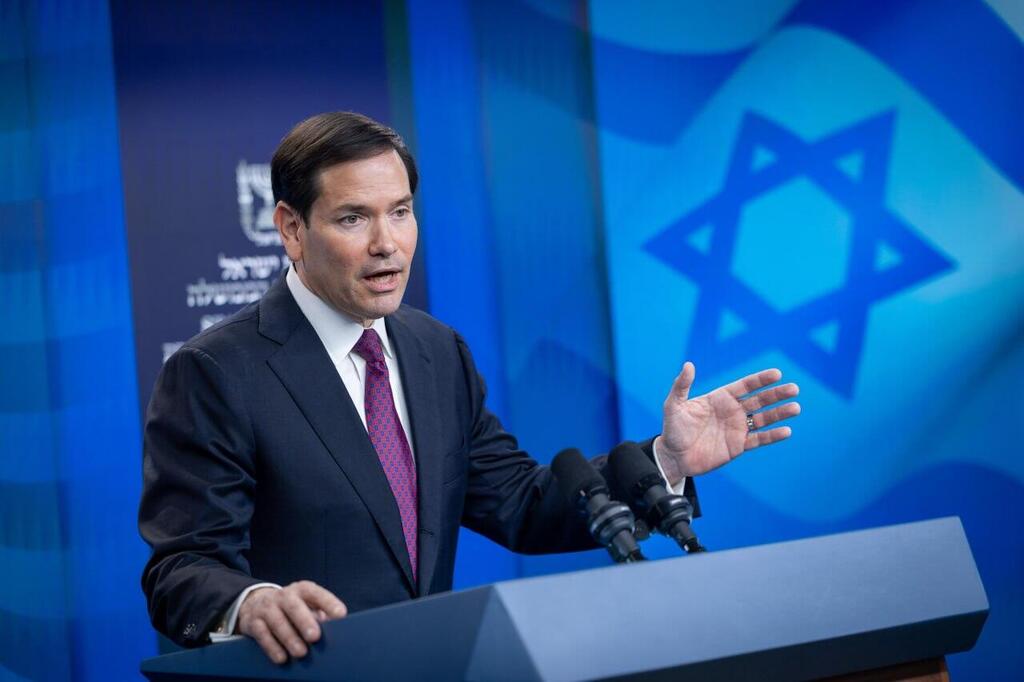
US Secretary of State Marco Rubio
(Photo: Chaim Goldberg/Flash90)
“He is investing a great deal of time in thinking this through,” officials said, even as warnings circulated that the “window of opportunity may be closing.”
In the Middle East, winds of war still blow
Meanwhile, Israel is not waiting for Iran’s response in the negotiations. Despite concerns about miscalculation — reportedly a factor in postponing a meeting of the Security Cabinet — officials are preparing for a scenario of direct confrontation that would include missile launches from Iran toward Israeli territory.
In recent restricted discussions led by Prime Minister Benjamin Netanyahu, the working assumption has been that Iran would fire missiles at Israel even if the IDF does not participate in any U.S. strike. As a result, emergency services and the Home Front Command have been instructed to prepare for war. Various security agencies have declared their highest level of defensive alert, and the defense establishment is clearly on edge.
Netanyahu said Thursday that “alongside all the tremendous achievements, it is important to remember that the Middle East is at a crossroads. The extremists refuse to give up and are reorganizing to challenge us. We are prepared and alert to defend ourselves against any challenge, and we are operating in close coordination with our ally, the United States.”
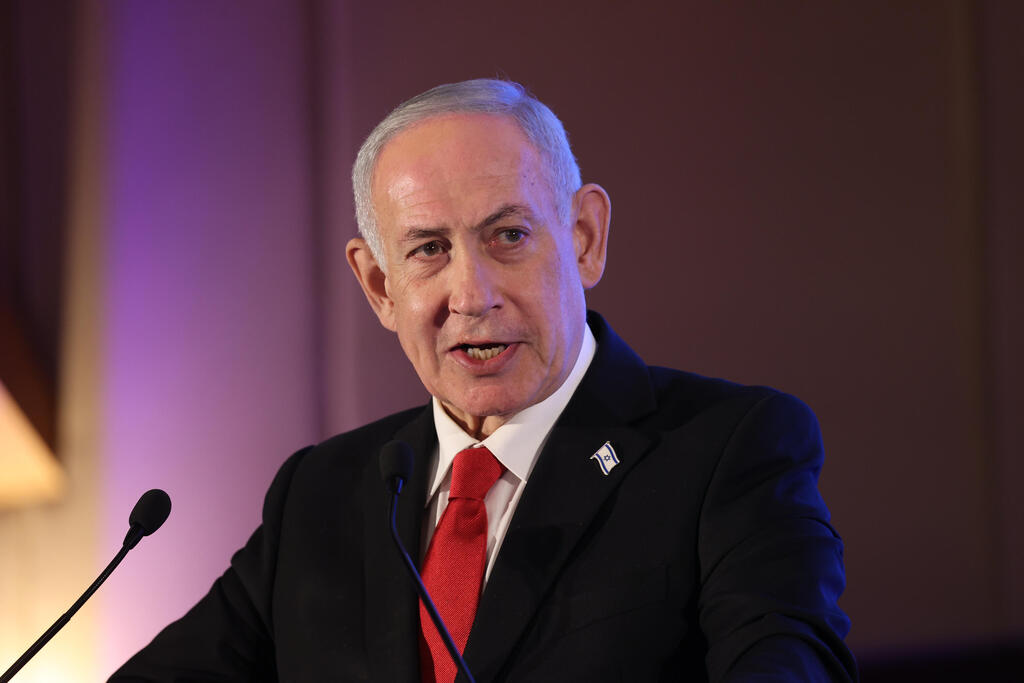
Prime Minister Benjamin Netanyahu
(Photo: Alex Kolomoisky)
Regarding the U.S.-Iran talks, he added: “I clarified to my friend Trump the principles that, in Israel’s view, must guide the negotiations with Iran. We are prepared for any scenario. If the ayatollahs attack, they will experience a response they cannot even imagine.”
Even before cooling messages emerged from U.S. officials, Israeli assessments Wednesday were that a decisive moment was approaching, with timelines shrinking to a matter of days. Two Israeli officials told CNN that Israel had raised its level of alert and accelerated military preparations amid “growing indications” of a possible joint U.S.-Israeli strike on Iran in the coming days.
According to one military source cited, Israel has sped up both its operational and defensive planning. If approved by Trump, the anticipated campaign “would go beyond the 12-day war and include coordinated strikes by the United States and Israel,” one source said.
In Iran, meanwhile, officials appeared unmoved by efforts to dial down tensions. Despite the massive U.S. naval and air forces positioned in the region, Supreme Leader Ali Khamenei threatened to sink American aircraft carriers. At the same time, Iran has reinforced defenses around key regime facilities and is conducting military exercises.
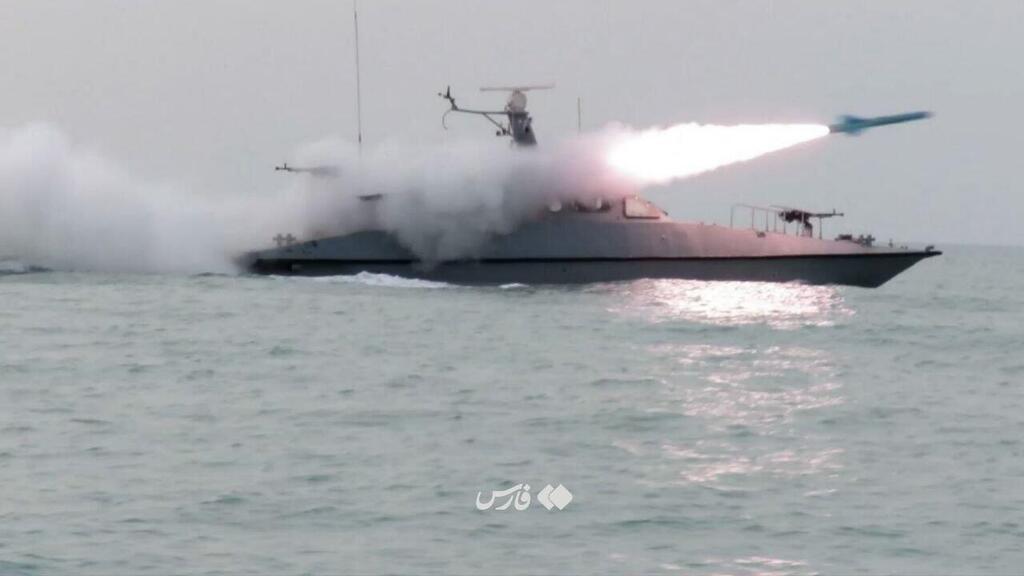
An Islamic Revolutionary Gaurd Corps naval drill in the Strait of Hormuz
According to assessments, Yemen’s Houthi rebels are expected to join the fighting immediately, launching missiles and drones toward Israel. There is also a credible scenario in which Hezbollah would not remain on the sidelines and, unlike during the 12-day war, would contribute to the confrontation this time.
The targets inside Iran
Between Washington’s cooling rhetoric and the winds of war blowing across the Middle East, President Trump appears to believe that the threat of military pressure could shift Iran’s defiant negotiating stance. If not, operational plans for large-scale strikes are likely already in place, with Israel and the United States closely coordinated. Drawing lessons from the 12-day war, senior officers from both countries reportedly spent weeks reviewing maps, aerial imagery and intelligence together.
The first and most urgent objective would likely be to cripple Iran’s air defense systems and establish air superiority — for Israeli forces and especially for U.S. aircraft. Another immediate target would be the ayatollah regime’s ballistic missile arsenal. Israel would prioritize destroying long-range missiles that threaten its territory, while the United States would focus on medium- and short-range missiles capable of targeting U.S. forces in the Gulf and regional allies. Washington would also almost certainly seek to dismantle Iran’s drone network, which could inflict damage on American assets.
Another key objective would be the naval forces of the Islamic Revolutionary Guard Corps, which pose a threat to U.S. ships. Neutralizing that fleet would be essential if Washington aims to eliminate Iran’s ability to disrupt or close the Strait of Hormuz.
Israel’s goal would be to focus on defending against Iran and its proxies while preparing for potential action against Hezbollah in Lebanon and the Houthis in Yemen. Israeli planning is aimed at removing the missile threat once and for all.
It remains an open question whether Israel or the United States would use a strike to inflict further damage on Iran’s nuclear facilities. Another possibility is that one or both would attempt to target Iran’s so-called “missile cities,” underground tunnel complexes used to store and launch ballistic missiles.
Missile defense is another critical factor. Israel and the United States are likely coordinating closely on air defense and efforts to intercept ballistic missiles Iran may launch toward regional targets and Israel. One of Israel’s requests to Washington has been to bolster air defense systems.
Unlike the 12-day war, this time additional countries may assist Israel in intercepting missiles. In contrast to last year’s conflict, which Israel initiated, a broader confrontation could create incentives for neighboring states and European countries to participate in missile defense efforts.