

Internet connectivity in Iran began gradually returning on Tuesday afternoon after 88 days during which the country was almost completely disconnected from the global network at the decision of the mullah regime.
The restoration came after Iranian President Masoud Pezeshkian said on Monday that he had ordered internet access to be returned to citizens.
Gallery
Internet connectivity in Iran began gradually returning
(Photo: Alexander NEMENOV / POOL / AFP, Flash 90, Shutterstock)
Monitoring organization NetBlocks reported that by the afternoon connectivity had reached 34% of normal levels, but by around 9 p.m. Israel time, it had climbed to 86%.
The Iranian regime initially cut internet access on January 8 during a wave of public protests against it, aiming to prevent opponents from coordinating demonstrations online. After suppressing the unrest with severe violence that Western estimates say killed tens of thousands, it restored access toward the end of January, though with new and strict restrictions.
Barely a month later, on February 28, at the start of Operation Roaring Lion in which Israel and the United States attacked Iran, the regime again severed internet access, citing concerns over espionage, surveillance and cyberattacks. Although a ceasefire was declared on April 8, Iran remained almost entirely offline for the following month and a half, amid growing public pressure to restore access.
According to NetBlocks, Iran was disconnected from the internet for a total of 2,093 hours, the longest recorded shutdown of any country in history, aside from North Korea, an isolated and impoverished dictatorship that has largely chosen not to connect to the World Wide Web.
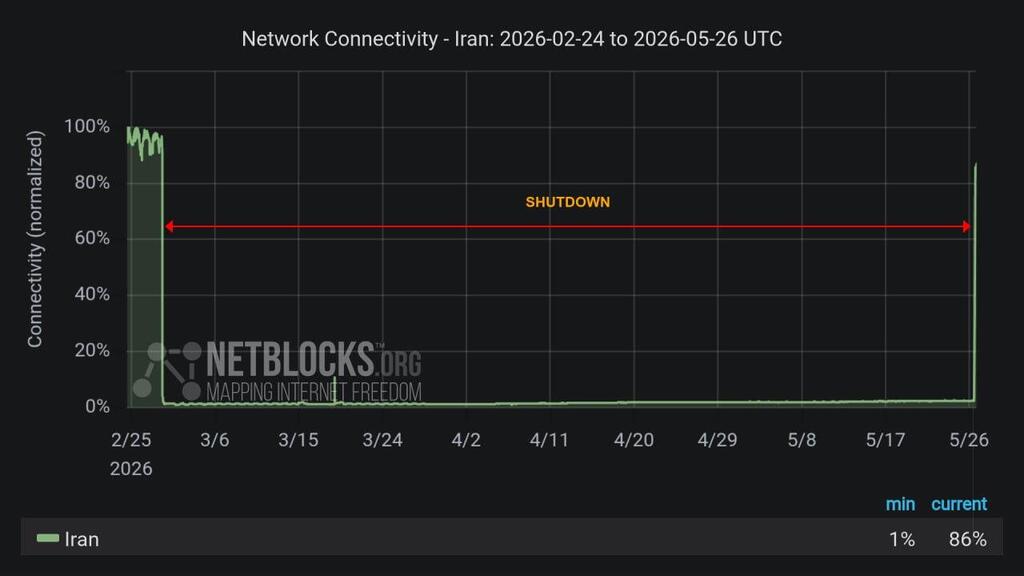
Netblocks reported that by around 9 p.m. Israel time connectivity in Iran had climbed to 86%
(Illustration: NetBlocks)
The prolonged blackout allowed the mullah regime greater control over its citizens, but came at a high economic cost. The lack of access severely damaged the ability of online businesses to conduct transactions, advertise and sell their goods both domestically and abroad.
Estimates suggest the “internet curfew” costs the Iranian economy between $30 million and $40 million per day. Some estimates indicate that around 5 million jobs in Iran depend on internet access, raising fears of a sharp rise in unemployment and widespread business closures.
In response, some Iranians tried to connect to the global internet using VPN services that mask their location or to access satellite internet services such as Starlink by Elon Musk. However, many avoided doing so, as the use of such services in Iran can lead to arrest by the authorities. Instead, citizens were limited to the national intranet, an internal network that allows access only to local messaging apps and banking services, but is not sufficient for full economic activity, which is already strained under heavy international sanctions.
The Iranian regime denied that the shutdown caused job losses, claiming that online businesses marketing their goods on Instagram, for example, simply shifted to local messaging services such as Rubika. However, figures in the e-commerce sector argued that audiences on such platforms are far smaller and cannot compensate for the loss of access to apps like Instagram, WhatsApp and Telegram or Google services.
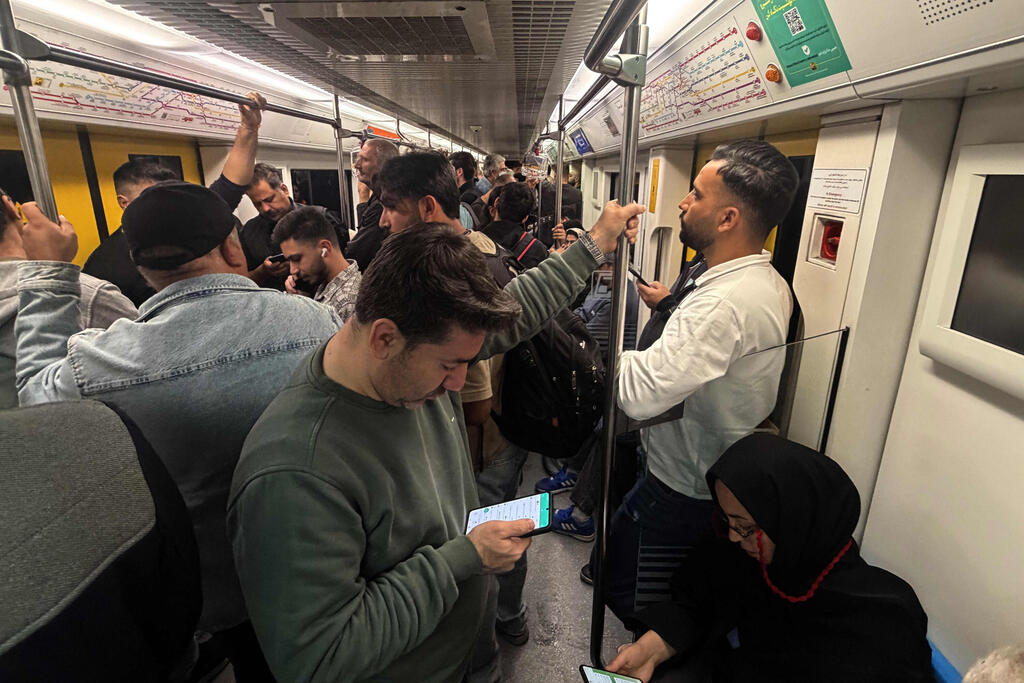
Some users said they regained access to their Gmail accounts after a long wait
(Photo: ATTA KENARE / AFP)
Early signs of a partial return of internet access were detected on Tuesday, around 3:30 p.m. Tehran time (3 p.m. Israel time). An hour later, NetBlocks and monitoring organization Kentik reported rising levels of connectivity. Shortly afterward, Iranian Vice President Mohammad Reza Aref posted on X: “The first step toward free and regulated access to cyberspace has been taken.”
The New York Times also reported that Iranians who contacted the paper via social media and phone said they were once again able to access the internet. Some users said they regained access to their Gmail accounts after a long wait. One content creator in Tehran, whose livelihood depends on internet access, told the BBC that he had finally managed to connect via his home WiFi: “The main point is, some of my income will come back.”
NetBlocks told the BBC it is still unclear how long it will take for full connectivity to be restored, saying the process could take weeks. The organization also noted that past experience shows that each time Iran disconnects its citizens from the internet, the restoration comes with even tighter restrictions.