

The unprecedented strike triggered nationwide sirens across Israel, ballistic missile launches from Iran, reported attacks on American bases in the Gulf, partial airspace closures across the region, mass Israeli reserve mobilization and warnings from Tehran of a “crushing” retaliation.
American refueling aircraft in Israeli skies
(Video: Kobi Konaks)


Strikes in Tehran
Tehran
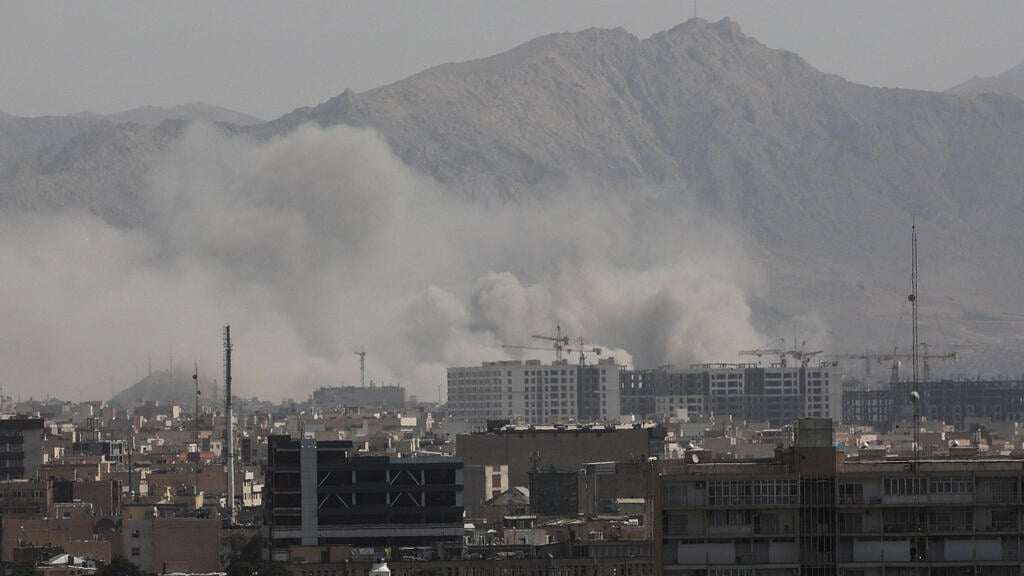
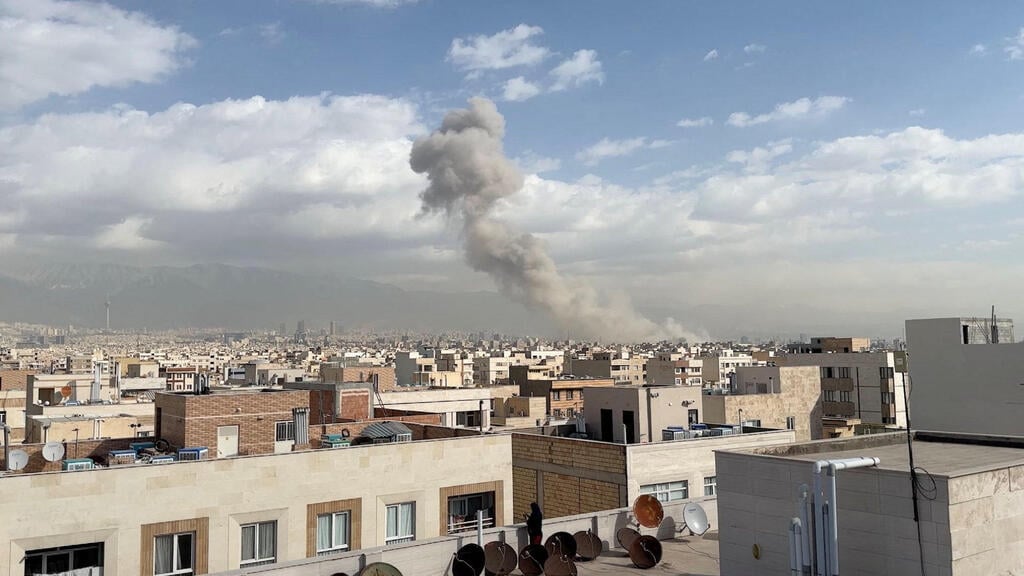
Tehran
(Photo: WANA (West Asia News Agency)/Handout via REUTERS)
Israeli and American officials said the operation was designed to neutralize what they described as imminent threats posed by Iran’s missile arsenal and nuclear program. Iranian officials accused both countries of launching a war whose consequences would extend beyond their control.
The opening strike
According to senior Israeli defense officials cited by The New York Times, the assault began at approximately 8:10 a.m. local time.
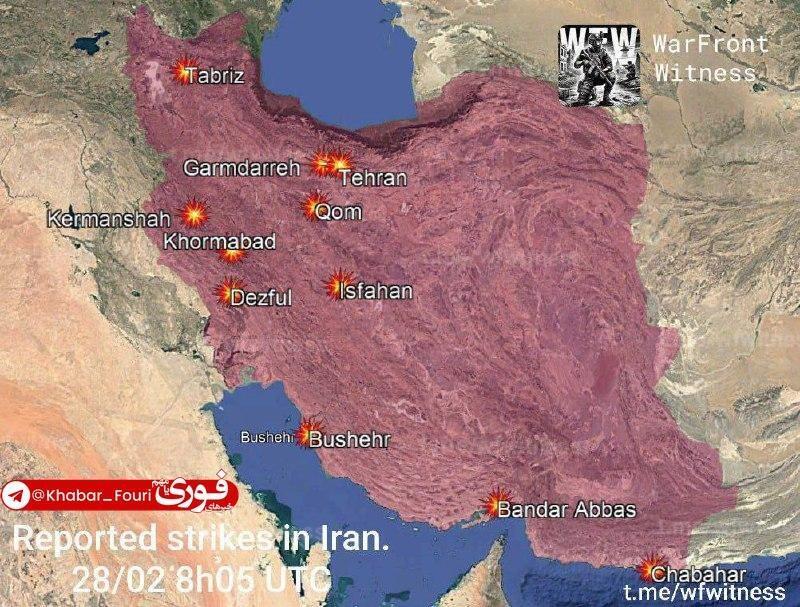
Opening strike
The initial wave targeted a broad spectrum of Iranian military and regime assets, including:
- Senior regime figures
- Islamic Revolutionary Guard Corps facilities
- Ballistic missile storage depots and launch infrastructure
- Air defense systems
- Command-and-control and intelligence installations
Explosions were reported in Tehran shortly after the operation began. Blasts were also reported in Tabriz and later in Isfahan, Kermanshah, Qom and Karaj. Iranian state-linked outlets reported damage in multiple districts of the capital.
Iranian media claimed that among the sites struck in Tehran were the Intelligence Ministry, the Defense Ministry, the office of Supreme Leader Ayatollah Ali Khamenei on Pasteur Street, the Atomic Energy Organization of Iran and the Parchin military complex.
Reuters, citing official sources, reported that Khamenei was not present in Tehran at the time of the strike and had been relocated to a secure site.
A senior security official described the campaign as “a synchronized, multi-domain assault targeting regime infrastructure.”
“Everyone is striking,” the official said. “The target is regime infrastructure.”
Nationwide emergency declared in Israel
Within minutes of the first confirmed strikes, Defense Minister Israel Katz declared that Israel had launched a “preemptive action” intended to remove threats against the State of Israel.
Katz signed an order declaring a special nationwide state of emergency under the Civil Defense Law. The declaration imposed a “special emergency situation” across the entire home front.
The Home Front Command activated nationwide sirens as a precautionary measure and pushed early warning alerts to mobile phones. Civilians were instructed to remain near protected spaces and to prepare for potential missile retaliation.
The Israel Defense Forces clarified that at that stage there was no requirement to remain continuously inside shelters, but emphasized that residents should stay close to protected areas.
Strict secrecy and deception
Military preparations had been conducted under deep secrecy for weeks.
Over the past month, IDF Chief of Staff Lt. Gen. Eyal Zamir and Air Force Commander Maj. Gen. Tomer Bar held tightly compartmentalized briefings with operational personnel.
As part of what officials later described as a deception effort, Zamir attended a routine public dinner Friday evening, projecting normalcy hours before the assault.
Officials said the timing of the Saturday morning strike was deliberately chosen to mislead Iranian forces and preserve operational surprise.
US joins the operation
Shortly after Israel’s assault began, US forces joined the campaign.
A US official told The New York Times that dozens of American strikes were conducted by attack aircraft operating from Middle Eastern bases and from one or more aircraft carriers.
Israeli analysis indicated that initial US efforts focused on southwestern Iran, including:
- IRGC naval assets
- Iranian naval infrastructure
- Bandar Abbas port
The objective was to prevent any Iranian attempt to disrupt or close the Strait of Hormuz, a critical global energy chokepoint.
Later in the morning, the Pentagon confirmed the American codename for its portion of the campaign: “Epic Fury.”
Netanyahu addresses the nation
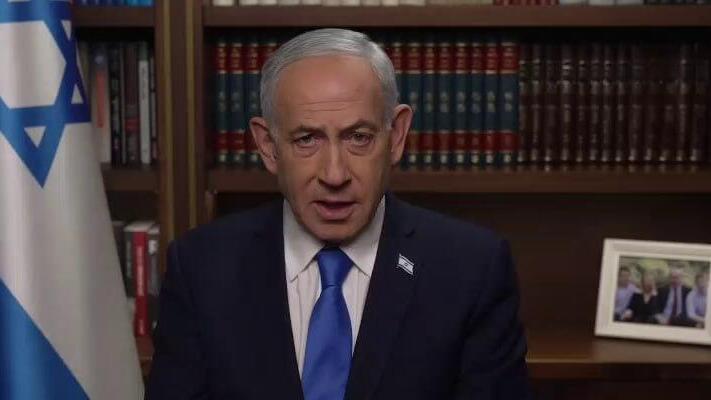
Prime Minister Benjamin Netanyahu confirmed the joint strike in a televised address.
“We will not sit idly by when the shadow of annihilation hovers over us,” Netanyahu said.
Prime Minister Benjamin Netanyahu
(Photo: GPO)
He described the operation as necessary to eliminate what he called an existential threat posed by Iran’s nuclear and missile capabilities.
“The campaign will continue as long as necessary,” he said. “Failure to act would result in a nuclear Iran immune to counterattack.”
Netanyahu thanked US President Donald Trump for full coordination and said the joint effort aimed to create conditions for the Iranian people to “take their fate into their own hands.”
Trump confirms “major combat operations”
President Donald Trump addressed Americans shortly afterward, confirming that the United States had begun “major combat operations” in Iran.
“Our objective is to defend the American people by eliminating imminent threats from the Iranian regime,” Trump said.
President Donald Trump addressed Americans
(Video: Truth Social)
He pledged the destruction of Iran’s missile capabilities and naval assets and vowed that Iran would never obtain nuclear weapons.
“It’s a very simple message,” Trump said. “They will never have a nuclear weapon.”
He warned members of the Revolutionary Guard Corps to lay down their weapons or “face certain death.”
Turning to the Iranian public, he declared, “The hour of your freedom is at hand.”
Iranian retaliation begins
Between 9:30 and 10:00 a.m., Iran’s Revolutionary Guards announced what they described as the “first wave” of retaliatory attacks against Israel.
Ballistic missiles and drones were launched toward Israeli territory.
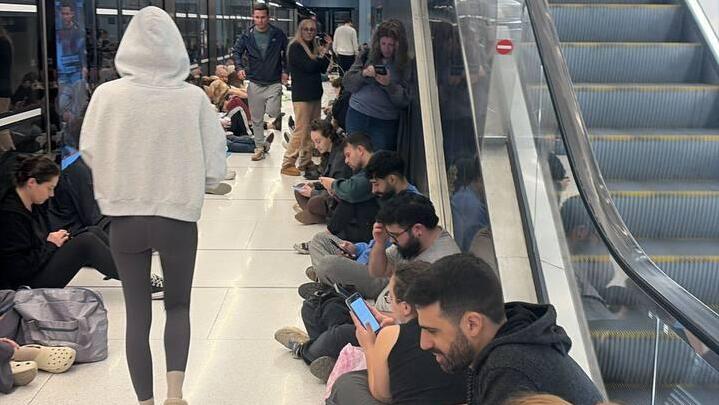
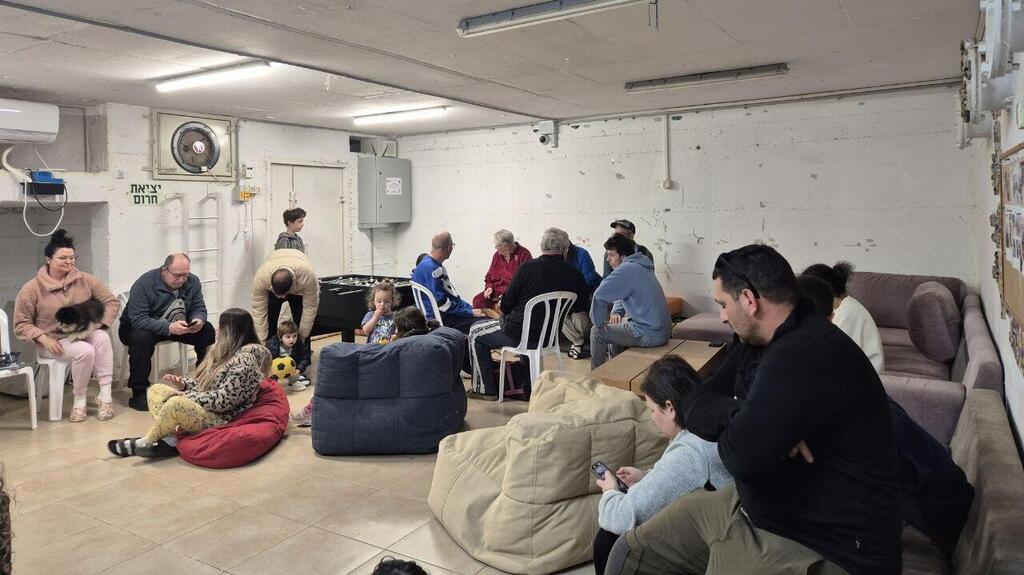
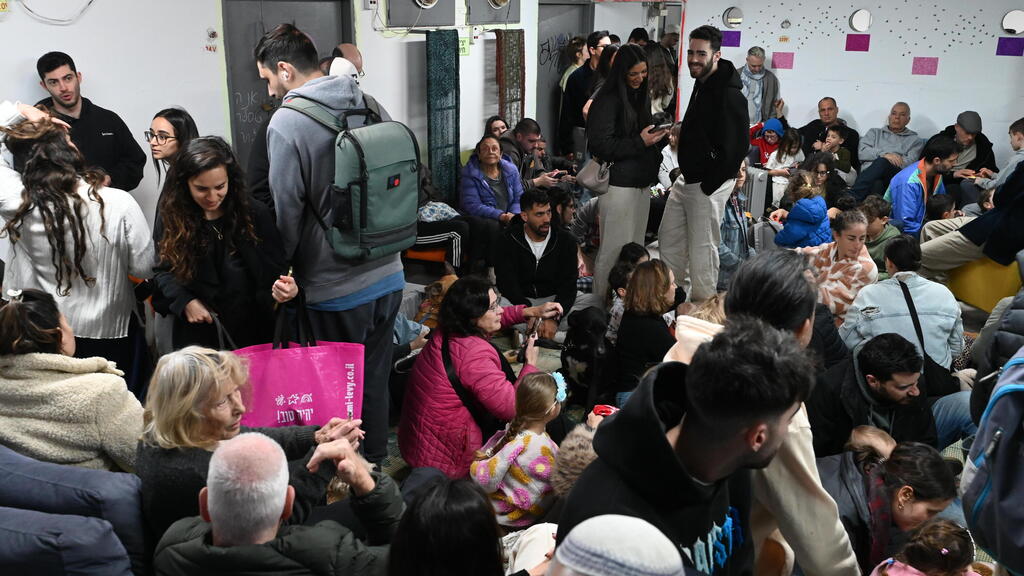
Sirens began sounding in northern Israel and rapidly expanded to central Israel, Jerusalem, southern Israel, the Negev, the Dead Sea region, Sharon, the Golan Heights, the Galilee and the Haifa area.
Israelis in shelters
Be'er Sheva
(Photo: Ilana Curiel)
(Photo: Yuval Chen)
Within minutes, sirens were sounding across nearly the entire country.
The IDF stated that air defense systems were identifying and intercepting threats but emphasized that protection is “not hermetic.” Civilians were instructed to remain in protected spaces until explicitly told otherwise.
Interceptions and reported hits
Between 10:00 and 11:30 a.m., interceptions were visible in multiple regions of Israel.
Reports included:
- Open-area hits in northern Israel
- A building was struck in Tirat Carmel, with no injuries reported
- Shrapnel incidents in Jerusalem and Beit Shemesh
- A possible strike near Tel Sheva
Damage from shrapnel across Israel
Kafr Manda
Magen David Adom reported no missile-related casualties. The agency said it treated several anxiety cases and minor injuries sustained while civilians were running to shelters.
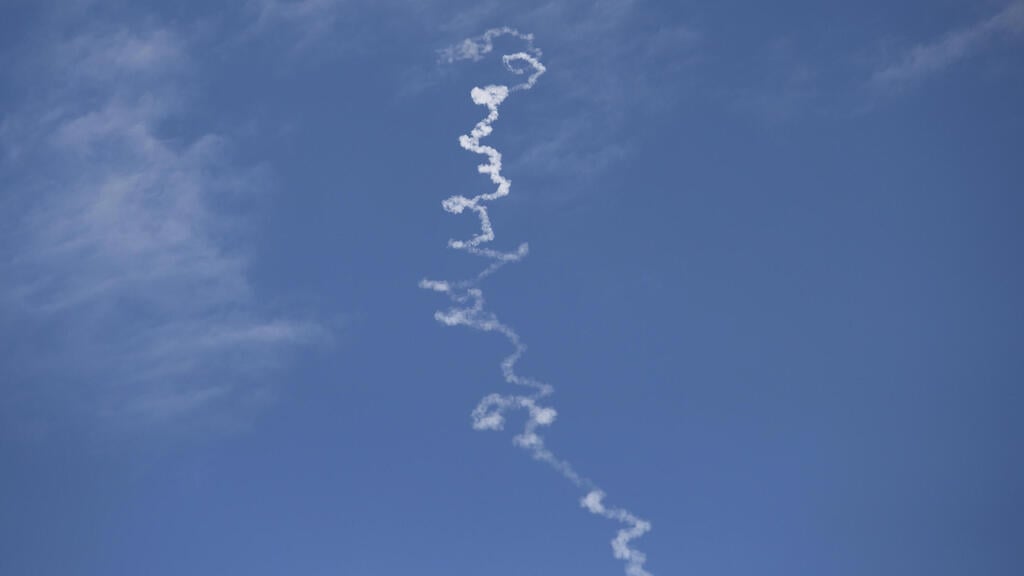
Interceptions
(Photo: Amir Levy/Getty Images)
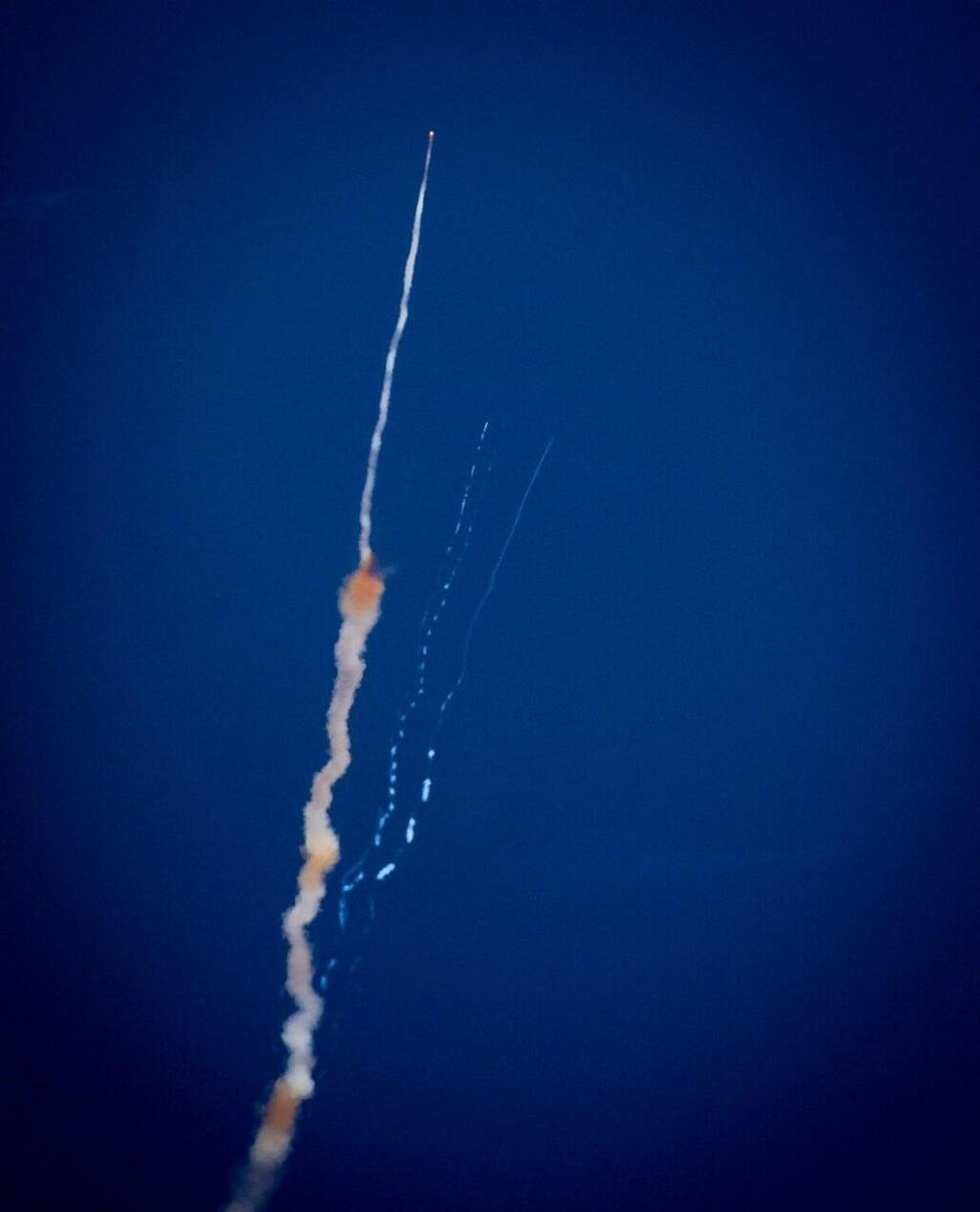
Haifa
(Photo: Gil Nechushtan)
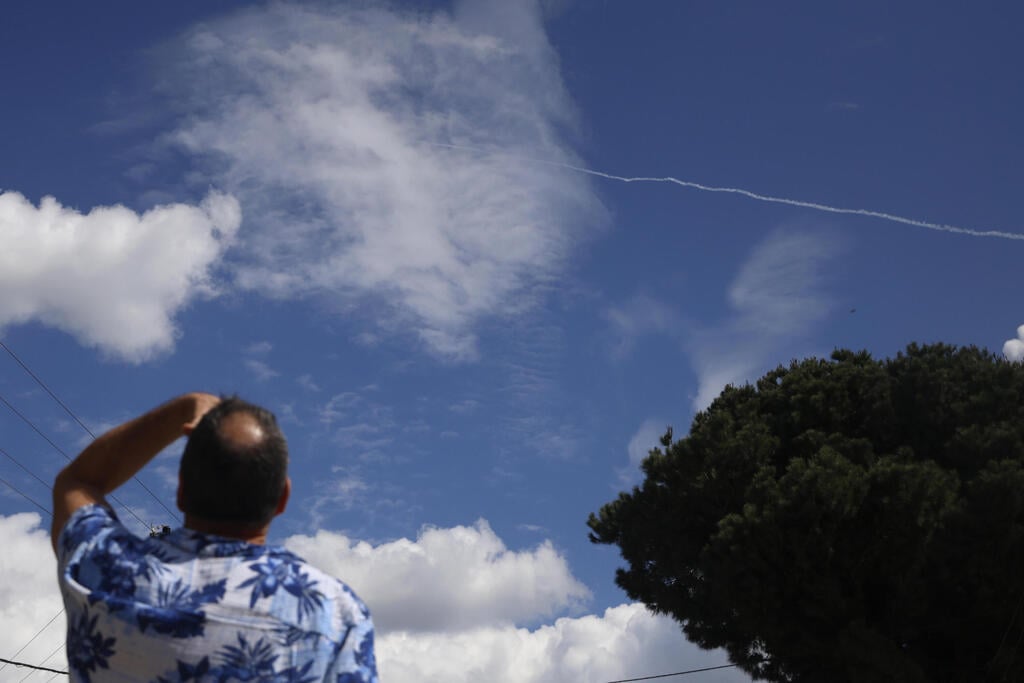
(Photo: Amir Levy/Getty Images)
Hezbollah targets struck in Lebanon
Earlier Saturday, the IDF confirmed strikes on Hezbollah launch positions and underground shafts in southern Lebanon.
According to the military, the sites were used to advance terror plots against Israel and constituted violations of understandings between Israel and Lebanon.
Qatar’s Al Araby TV reported more than 10 strikes in the al-Qatrani and Wadi Barghoz areas.
Officials said the Lebanese strikes were intended to blind Hezbollah detection systems that could have alerted Iran to Israeli air movements.
US bases targeted in Gulf
Iranian media reported ballistic missile attacks on four US bases:
- Al Udeid Air Base in Qatar
- Al Salem Air Base in Kuwait
- Al Dhafra Air Base in the United Arab Emirates
- A US facility in Bahrain
Smoke rises near US Navy base in Bahrain amid Iran conflagration
Smoke was reported rising from Bahrain’s Juffair district, home to the US Navy’s Fifth Fleet.
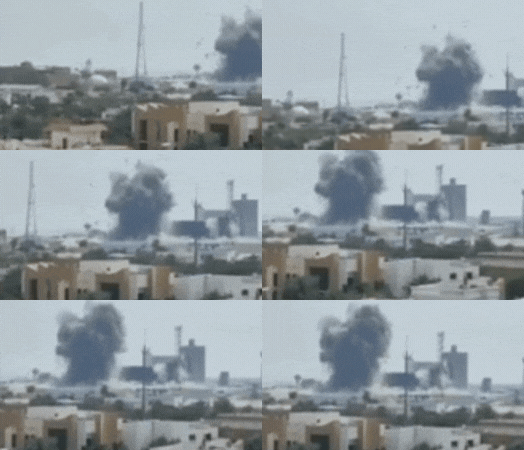
Bahrain’s Juffair district, home to the US Navy’s Fifth Fleet
Bahrain’s Interior Ministry activated missile alerts and instructed residents to remain in protected spaces.
Reuters reported that an explosion was heard in Abu Dhabi.
Abu Dhabi
The US Embassy in Qatar issued shelter-in-place guidance. The UAE partially closed its airspace.
Houthis threaten Red Sea shipping
Two officials from Yemen’s Iran-backed Houthi rebels told The Associated Press that the group would resume attacks on shipping in the Red Sea corridor.
Security officials warned of a potential multi-front escalation involving Hezbollah, Houthis, Iraqi Shiite militias and other Iranian proxies.
Domestic measures in Israel
Transportation Minister Miri Regev announced the closure of Israeli airspace.
Aircraft were evacuated from Ben Gurion Airport and Haifa Airport.
Israel Railways prepared special trains to evacuate passengers.
Hospitals nationwide shifted to emergency footing.
The Culture and Sports Ministry suspended all public events and non-essential activity.
Government ministries activated a unified underground command center.
Approximately 70,000 reservists were mobilized, primarily for border defense.
Supermarkets across the country reported panic buying.
Iranian warnings
Iranian media reported cyberattacks targeting news websites and ongoing explosions in multiple cities.
An Iranian official told Reuters that Tehran was preparing a “crushing” retaliation.
Ebrahim Azizi, head of Iran’s parliamentary security committee, wrote on social media: “We warned you. Now you have started down a path whose end is no longer in your control.”
The situation as it stands
As of late morning:
- Israeli and US strikes inside Iran continued
- Iranian missile launches toward Israel continued intermittently
- Sirens sounded repeatedly across northern and southern Israel
- US military assets in the Gulf remained on high alert
- Regional airspace closures persisted
- Officials said the campaign is expected to last several days.
- Security officials described it as a coordinated Israeli-American operation targeting regime infrastructure on a scale not seen before.
- “This is not a limited strike,” one official said. “It is a comprehensive campaign.”