

U.S. President Donald Trump said on Wednesday that Lebanon was not included in the two-week ceasefire he announced with Iran, signaling U.S. backing for Israel’s continued offensive against Hezbollah even as Washington tries to open a diplomatic track with Tehran.
Liz Landers of PBS wrote on X that after asking Trump about continued Israeli strikes in Lebanon, he replied, “Yeah, they were not included in the deal.”
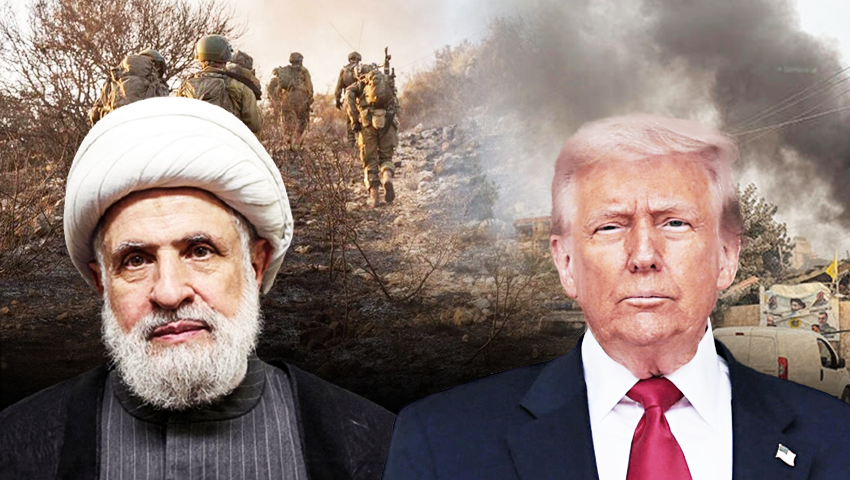
When asked why, and whether Lebanon should have been included, Trump said: “Because of Hezbollah. They were not included in the deal. That’ll get taken care of too. It’s alright.”
Asked whether he agreed with Israel continuing to strike there, Trump replied: “It’s part of the deal — everyone knows that. That’s a separate skirmish.”
Trump’s remarks came as Iran and its allies issued fresh warnings over the Lebanese front, signaling that continued Israeli attacks in Lebanon could trigger retaliation.
A security source told the Fars news agency that Iran was preparing deterrent measures against Israeli military positions after what it described as "Israel’s violation of the temporary ceasefire through attacks on Lebanon and Hezbollah."
Israeli Air Force fighter jets taking off for strikes on Hezbollah targets in Lebanon
(Video: IDF)


The semi-official agency later reported that the passage of oil tankers through the Strait of Hormuz was suspended following Israel's strikes in Lebanon, after two oil tankers were reportedly "allowed to pass safely" through the strategic waterway "with Tehran’s approval."
A senior Iranian official told Al Jazeera that Iran would punish Israel for what he called the "crime it committed in Lebanon" and for violating the ceasefire terms, saying the agreement covered the entire region. Iranian media also quoted a source as saying Tehran would withdraw from the ceasefire agreement if the attacks on Lebanon continued.
Majid Mousavi, commander of the Revolutionary Guards’ Aerospace Force, said: “The slightest mistake by the enemy will trigger a strong response. They tested us again today and saw that our fingers are on the trigger. We now face two weeks of vigilance on the ground, in diplomacy and in the street.”
Iran’s Tasnim news agency quoted a source as saying that “Tehran will withdraw from the ceasefire agreement if the attacks on Lebanon continue.”
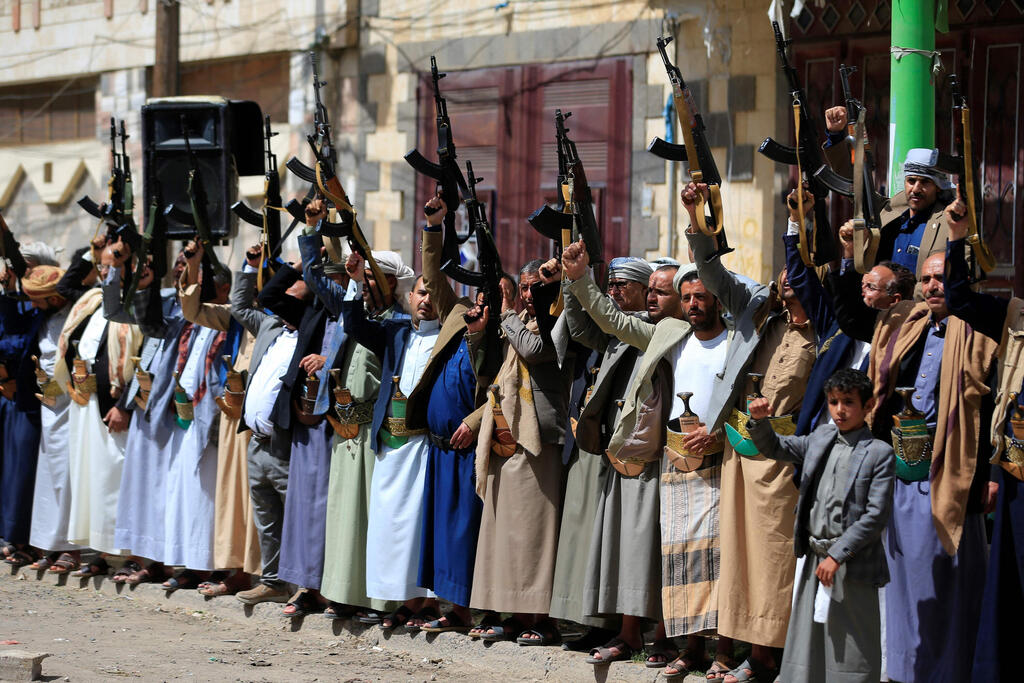
Houthi rebels in Sanaa, Yemen
(Photo: Mohammed HUWAIS / AFP)
A senior Houthi source told the Hezbollah-affiliated Lebanese network Al Mayadeen that “Yemen’s hand is still on the trigger because we understand that the agreements of the criminals are only ink on paper. Yemen stands with Lebanon, and Hezbollah will not be left alone in the field. The destruction of Lebanon and the attack on Hezbollah are unacceptable, and Yemen is ready for whatever stage comes next with the enemy.”
According to the source, “Loyalty to Hezbollah means standing by it in every battle, and Yemen sees every battle with the criminal entity as a battle for the entire Muslim world.”
A political-security source said the United States had coordinated the temporary ceasefire with Israel in advance, but that the arrangement did not require Israel to halt operations in Lebanon.
The source said the understanding was that Iran would reopen the Strait of Hormuz without receiving any of its prior demands up front, including a commitment to a final end to the war, compensation or relief from heavy sanctions.
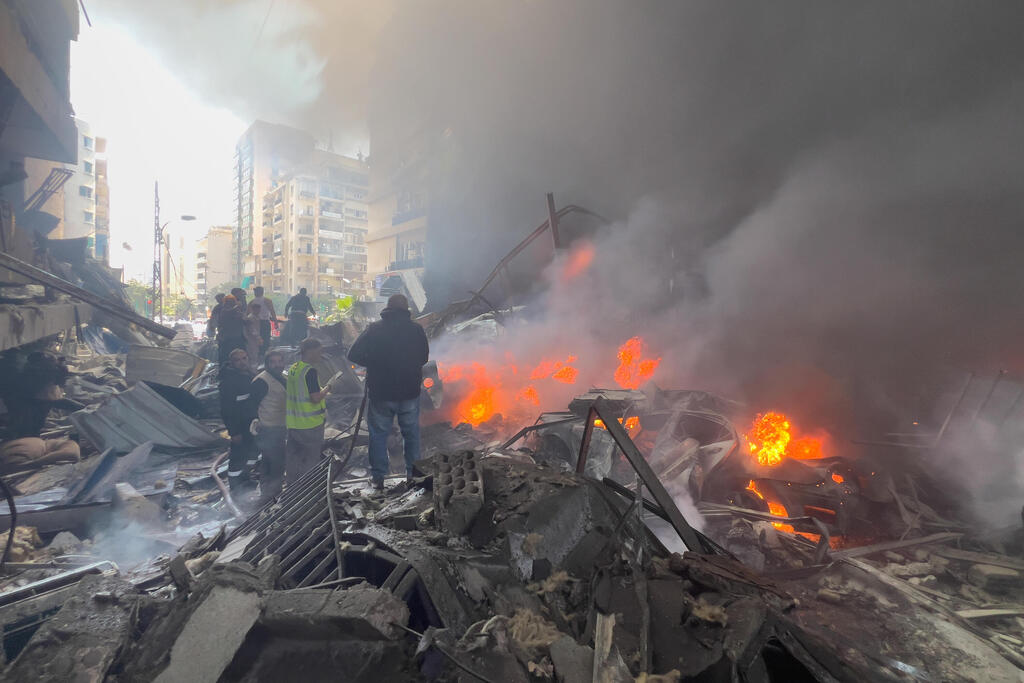
Aftermath of an Israeli airstrike on Beirut, Wednesday
(Photo: AP Photo/Hussein Malla)
According to the source, senior Trump administration officials also told Israel that in the negotiations expected over the next two weeks, Washington would insist on the removal of Iran’s nuclear material, an end to uranium enrichment and the elimination of the ballistic missile threat.
Israel has publicly taken the same position. Prime Minister Benjamin Netanyahu’s office said Israel supports Trump’s decision to suspend attacks on Iran for two weeks, provided Iran immediately reopens the Strait of Hormuz and halts attacks on the United States, Israel and countries in the region, but added that the temporary ceasefire “does not include Lebanon.”
Meanwhile, Israel pressed ahead with a major new offensive in Lebanon. The IDF announced a new operation under the name “Eternal Darkness,” opening with strikes on 100 targets across Lebanon within 10 minutes using roughly 160 munitions.
The army described it as an especially significant blow and said the attacks were the broadest of the war against Hezbollah.
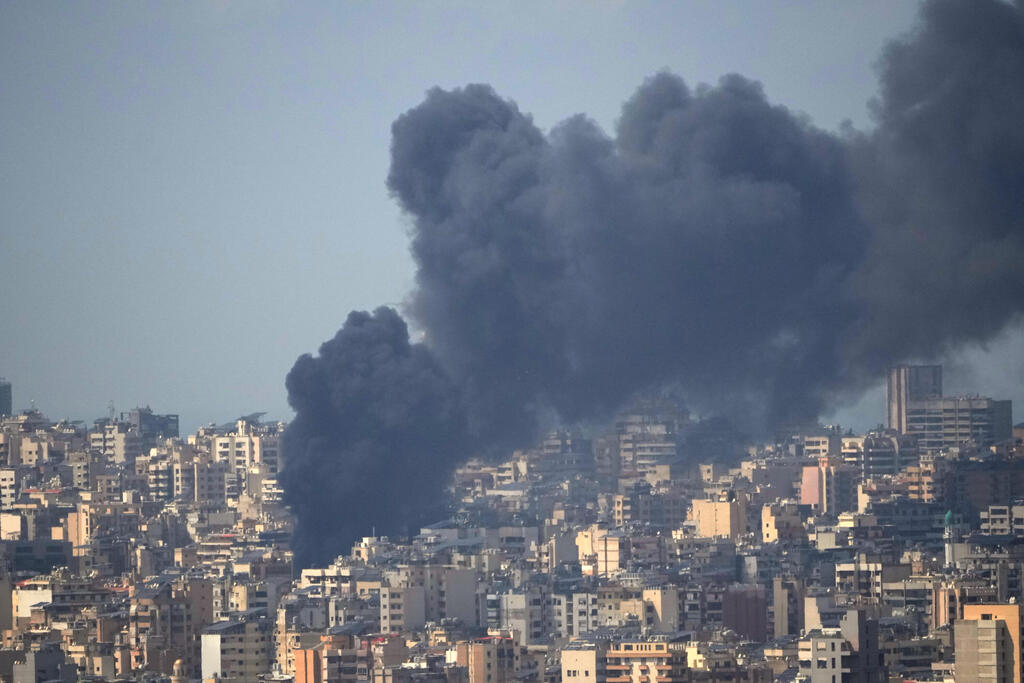
Smoke rises over Beirut following an Israeli airstrike, Wednesday
(Photo: AP Photo/Hassan Ammar)
According to the military, the operation targeted Hezbollah operatives from field level to senior ranks and was aimed at command-and-control centers in southern Lebanon, Beirut and the Bekaa Valley.
Defense Minister Israel Katz said hundreds of Hezbollah operatives were hit in what he called the largest concentrated blow the group had suffered since the pager operation. He praised Netanyahu for insisting on separating the Iranian and Lebanese theaters and warned that Hezbollah leader Naim Qassem would also face consequences.
IDF Chief of Staff Lt. Gen. Eyal Zamir, who oversaw the operation from the military headquarters in Tel Aviv, said Israel would continue striking Hezbollah without pause and would not compromise on the security of residents in the north.
The Security Cabinet is expected to convene on Wednesday evening against the backdrop of the ceasefire with Iran. Ministers were informed of the meeting in a notice that did not specify a time.
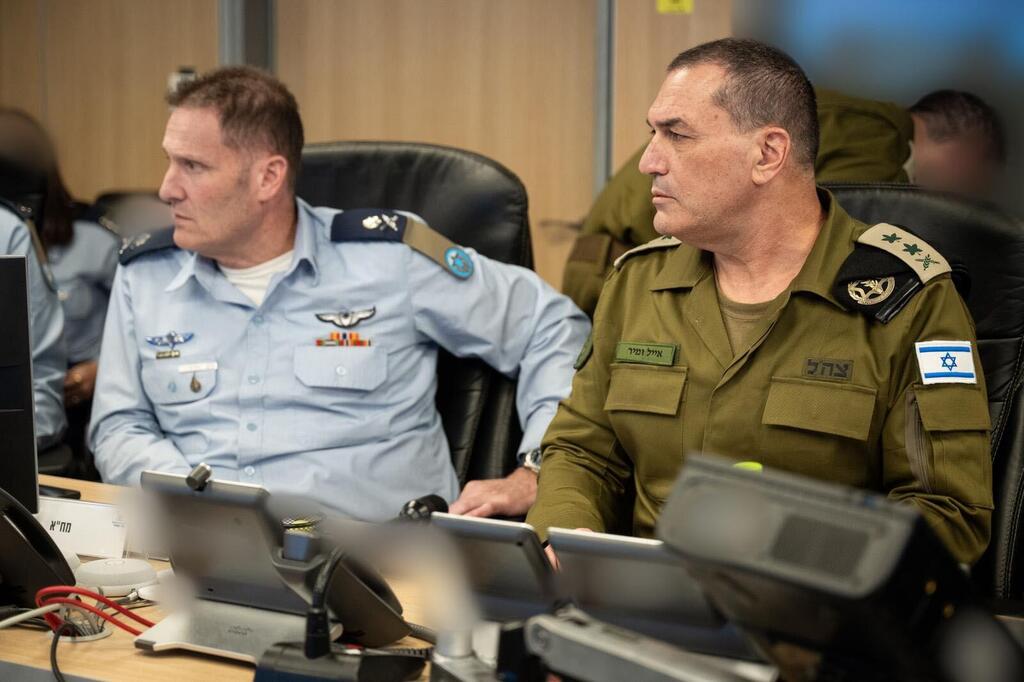
IDF Chief of Staff Lt. Gen. Eyal Zamir (right) commands the strikes in Lebanon from the military bunker in Tel Aviv
(Photo: IDF)
The Lebanese Red Cross told Qatar’s Al Araby channel that more than 300 people were killed or wounded in Beirut and the southern suburbs in the Israeli strikes. According to an initial toll, about 80 people were killed and another 200 wounded from the Israeli strikes in Beirut alone. “Rescue operations are still underway,” the organization said.
Lebanese hospitals issued urgent calls for blood donations, while Hezbollah-affiliated media described the wave of attacks as a "massacre."
An Israeli security source said that Qassem was not a target in the broad wave of strikes in Lebanon.
Meanwhile, Lebanese reports said Parliament Speaker Nabih Berri, who has previously been reported to receive large sums of money regularly from Iran, was “safe and sound after the strike near his residence in Ayn al-Tineh."
In a mourning statement, the Hezbollah terror group announced the death of Sheikh Sadiq al-Nabulsi in Israeli strikes on Sidon in southern Lebanon. Al-Nabulsi was the brother of Mohammed Afif, Hezbollah’s spokesman who was killed in 2024.