

The Health Ministry on Tuesday released findings from review teams that examined the performance of the health care system during the war that began with the Hamas-led attack of Oct. 7, 2023, including the subsequent conflict with Iran last summer, outlining reforms aimed at improving readiness for future emergencies.
Among the recommendations are the creation of a central coordinating body to manage and direct patients to rehabilitation based on bed availability and place of residence, earlier preventive treatment for post-traumatic stress, clearer procedures for coordinating patient flow among hospitals and formal guidelines for the medical treatment of terrorists.
The ministry said it has already begun implementing many of the lessons learned, with a significant portion already in place. During 2025, it conducted 47 preparedness and infrastructure inspections at hospitals and community facilities, along with 17 drills, including surprise exercises.
Health Ministry Director General Moshe Bar Siman Tov said there is no contradiction between a strong system and one that conducts in-depth reviews of its performance.
“A good and excellent system is not a perfect system,” he said at a briefing. “It is a system that knows how to identify where it needs to improve.”
Six review teams began work in March 2025, focusing on core areas of wartime activity, including command and control, logistics, rehabilitation, evacuation of wounded soldiers, primary community care for evacuees and mental health. Publication of the findings was delayed in part due to operational developments during the conflict with Iran.
The briefing came amid continued regional tension and public concern about further escalation. Bar Siman Tov said alert levels have not been raised and hospitals have not been evacuated or moved underground, but readiness has been increased to allow faster transitions if needed.
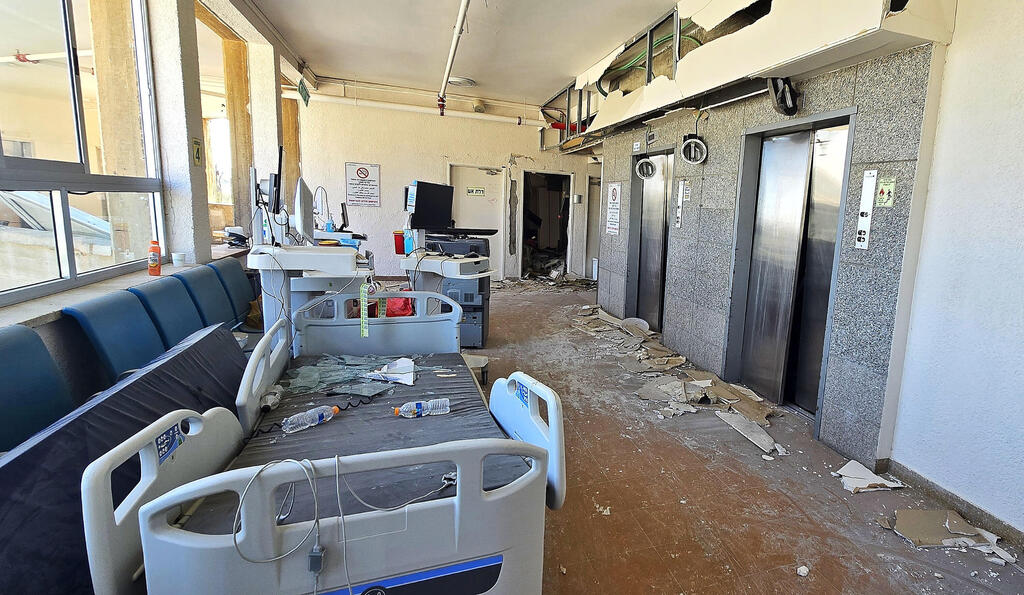
Hospital fortification was cited as a major focus, especially following an Iranian missile strike that damaged Soroka Medical Center. Over the past two years, 3,642 protected hospital beds have been added. More than 100 million shekels are expected to be allocated in 2026 for additional fortification projects, including new protected emergency departments at Shamir Medical Center and Hillel Yaffe Medical Center.
The ministry expressed particular concern over protection at geriatric facilities, noting the sector is largely private and includes a far greater number of inpatient beds.
One review team examined coordination of helicopter evacuations and hospital destinations for wounded soldiers, an issue that at times sparked disputes among hospitals. Prof. Arnon Afek, who coordinated the review teams, said the system faced unprecedented numbers of severely wounded patients who survived due to advances in medicine.
“There are real differences in hospitals’ ability to treat complex trauma,” Afek said, adding that the issue will continue to be studied.
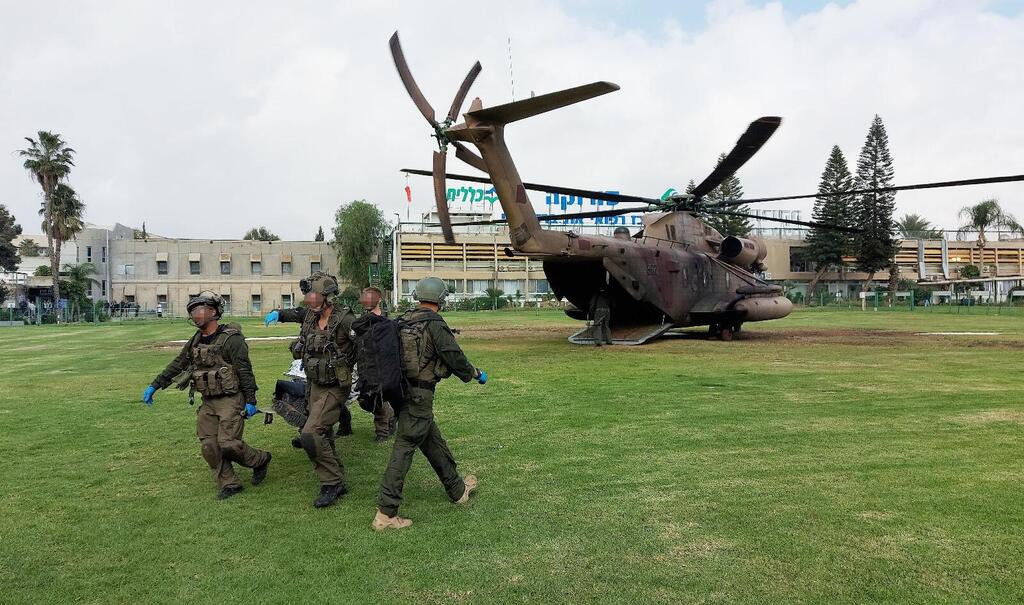
מסוק עם פצועים נוחת בסורוקה
(דוברות סורוקה)
In logistics, the teams recommended secured contracts with essential suppliers, airlines and maritime transport companies, increasing emergency stockpiles to cover two months of operations and setting aside protected emergency budgets to enable rapid decision-making.
The report also addressed the sensitive issue of medical care for terrorists and Gazans treated in Israeli facilities. Early in the war, the ministry established a separate field hospital at Sde Teiman, with patients transferred to general hospitals only when full treatment could not be provided there. The move followed unrest by civilians at one central hospital.
Afek said the system must operate according to international law and conventions to which Israel is a signatory, regardless of public anger. Bar Siman Tov said primary responsibility for providing care to detained terrorists lies with the Israel Prison Service, but the Health Ministry stepped in to fill a gap during the war. The review team recommended formal procedures so separate facilities can be activated quickly in the future.
Mental health services were another major focus. The Oct. 7 attack and subsequent fighting underscored longstanding shortages in the public mental health system. A national program budgeted at about 1.4 billion shekels expanded services nationwide. In 2025, some 435,000 patients were treated at health fund mental health clinics, a 30% increase since 2022. Therapeutic encounters rose 42% over the same period.
The ministry cited new wage agreements with psychologists and psychiatrists, leading to the recruitment of more than 700 new therapists, as well as sharp increases in trainees in psychology and psychiatry.
“These are unprecedented figures for a system that is growing,” said Dr. Gilad Bodenheimer, head of the Mental Health Division. He said concerns remain about a possible surge in demand after the war, though experience following the COVID-19 pandemic did not point to an extreme rise in suicides.
From the start of the war through July 2025, about 1,600 soldiers and victims of terror attacks were hospitalized for rehabilitation. The review teams recommended establishing a coordinating body to manage rehabilitation placements, beginning preventive PTSD treatment as early as possible and strengthening social work services to support patients and families.