

President Donald Trump has been presented in recent days with an expanded range of potential military options against Iran, according to several senior U.S. officials cited by The New York Times. The options are intended to further damage Iran’s nuclear and missile facilities or weaken the position of Iran’s supreme leader, Ayatollah Ali Khamenei.
Trump confirmed overnight that he had communicated with Iranian officials, delivering a message demanding that Iran refrain from developing nuclear weapons and halt the killing of protesters.
Trump confirmed that he spoke with Iran
(Photo: The White House)


According to the officials, the Pentagon’s proposals go beyond the military options Trump considered about two weeks ago, when his administration was focused on fulfilling his pledge to stop the killing of demonstrators by Iranian security forces and affiliated militias. The current list of options includes the possibility of U.S. forces carrying out raids on targets inside Iran.
The officials emphasized that Trump has not authorized any military action and has not selected from among the options presented, despite the significant U.S. military buildup in the Middle East, including the deployment of the aircraft carrier USS Abraham Lincoln. Trump remains open to a diplomatic resolution, and some officials acknowledged that the threat of military action is intended to pressure Iran into negotiations.
In recent days, Trump has also weighed whether regime change in Iran is a feasible objective. During the protests in Iran, his administration considered strikes against Iran’s nuclear program as well as against more symbolic targets, such as the headquarters of militias blamed for much of the violent suppression of demonstrations. Trump later shifted course and ruled out military action after Iranian authorities announced the cancellation of hundreds of planned executions and after Arab states urged him to delay any strike. Reports said Prime Minister Benjamin Netanyahu also asked Trump to refrain from attacking Iran.
Gallery
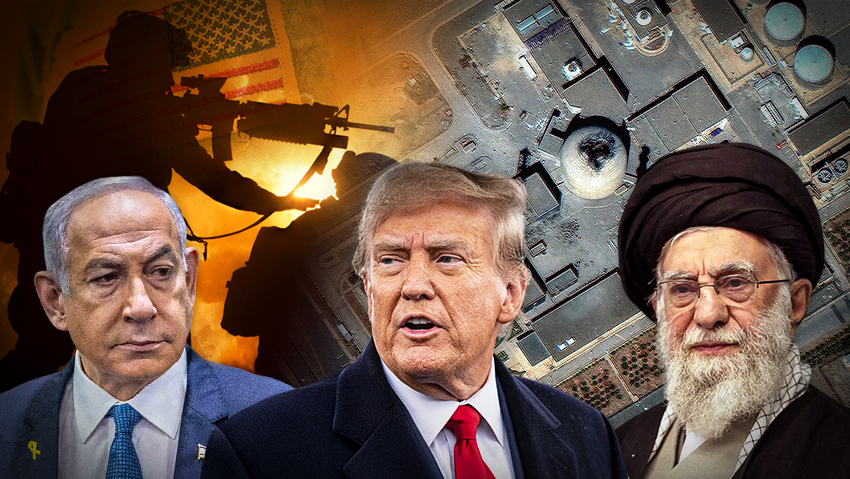
(Photo: Lev radin/shutterstock, AP, Flash 90, SATELLITE IMAGE MAXAR TECHNOLOGIES / AFP, Getmilitaryphotos/shutterstock, Reuters)
The officials said Trump’s approach toward Iran mirrors his strategy toward Venezuela, where the United States positioned forces off the country’s coast for months as part of a pressure campaign aimed at removing President Nicolás Maduro. Those efforts failed, eventually leading U.S. forces to attack Venezuela and capture Maduro. With Iran, however, officials remain skeptical that Tehran would accept U.S. demands.
Those demands include a permanent halt to all uranium enrichment, the surrender of all existing nuclear stockpiles, strict limits on the range and number of ballistic missiles in Iran’s arsenal, and a complete end to support for its regional proxies, including Hamas, Hezbollah and the Houthis in Yemen. U.S. officials say restrictions on Iran’s missile program would effectively eliminate its ability to strike Israel.
A senior U.S. official said Trump and his top advisers are keenly aware that any operation in Iran would be far more complex than U.S. actions in Venezuela. As a result, Trump continues to consider a broad set of options that could be implemented simultaneously or in combination.
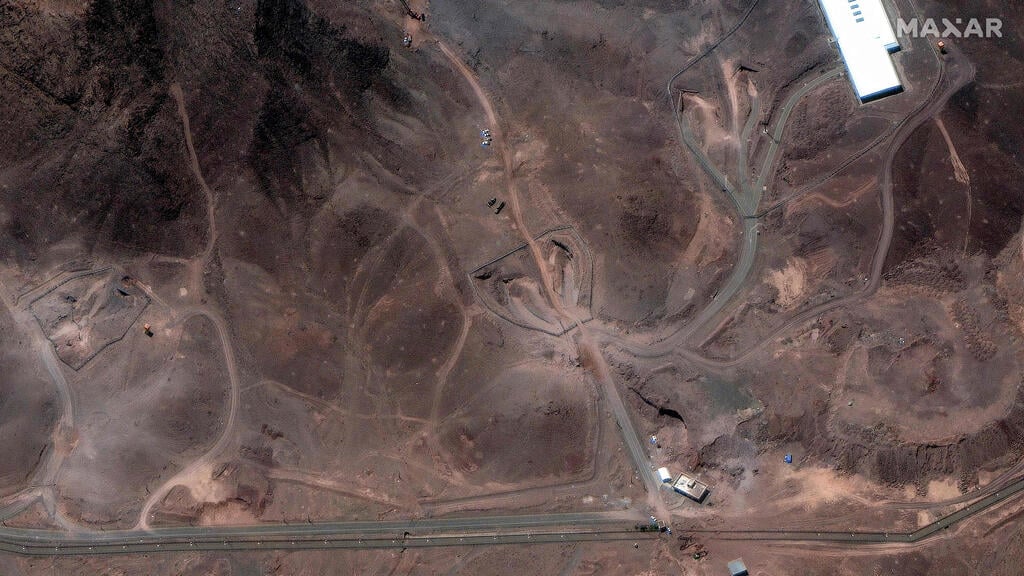
The Fordow nuclear site
(Photo: AFP PHOTO/ SATELLITE IMAGE ©2024 MAXAR TECHNOLOGIES)
The most dangerous option under discussion would involve the covert deployment of U.S. commando forces to destroy or severely damage parts of Iran’s nuclear program that were not hit in U.S. strikes last June. U.S. forces have trained for years for such missions, which involve infiltrating countries such as Iran to strike nuclear facilities or other sensitive targets. Trump has repeatedly expressed reluctance to deploy U.S. ground forces, citing the failed 1980 mission ordered by President Jimmy Carter to rescue 52 American hostages held in Iran.
Another option involves a series of strikes on military targets and figures within Iran’s leadership, intended to create sufficient upheaval to pave the way for the removal of Khamenei by Iranian security forces or other actors. It remains unclear who would govern Iran if Khamenei were ousted, or whether any successor would be more willing to engage with the United States. The Times reported that Trump’s interest in this option is partly driven by alleged Iranian attempts to assassinate him. Federal prosecutors in New York said last year that Iranians discussed a plan to kill Trump shortly before his election to a second term.
Israel is pressing for a third option: U.S. participation in a renewed strike on Iran’s ballistic missile program, which Israeli intelligence officials say has been largely rebuilt since Operation Rising Lion.