

The teenager killed Monday when an unexploded cluster munition detonated during a school hike on Ramim Ridge in northern Israel has been identified as Yair Wilensky, the youngest of five children.
His family described him as "a boy who loved life. Bright and wise, full of joy, a good and much-loved friend, with his whole future ahead of him." He is survived by his parents, three sisters and a brother.
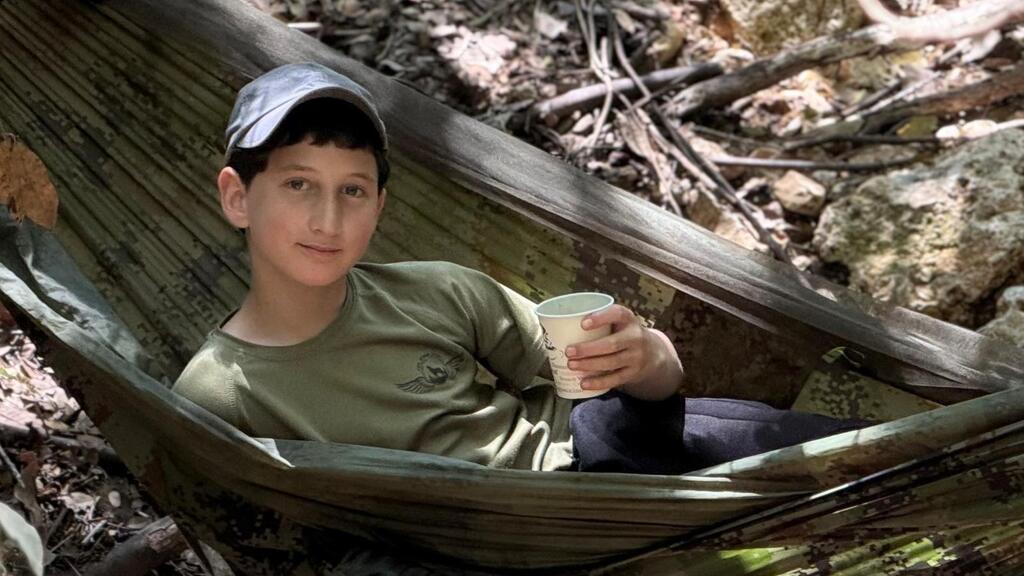
Yair Wilensky
Wilensky, whose full name was Elazar Yair, had previously competed in fencing and was ranked among Israel's leading athletes in his age group about two years ago. His older brother, Dov Wilensky, is one of Israel's top épée fencers and is considered an Olympic prospect.
Yair was a ninth-grade student at ORT Ma'alot Yeshiva High School. The Ma'alot-Tarshiha municipality issued a statement expressing condolences to the family on behalf of the mayor, his deputies, city council members and municipal employees.
Teacher remains seriously wounded after surgery
Rambam Medical Center in Haifa said Tuesday morning that a 61-year-old teacher injured in the explosion underwent surgery overnight and remained in serious condition.
One teenager was hospitalized in moderate condition with a shrapnel fragment lodged in his neck. He was fully conscious. Two other teenagers remained hospitalized with minor injuries.
Six people injured in the explosion were taken to Galilee Medical Center in Nahariya.
Dr. Nadav Sleifer, head of the hospital's pediatric surgery department, told ynet Monday that medical teams had encountered complicated injuries caused by the blast.
"The teenagers suffered blast and shrapnel injuries," he said. "They are all stable now and out of danger. Each will need a period of recovery, depending on the nature of their injuries. I expect the first patients to be discharged as early as tomorrow, while others will need several more days before they can return home."
Sleifer explained that although the cluster munition was small, roughly the size of a beverage can, it was capable of causing devastating injuries.
"It causes blast injuries and shrapnel wounds. We're talking about very small fragments that can penetrate all the layers of tissue, travel deep into the body and damage vital organs," he said.
"Even a tiny fragment can cause a very serious injury if it enters the wrong place. That's what we saw in some of these cases. There weren't necessarily many fragments, but some caused severe injuries."
Students used tourniquets and CPR to save their friends
Students who survived the explosion described extraordinary efforts by the wounded to help one another in the chaotic moments after the blast.
Several teenagers applied tourniquets to their injured friends, while one student performed CPR on another.
One injured boy, bleeding heavily from shrapnel wounds to his leg, made a video call to his father and asked him to explain how to apply a tourniquet to himself.
The group had set out on a three-day hike along the Israel National Trail, a long-distance walking route stretching across the country. They left their school in Ma'alot at dawn Monday.
The explosion occurred while the group was taking a meal break near Pe'er Lookout in the Upper Galilee, close to the Lebanese border.
According to the students, they had not noticed a sign beside the area where they stopped warning of unexploded ordnance and prohibiting entry.
In addition to Wilensky, who was killed, three people were reported seriously wounded, 10 moderately wounded and another 10 lightly injured.