

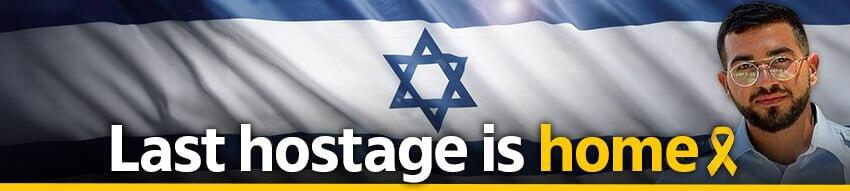
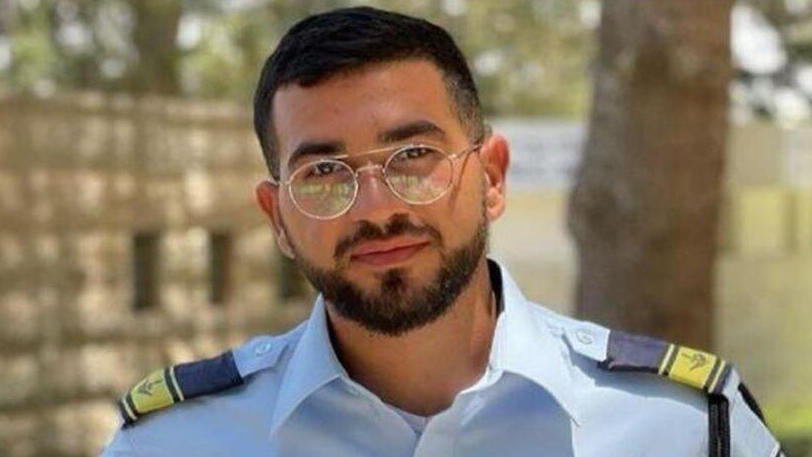
The funeral for Sgt. First Class Ran Gvili, an Israel Border Police officer who was killed in action on October 7, will be held today (Wednesday) in the southern community of Meitar. Gvili had been held in the Gaza Strip for 843 days and was returned to Israel the day before yesterday in a complex IDF operation.
The funeral procession for the last hostage casualty departed from Camp Shura near Ramla and headed to Meitar, Gvili’s hometown, where he was laid to rest. President Isaac Herzog and Prime Minister Benjamin Netanyahu were among those scheduled to speak at the eulogies.
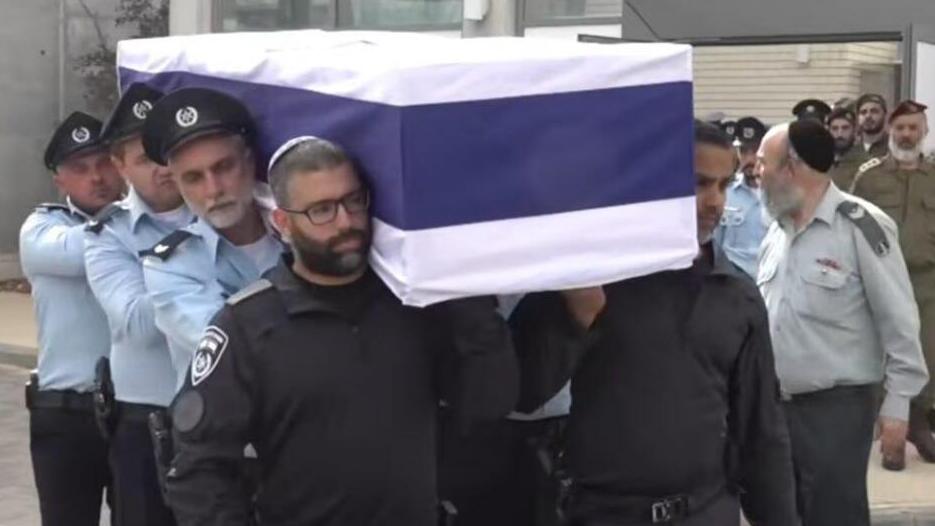
Ran’s coffin is carried at the Shura base
(Photo: GPO)
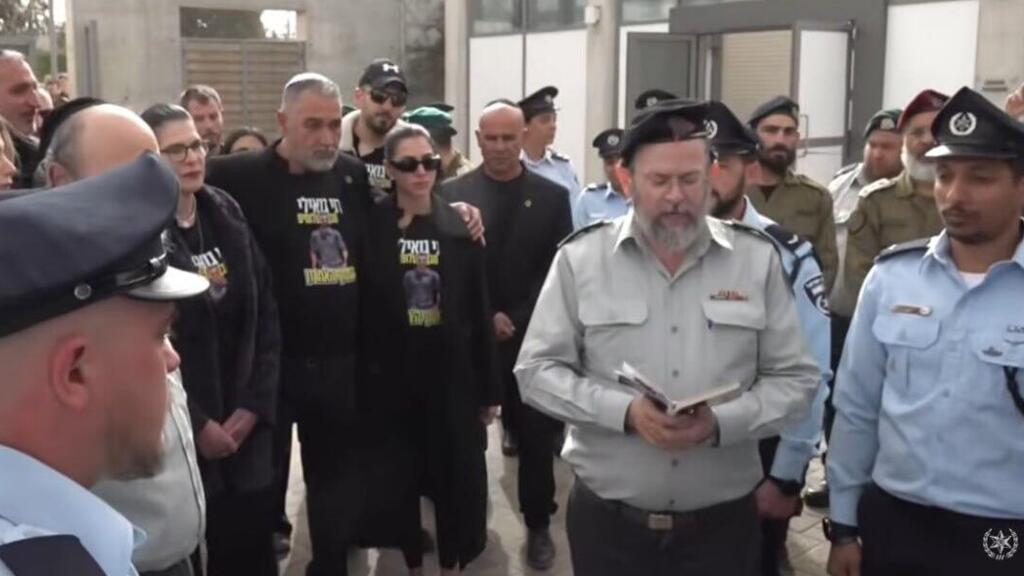
(Photo: GPO)
At 6:30 a.m., a police procession escorting the Gvili family left Meitar for Camp Shura. The convoy included the national motorcycle unit of the traffic division and vehicles and motorcycles from the Southern District’s Special Patrol Unit. The funeral procession itself is set to begin at 10:30 a.m. The convoy is to accompany Gvili’s casket to Meitar via Highway 431, entering Highway 6 at the Nesher interchange and later traveling on Highway 60.
The main eulogy ceremony is to begin at 12:30 p.m. at a field near the community’s sports center, followed by a burial at the cemetery at 2:30 p.m. in a private service with no media present. Police warned that significant traffic congestion is expected on Highway 60 toward Meitar. “From 8:00 a.m., vehicle access to Meitar will be permitted for local residents only with valid identification and for authorized vehicles,” police said. “From 10:30 a.m., the entrance gates to the eulogy area will open. An organized shuttle system will operate from the parking area at the entrance to Meitar to the ceremony site. The eulogy area at the field is limited to about 2,000 people for safety reasons. Once capacity is reached, no additional entry will be allowed.”
'I heard over the radio: ‘Rani has been found'’
For Guy Elkabetz, one of Gvili’s closest friends, his return was both a closure and a deep heartbreak. Elkabetz, a reserve combat engineer, was part of the forces that operated in the field and took part in the rescue operation that located Ran “We knew the blow was coming,” he said, “but I didn’t think it would be this strong. Knowing exactly what was supposed to happen and how it was supposed to happen only made it worse.”
On Thursday, Elkabetz received a call from his direct commander: approval had been given for plans for the operation involving Ran. Preparations began the next day, and by Saturday morning he was at Nahal Oz. “We began preparing the routes to the cemetery. We cleared routes and removed explosive devices so professionals and vehicles could pass,” he said.
Elkabetz has served in the reserves since October 7, accruing about 350 days of reserve duty over six deployments in Gaza and Lebanon. On Sunday at 6:00 a.m., the forces assembled near the cemetery. “They began digging. The area was divided into polygons, and I secured the site all day.” Ran was found on Monday morning. “Maybe he was waiting for me to go,” his close friend said.
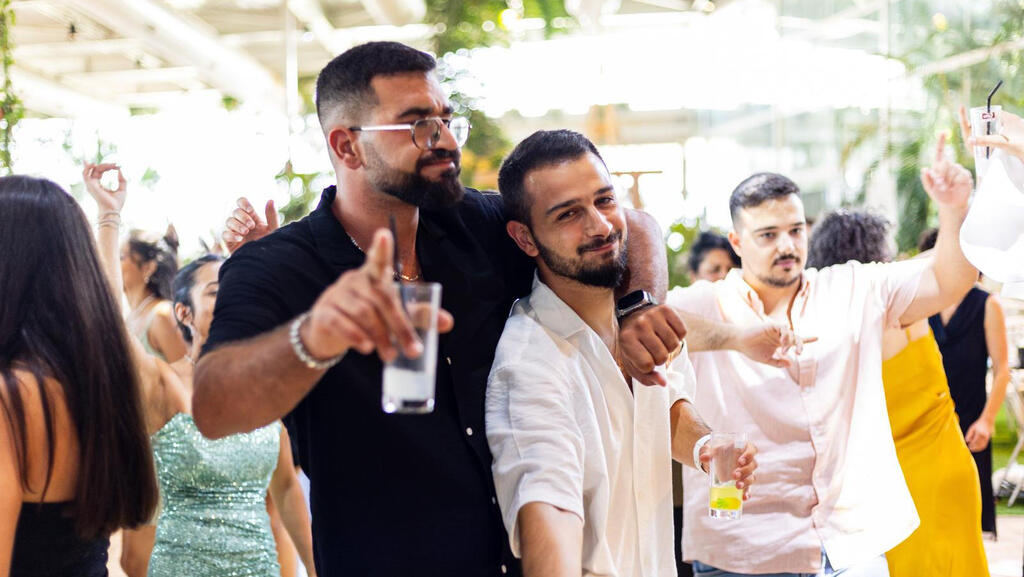
Guy and Ran

At that time Elkabetz was with his platoon, radio close at hand. “I was listening to the brigade, and then I heard the call: ‘There are findings we can confirm — Ran Gvili is found.’ At that moment it was a mix of joy and sadness. I understood he was coming home, but not as I knew him. Heartbreak with a silly smile on my face.”
Elkabetz couldn’t cry immediately. “I’m a sensitive person, I cry easily. And suddenly it didn’t come out. Only when I got home and sat down to write to him did I break down,” he said. Over the past two years he had written to him often. “I wrote a sort of little eulogy and then it hit me.” What keeps him going, he said, is a phrase he heard from Ran’s brother Omri: “Pride is stronger than sadness.” According to Elkabetz, “Pride in who Ran was and that I was privileged to be one of his close friends.”
For him, participating in the operation was the fulfillment of an old promise: “On October 7, I swore I would do everything so that Ran would come home— in reserve and out of reserve, to tell his story, to take part in activities for him. I did everything I could. I was given the right to take part in this thing that ultimately found and brought Ran back. On one hand I feel whole that I did 100%. On the other hand, I’m heartbroken. I still haven’t processed that I took part in bringing back my best friend. Ran will accompany me all my life. I will continue to tell his story.”
IDF forces' operation in 'Brave Heart' to recover Ran Gvili
(Video: IDF)


Among all the memories, there is one in which Elkabetz also brought Ran home. “We went to a wedding of a friend’s sister. All the friends were in Ran’s car. On the way there he was driving, and on the way back he told me ‘I drank, you drive,’ and sat next to me. Suddenly this enormous person became something so soft. He was asleep, relaxed, happy. Now it has come back to me and taken on a different meaning. That is the time I brought Ran back and enjoyed it. That’s the one I want to hold onto.”
Elkabetz wanted to thank the Hostages and Missing Families Forum, the police, and friends. “Ran was a lover of people. The message he would want to convey is that we should be one, with one purpose,” he said. “To be there for each other and heal the rift in the nation. If I could meet him one more time, I would hug him as hard as I could. Not as hard as he would, but as hard as I can. I would want him to hug me with his big arms. And if I were to say something, it would be that I love him.”
Gvili served as a fighter in the Negev Border Police in the southern district. On October 7, he went into battle injured with a broken shoulder after a motorcycle accident and was due to have surgery. He managed to save the lives of dozens of partygoers in Re’im before he was killed and his body was abducted near Kibbutz Alumim. He was nicknamed “Ran the Protector of Alumim.”
The day before yesterday, 843 days after the October 7 massacre, Gvili was found in a Palestinian cemetery in eastern Gaza City. The search operation, “Brave Heart,” was complex and involved numerous forces in the search and identification. During the operation, the bodies of 250 Palestinians were examined until Gvili was identified by the police uniform he was wearing and the shoes he had on the day he fell near Kibbutz Alumim.
First published: 09:09, 01.28.26