


The head of the Shin Bet security agency, Maj. Gen. (res.) David Zini, addressed the threat of kidnappings of Israelis and told ministers at a meeting of the Security Cabinet held last Thursday that “the threat of kidnappings has not gone down. It has risen and will continue to rise, because there is a price for the way we paid for the release of the hostages.”
Zini’s comments were not presented as an opinion on the hostage deals conducted with Hamas during the war or on whether it was right to pay the price of releasing prisoners and terrorists in return. Rather, they were made in the context of a confidential professional discussion in the cabinet on required security measures in the field of flights and aviation.
Senior political sources told ynet: “This is not the first time Zini has made this statement in closed discussions, as part of his professional assessment of the threats. He is saying that terrorist organizations and our enemies have seen that kidnapping Israelis pays, and that the threat of kidnappings of Israelis in Israel and abroad has increased.”
The Shin Bet did not deny the report but declined to address the remarks directly, saying in response: “We do not comment on statements made in closed discussions.”
The same cabinet meeting also dealt with a long list of additional issues. According to ministers who attended, this was not a routine Security Cabinet meeting but one that convened more like a full government session in order to make decisions. For example, the meeting did not include security briefings on the various combat fronts, and IDF Chief of Staff Lt. Gen. Eyal Zamir did not attend due to another operational discussion being held at the same time. The deputy chief of staff attended the meeting with the ministers instead.
Among the items on the agenda, the cabinet approved Israeli humanitarian assistance for Druze and Christians in Syria in what is referred to as the “security zone,” effectively the buffer area in which the military operates. The decision aligns with a report by a Syrian news agency two days earlier that said the IDF had offered humanitarian aid to residents in the Quneitra area. The move was seen as an attempt to establish a presence, calm the area and support minority groups with which Israel has shared interests, while pushing hostile elements farther away.
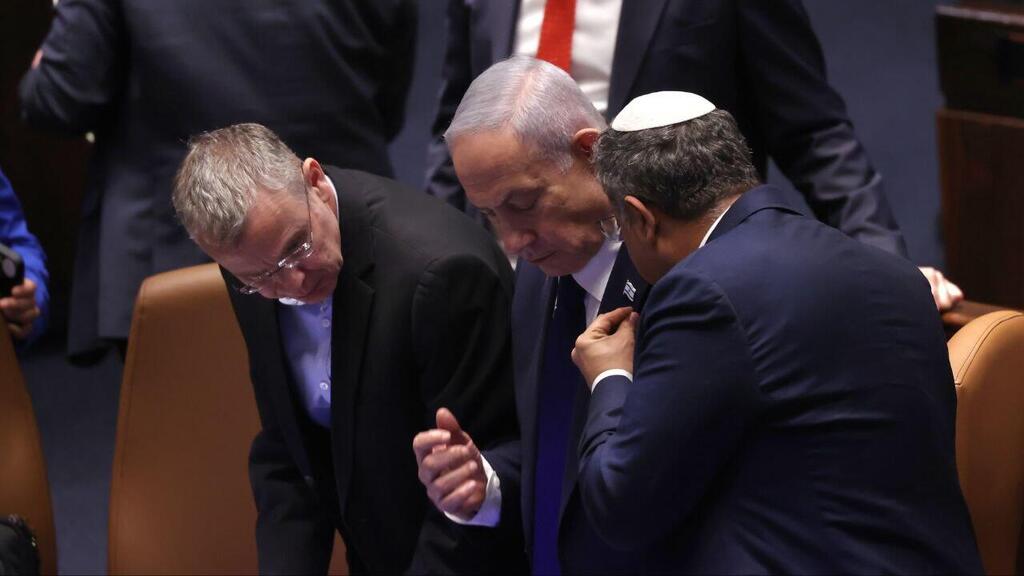
Prime Minister Benjamin Netanyahu
(Photo: Alex Kolomoisky)
The cabinet also held an extended discussion on a bill to impose the death penalty on terrorists, which is currently being prepared in the Knesset ahead of second and third readings. The discussion grew heated when Justice Minister Yariv Levin complained that the issue had not been brought to him for prior consultation, despite falling under his responsibility. Levin was also angered by what he said was a lack of coordination regarding legislation on the prosecution of Nukhba terrorists, referring to Hamas’ elite assault unit that carried out the Oct. 7 attack. That bill is being advanced jointly with the Justice Ministry and lawmakers Simcha Rothman of the Religious Zionism party and Yulia Malinovsky of Yisrael Beiteinu in the Knesset Constitution Committee.
National Security Minister Itamar Ben-Gvir lashed out at Levin, saying: “Did you ask me about your laws related to the police?” The discussion descended into shouting, and Prime Minister Benjamin Netanyahu told Ben-Gvir: “You want to run things? Get elected prime minister.” Netanyahu also turned to Levin and said: “What are you asking for?” As tempers continued to flare, Netanyahu said: “I am not willing to run a discussion like this. Cease-fire.”
At the meeting, the cabinet also approved the establishment and legalization of 19 communities across Judea and Samaria, the term Israel uses for the West Bank. Two of the communities, Ganim and Kadim, are to be rebuilt after they were evacuated from northern Samaria as part of the disengagement plan 20 years ago. The proposal, submitted by Defense Minister Israel Katz and Finance Minister Bezalel Smotrich, was approved unanimously by the cabinet. Some of the communities are long-standing sites that will now be formally legalized, while others are entirely new.
The proposal was coordinated with the United States, which asked that it be kept quiet for several days. Despite the request, it leaked to the media earlier.