


The U.S. State Department approved more than $8.6 billion in weapons sales to Middle Eastern allies, including nearly $1 billion each in precision-guided rocket systems for Israel and Qatar, as the Trump administration moved to bypass the usual congressional review process by invoking an emergency clause.
The approvals include the sale of 10,000 Advanced Precision Kill Weapon System, or APKWS, units and related equipment to Israel for an estimated $992.4 million, and a separate APKWS package of the same size and value for Qatar. The principal contractor for the APKWS sales to Israel, Qatar and the United Arab Emirates will be the UK's BAE Systems.
APKWS in action
(Video: CENTCOM)


APKWS is a guidance system that turns unguided rockets into laser-guided precision weapons designed to strike specific targets.
Secretary of State Marco Rubio determined that an emergency exists requiring the immediate sale of the weapons in the interest of U.S. national security, exempting the administration from regular congressional approval procedures. The State Department said the sales would support regional stability and improve the ability of Israel and Qatar to confront current and future threats.
In a separate deal, the State Department approved a $4.01 billion sale of Patriot air and missile defense equipment to Qatar. The package includes 200 PAC-2 interceptor missiles and 300 PAC-3 missiles meant to replenish Qatar’s air defense system.
The United Arab Emirates also received approval to buy APKWS systems in a deal valued at about $147.6 million. Kuwait received approval for a $2.5 billion integrated battle command system. RTX and Lockheed Martin will be the principal contractors for the Patriot sale to Qatar and the battle command system for Kuwait, while Northrop Grumman will also take part in the Kuwait deal, according to the State Department.
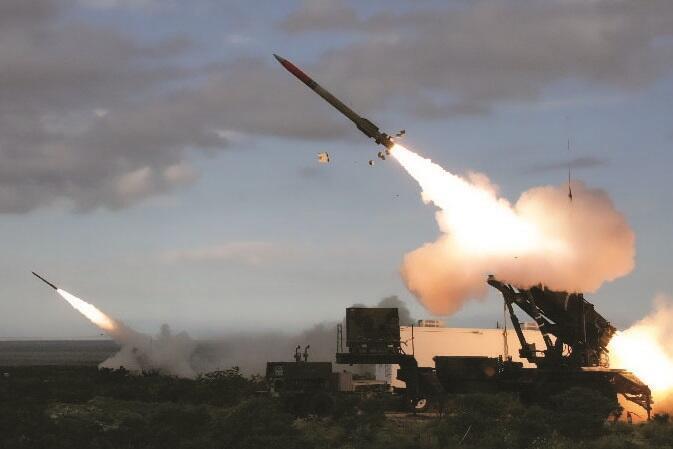
Archival: A Patriot missile defense system in action, 2019
(Photo: US Armed Forces)
The approvals come as the Trump administration is trying to ramp up weapons production amid reports of shrinking U.S. missile stockpiles. U.S. defense companies have agreed with the administration to expand production, but officials have said the government still lacks the funding or congressional backing needed to purchase weapons required for potential future conflicts.
While the administration waits for congressional approval, the Pentagon has diverted some ammunition shipments originally intended for U.S. allies for its own use as a temporary stopgap until major new weapons orders begin. U.S. defense firms have announced ambitious plans to produce more munitions and interceptors, though much of the expanded production is not expected to affect supply for several years.
Secretary of War Pete Hegseth appeared in recent days before the House and Senate armed services committees, urging lawmakers to approve funding so the Pentagon can buy additional weapons. The request is part of a $1.45 trillion Department of War budget proposal that does not include additional money the department is expected to seek for the costs of the war with Iran.
A senior Pentagon official told Reuters this week that the war with Iran has cost the United States $25 billion, though the final cost is expected to be significantly higher.