


The Military Advocate General’s Office had long maintained that it was impossible to identify who leaked the footage of soldiers involved in the Sde Teiman abuse case, saying too many people had viewed it. A High Court of Justice petition demanding an investigation was rejected — until now.
Last week, new intelligence passed from the Shin Bet to the IDF altered the picture entirely. That information provided the first clear indication of the leaker’s identity, prompting Attorney General Gali Baharav-Miara to authorize a criminal investigation.
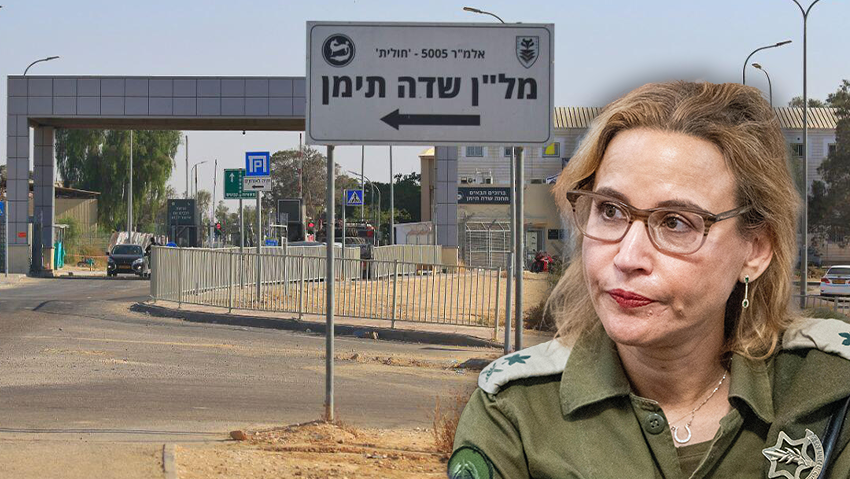
(Photo: Meir Even Haim, Shalev Shalom)
According to sources familiar with the matter, a senior officer from the Military Advocate General’s Office — reportedly close to Maj. Gen. Yifat Tomer-Yerushalmi — underwent a routine Shin Bet polygraph test as part of his security clearance. The results raised suspicion and were forwarded to the IDF chief of staff, the police, and the attorney general.
Initial findings of the investigation, as reported by Army Radio, indicate that the leak was not the work of a lone officer but part of a coordinated effort involving several individuals — possibly including the Military Advocate General herself.
Police have already seized digital devices, including cellphones and computers, as part of the probe. Investigators are also examining whether officers in the Military Advocate General’s Office who were allegedly involved in the leak also helped draft the state’s earlier High Court response claiming there was no way to identify the source. If confirmed, those involved could face charges of breach of trust, fraud, and submitting a false affidavit.
The suspected offense falls under Article 117 of Israel’s Penal Code: “A public servant who unlawfully discloses information obtained through his position to a person not authorized to receive it shall be liable to three years’ imprisonment.” Evidence collected during the investigation will be reviewed by the attorney general and the prosecution to determine whether Tomer-Yerushalmi or her subordinates were involved, and whether the leak was authorized through formal channels.
It is important to note that formally transferring evidentiary materials to journalists is occasionally permitted. For example, when indictments were filed over the trash-bin arson near the prime minister’s residence in Jerusalem, police lawfully released video evidence from the incident. The Supreme Court, however, has repeatedly warned against leaking investigative materials, citing as early as 1997 “the danger of creating hostile public opinion against defendants whose fate has been pre-judged by the media.”
MPs raid Sde Teiman in 2024


The Sde Teiman abuse case erupted following a Military Police Criminal Investigation Division (CID) raid on the base on July 29, 2024. Eight reservists were detained after the IDF received reports from foreign human rights organizations alleging the mistreatment of detainees.
Shortly after the raid, footage showing masked CID investigators at the base was leaked, sparking outrage and widespread protests. Demonstrators, some masked and armed, later breached another military installation, Beit Lid Base, where violent clashes broke out with security forces.
The incident quickly escalated: soldiers and civilians stormed bases and confronted CID officers. Members of Knesset and right-wing ministers, including MK Zvi Sukkot (Religious Zionism) and Deputy Minister Almog Cohen (Otzma Yehudit), arrived on site. Journalists covering the events — including Ynet and Yedioth Ahronoth correspondent Ilana Curiel — were attacked, and some camera crews required rescue.
Then-IDF Chief of Staff Herzi Halevi strongly condemned the storming of the bases, calling it “a serious and unlawful act.” Defense Minister Yoav Gallant and Prime Minister Benjamin Netanyahu also urged calm.
Nevertheless, the affair quickly turned into a political flashpoint, symbolizing the growing tension between the military-legal establishment and right-wing figures who backed the soldiers.