

Destroyers, more than 100 aircraft and about 15,000 troops: This is the U.S. force that will try to ensure the implementation of “Project Freedom,” announced by President Donald Trump — the renewal of commercial ship traffic through the Strait of Hormuz and, in effect, the breaking of the Iranian blockade.
Ebrahim Azizi, head of the Iranian parliament’s foreign policy and national security commission, warned in a post on X that “any American interference in the new maritime regime of the Strait of Hormuz” would be considered a violation of the ceasefire.
US forces seize M/V Touska


“The Strait of Hormuz and the Persian Gulf would not be managed by Trump’s delusional posts,” he wrote. “No one would believe Blame Game scenarios.”
Trump called the move a “humanitarian gesture” and said it would begin Monday morning, Middle East time. He wrote that countries not involved in the Middle East conflict had asked the United States to help free ships stuck in the Strait of Hormuz, calling the vessels “neutral and innocent bystanders.”
Trump said the United States would use its best efforts to guide the ships and crews safely out of the strait, adding that they would not return until the area is safe for navigation. He also warned that if the humanitarian process is interfered with in any way, the interference would have to be dealt with “forcefully.”
U.S. Central Command said it will launch “Project Freedom” on Monday to restore freedom of navigation for commercial shipping through the Strait of Hormuz.
“The mission, directed by the president, will support merchant vessels seeking to freely transit through the essential international trade corridor,” CENTCOM said.
“Our support for this defensive mission is essential to regional security and the global economy as we also maintain the naval blockade,” said CENTCOM commander Adm. Brad Cooper, noting that a quarter of the world’s oil trade at sea and significant volumes of fuel and fertilizer products are transported through Hormuz.
CENTCOM said the operation will include guided-missile destroyers, more than 100 land- and sea-based aircraft, multidomain unmanned platforms and 15,000 service members.
Trump also wrote that his representatives were holding “very positive discussions” with Iran and that the talks could lead to “something very positive for all.” He said the ship movement was intended only to free people, companies and countries that “have done absolutely nothing wrong” and are “victims of circumstance.”
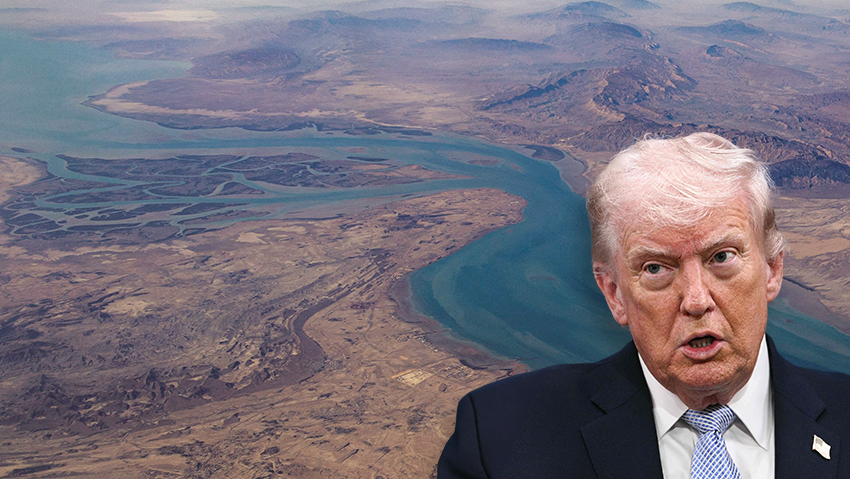
Details of how the plan would be implemented and which countries would be involved remain unclear.
Iran has imposed tight controls on shipping in the Strait of Hormuz during the conflict, requiring vessels to seek prior approval before transit. Iranian officials say the measures are within the country’s sovereign rights to ensure security, while denying that the strait has been fully closed. Tehran has also said it will not permit vessels linked to its adversaries or their allies to leave the Gulf without authorization.
At the same time, the United States has enforced its own naval restrictions on Iranian ports, a move Tehran has described as illegal and a violation of a ceasefire reportedly brokered by Pakistan earlier in April. Iranian officials have repeatedly criticized the blockade, warning that any attempt to challenge its control of the strait through military means would trigger a strong response.
Meanwhile, negotiations between Iran and the United States remain stuck. Iran’s Foreign Ministry said Tehran received a response from the United States through Pakistan to its latest proposal to end the war and that the response is under review. In Israel, officials are monitoring the talks but believe the chances of a deal are very low because of Iran’s refusal to accept Trump’s demand to give up its enriched uranium at the first stage of the agreement.
At the same time, possibly as a gesture to Iran in an effort to advance the stalled talks, the Americans announced that the Iranian vessel M/V Touska — seized by the United States after it tried to violate the American blockade — had been transferred to Pakistan for return to Iran, together with its crew.
A CENTCOM spokesman told ABC that the transfer of 22 crew members of the M/V Touska to Pakistan for their return home had been completed, after six additional passengers were transferred last week. Control of the Touska is now being transferred back to its original owners. According to Iranian media, those six were relatives of some crew members. On April 19, a U.S. destroyer fired shells at the container ship’s engine room before U.S. Marines took control of the vessel.
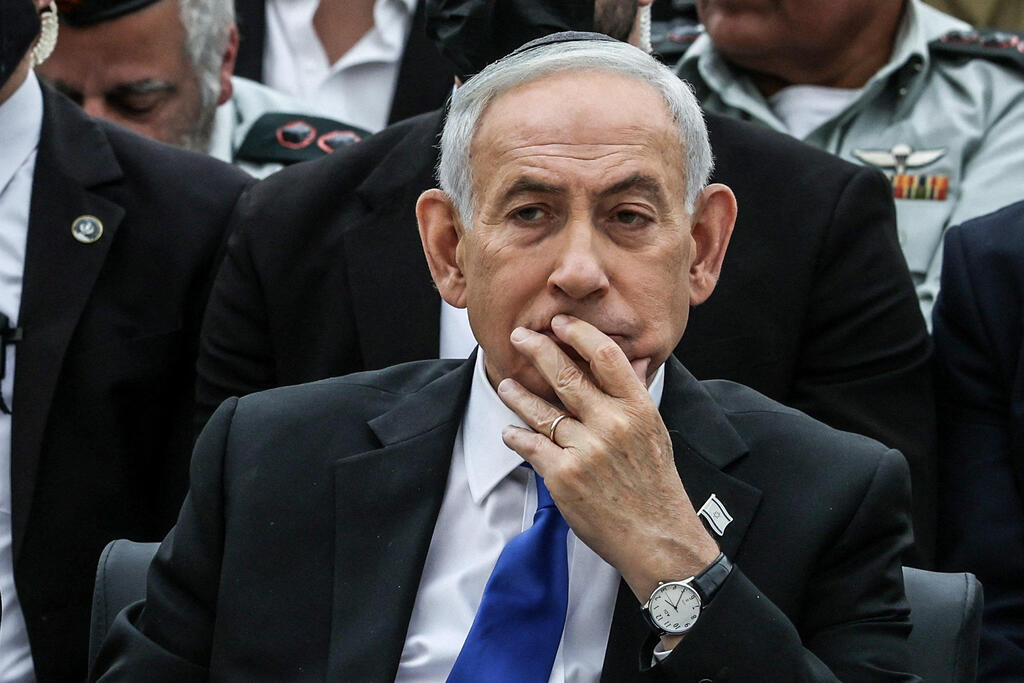
(Photo: ILIA YEFIMOVICH/Pool via REUTERS)
Against the backdrop of the contacts between Washington and Tehran, Prime Minister Benjamin Netanyahu instructed ministers during Sunday’s Cabinet meeting not to comment on Iran. “This is a sensitive period and words must be chosen carefully,” he said. Netanyahu also convened a limited security discussion for a multi-front assessment.
In Israel, officials say there is coordination with the United States, while also casting doubt on Trump’s assessment that the continued American blockade of Hormuz and the economic damage caused to Iran will lead Tehran to agree to remove the enriched uranium. According to Israeli officials familiar with the details, alongside the negotiations and the blockade, the United States is also preparing for the possibility of renewed fighting with significant military action — including ground operations that could last a long time.
First published: 08:45, 05.04.26