


Of all the IDF’s core investigations into the failures of October 7, the easiest was the review of the military’s Operations Directorate. This unit, based in the IDF’s underground command center, directs forces in both routine and emergency situations.
At the time, the division was led by Maj. Gen. Shlomi Binder, who was later appointed head of the IDF’s Military Intelligence Directorate (MID), replacing Maj. Gen. Aharon Haliva, who resigned over his role in the failures.
The military’s supervising command post, activated within minutes that morning in the IDF’s military headquarters in Tel Aviv, is responsible for allocating and overseeing forces.
The investigation found that until 6:29 a.m. on October 7, operations in the Gaza Division were proceeding as normal. At the time, 671 soldiers were stationed in the area, distributed among 14 companies in four regional security battalions.
The report concluded that, given the chaos of the attack and the fact that a large-scale invasion was never considered a realistic threat, the deployment of forces was reasonable. Many commanders and soldiers rushed to the battlefield of their own accord.
“The General Staff’s operations center failed to produce an accurate situational assessment in the critical early hours and the Operations Directorate was unable to break through the system’s constraints that morning,” the report read.
“It was a catastrophic event with no outstanding performances or real-time feedback. There was also difficulty assessing the readiness of command posts in the Gaza Division.”
However, the investigation also found that “the decisions made in the first hours were reasonable, though in some locations, forces were not fully utilized. There were also gaps in the Air Force’s firepower deployment, particularly using fighter jets. While force mobilization aligned with readiness protocols, oversight of troop deployment was inadequate.”
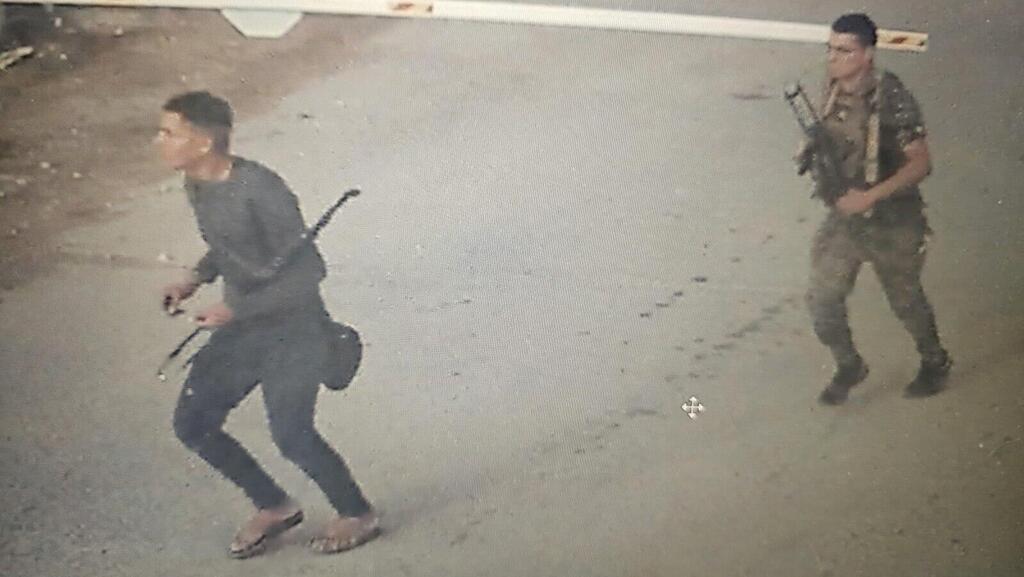
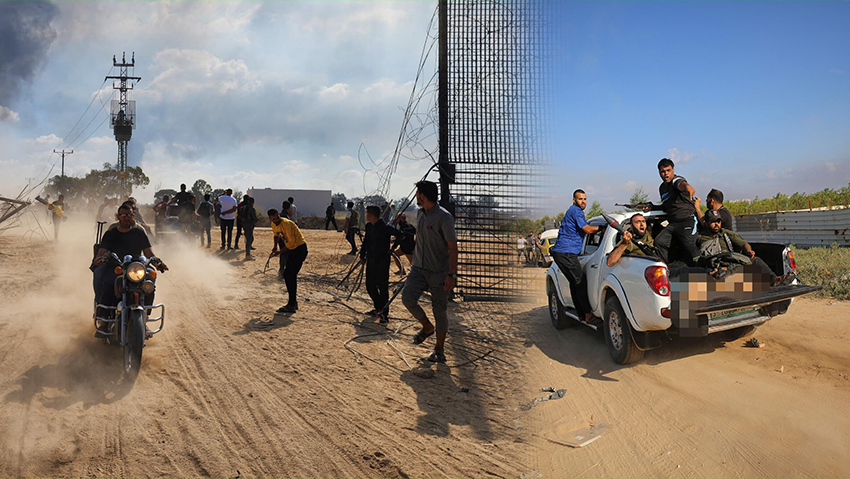
Hamas terrorists on October 7
(Photo: Kibbutz Nir Oz)
Fighting with no intelligence
The investigation was conducted without cooperation from the Shin Bet and Israel Police, due to both security restrictions and a deliberate decision to prevent coordination of testimonies in the event of a future state commission of inquiry.
“We fought an entire day without intelligence,” IDF Southern Command officers said in the report, noting that the MID failed to detect thousands of terrorist phone and radio signals inside Israel.
“Even if we had 100 fighter jets that morning, we wouldn’t have known what to do with them because we weren’t prepared for this scenario,” one officer said. “We had no pre-planned aerial attack strategy for even 10% of what took place.
“In the first 24 hours, we carried out 500 strikes in Gaza but the first dedicated attack cell wasn’t set up until 8:30 a.m. because it consisted of reservists who were still at home.”
Southern Command chief’s mistakes
According to the Southern Command’s internal review, IDF forces — despite being vastly outnumbered — managed to kill about 600 terrorists that morning.
Maj. Gen. Yaron Finkelman, who led the Southern Command, had correctly ordered the activation of the "Parash Pleshet" protocol — an alert for hostile infiltration — but the scale of the attack far exceeded expectations.
Soldiers guarding the Gaza border were operating under standard pre-dawn readiness procedures, with additional troops positioned outside at sunrise. Fourteen tanks were manned in the area that morning but one of the Gaza Division’s emergency reserve battalions was away on a training exercise in the Golan Heights, causing significant delays in reinforcements.
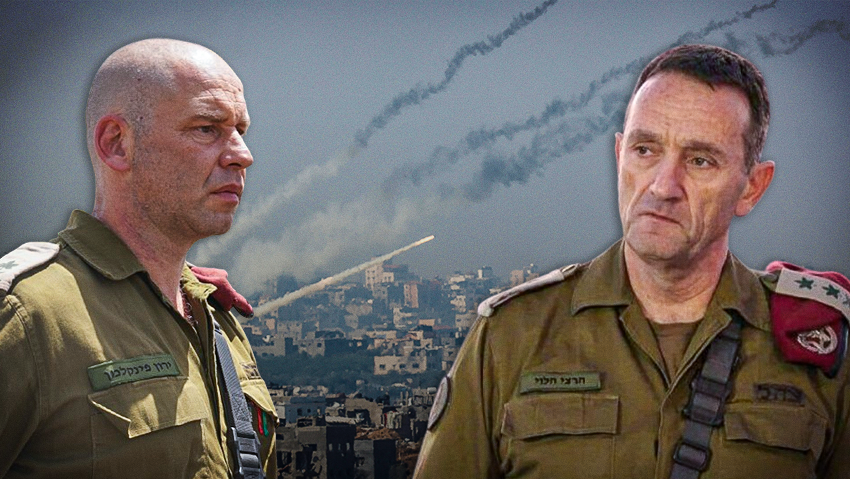
Maj. Gen. Yaron Finkelman, IDF Chief of Staff Lt. Gen. Herzi Halevi
(Photo: Reuters/Amir Cohen, IDF Spokesperson's Unit)
Finkelman later told investigators that he had to “reinvent” his forces that morning to respond to an unimaginable scenario. The key decisions he made included:
- Prioritizing civilian rescue, rapidly flooding the area with troops despite the risks and lack of coordination.
- Dividing the Gaza Division into three new divisions to regain command over forces.
- Sealing the border with airstrikes — though belatedly.
Finkelman also identified five critical mistakes he made:
- Placing too much weight on immediate threats the night before the invasion, despite warning signs.
- Failing to gather additional intelligence on both enemy movements and IDF force deployment.
- Not initiating a cross-command discussion on closing the border fence, which could have enabled an airstrike an hour and a half earlier.
- Not providing sufficient reinforcements to southern Gaza border communities that day.
- Failing to establish a faster and safer civilian evacuation plan.
Looking back, Finkelman, like many other senior officers, concluded that under no circumstances should terrorist organizations be allowed to establish and grow along Israel’s borders.
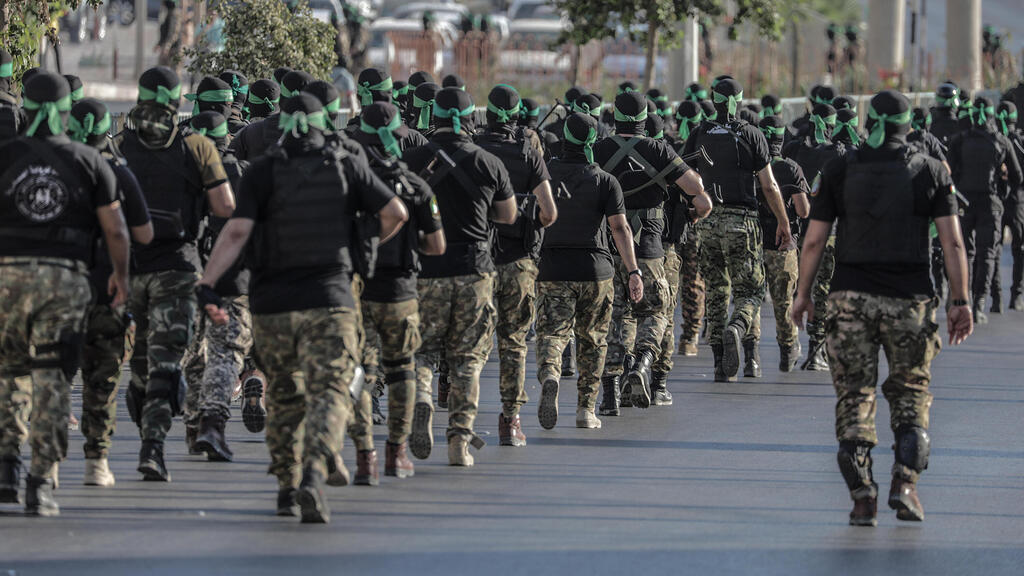
Hamas terrorists in Gaza
Command failures on the ground
The review of battlefield conduct found no significant cases of soldiers avoiding combat or deserting under fire. However, some IDF officials criticized the decision of Northern Gaza Brigade Commander Col. Haim Cohen to oversee the battle from the operations center rather than the field.
His counterpart, Southern Brigade Commander Col. Asaf Hamami, was killed in combat and his body remains in Hamas captivity. Despite the criticism, Cohen’s presence in the command center allowed him to maintain some control over the situation.
The human cost
The toll of October 7 was devastating. According to IDF data, 1,320 people were murdered or killed that day, including 457 security forces personnel and first responders. Another 251 people were kidnapped to Gaza and thousands were wounded.
Minute by minute
In total, 5,500 terrorists entered Israel, carrying out a campaign of conquest, mass murder, rape and abduction in the western Negev. They breached 114 openings in the border fence, infiltrating through 59 routes with the aid of 57 drones, six paragliders, seven boats and a massive barrage of 3,889 rockets and mortars throughout the day.
The timeline of orders issued by the Operations Directorate, alongside the Southern Command’s investigative chronology, reveals the extent of the chaos that day — and how the IDF was unaware, in real time, of the scale of the massacres unfolding in the kibbutzim and at the Nova music festival:
6:29–7:00 a.m. – The first wave of 1,175 Hamas terrorists, mostly from the elite Nukhba forces, infiltrates southern Israel under cover of a 1,400-rocket and mortar barrage. Their initial targets include IDF outposts, the Gaza Division headquarters, an intelligence base near Urim, the Sderot police station, key intersections and major roads — aiming to secure control over the western Negev.
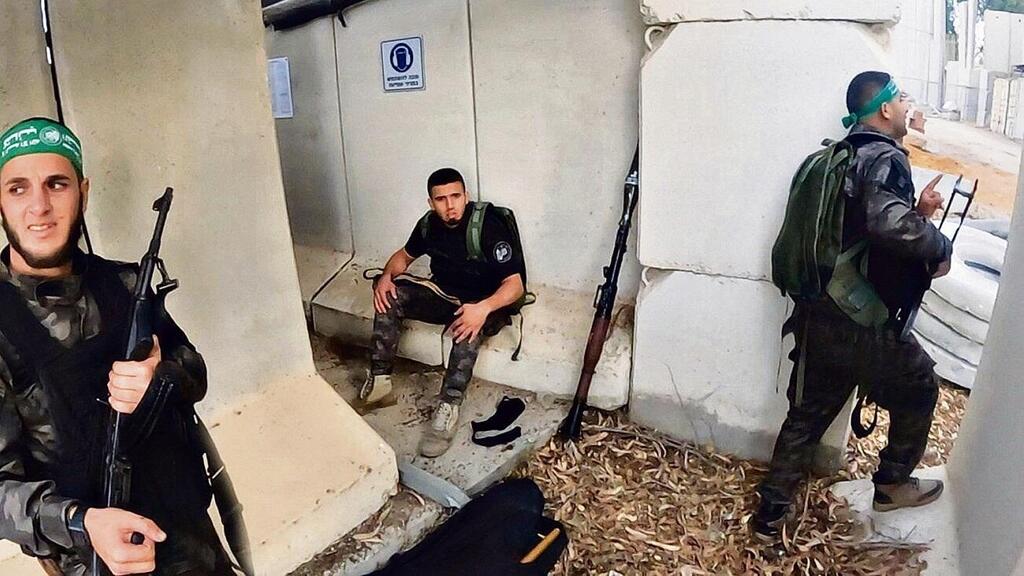
Nukhba terrorists in Israel on October 7
6:31 a.m. – The IDF’s supervising command post is activated in the IDF’s underground headquarters in Tel Aviv. At the same time, immediate readiness protocols for the Air Force and elite emergency units are enacted.
6:35 a.m. – The Air Force is ordered to deploy additional fighter jet crews beyond its standard readiness level.
6:38 a.m. – The Gaza Division activates "Parash Pleshet," its highest-level infiltration alert, assuming the attack involves around 70 terrorists from four to eight locations. Over the next 14 minutes, the Operations Directorate gradually deploys all available reserve ground forces to the southern region.
6:45 a.m. – The first report of a ground incursion from northern Gaza reaches IDF headquarters.
7:00 a.m. – Southern Command are now aware of 15 terror incidents occurring simultaneously along the border. The General Staff opens a dedicated attack coordination center to manage airstrikes from the headquarters.
7:00–9:00 a.m. – A second wave of approximately 600 Nukhba terrorists joins the invasion, under cover of 937 additional rocket and mortar strikes, mostly targeting Israeli communities near the border.
7:05 a.m. – The IDF chief of staff’s military secretary sends an internal WhatsApp message to the Operations Directorate group, independently declaring: “We are at war.”
7:13 a.m. – The security coordinator of the Nova music festival reports to the IDF that 90% of attendees have been evacuated.
7:14 a.m. – The Air Force conducts its first drone strike against terrorists near Netiv HaAsara.
7:26 a.m. – Officer updates IDF headquarters: “A breach at the Erez Crossing has resulted in two hostages being taken. There is ongoing combat in Sderot. The division is requesting deployment of every available combat unit to the southern region.” A senior officer at IDF headquarters responds: “Every IDF unit has been ordered to join you. Open routes for them and direct them where needed. We have activated troops from training bases.”
7:28 a.m. – Brig. Gen. Shlomi Binder, head of the Operations Directorate, orders a full-scale military mobilization. An emergency deployment order is issued to send massive reinforcements to the western Negev.
7:30 a.m. – Units from the 80th Division, responsible for the Egyptian border, arrive from the south to assist. Under the command of the Paran Brigade, a team of female tank operators prevents two Nukhba battalions from seizing communities in the Kerem Shalom area.
7:55 a.m. – The first fighter jet strike targets a Hamas tunnel near Netiv HaAsara.
7:58 a.m. – Fromer Hamas military chief Mohammed Deif calls on Gaza residents via local media: “Go and storm Israel. There is no border fence.” At that moment, the dramatic decision is made — to be officially executed an hour later — to seal the breached border at all costs using airstrikes.
8:00 a.m. – Southern Command chief Maj. Gen. Yaron Finkelman urgently requests additional reinforcements. IDF headquarters decides that two-thirds of the West Bank Division’s security forces will abandon their positions and be rushed south.
8:17 a.m. – The IDF establishes a command center dedicated to managing the hostage crisis.
8:29 a.m. – Investigators later determine that at this stage, only 55% of active terror incidents in the Gaza border communities were being reported to IDF headquarters, further complicating the situational assessment.
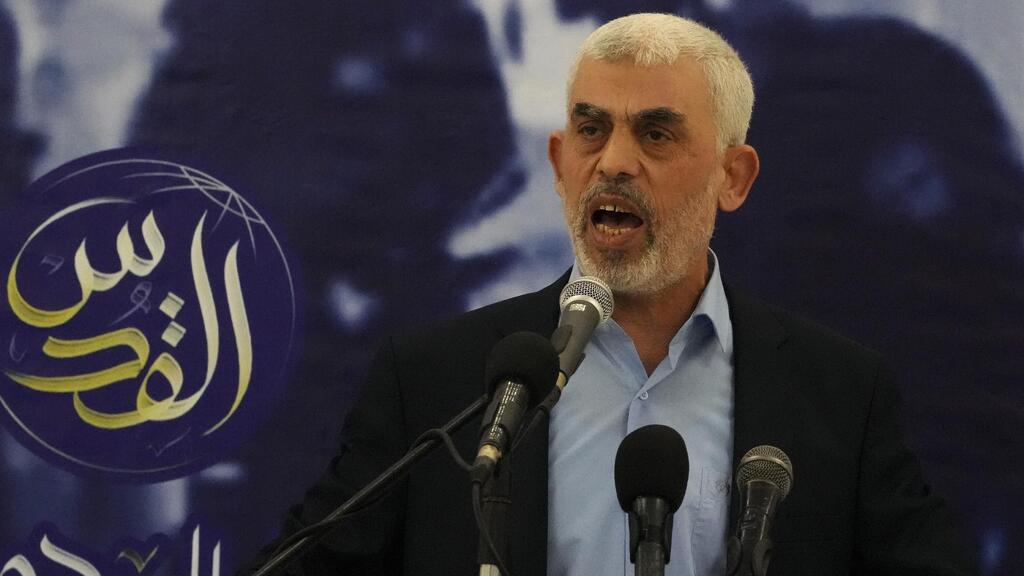
Former Hamas leader Yahya Sinwar
(Photo: Adel Hana, AP)
8:30 a.m. – Southern Command activates "Damocles’ Sword," an operation targeting Hamas’ command and control centers in Gaza to disrupt the ongoing invasion.
8:42 a.m. – The supervising command center orders the air force to target Hamas headquarters and leadership figures.
9:23 a.m. – The Gaza Division is effectively overrun as Nukhba forces besiege its main command center near Kibbutz Re’im. The IDF decided to dispatch division and brigade commanders across the region, assigning each to oversee a major town or community that Hamas had seized, including Ofakim, Netivot, Sderot and Be’er Sheva.
9:40 a.m. – Southern Command and the Air Force order an aerial lockdown of the breached border, authorizing fighter jets to kill anyone moving within a kilometer (0.6 miles) of the fence. The bombing begins but does not fully halt the infiltration.
10:00 a.m. – By this hour, IDF headquarters is receiving reports on 61% of ongoing terror incidents in the southern region.
10:40 a.m. – A bottleneck of military forces is identified in Sderot, where troops have gathered after seeing viral footage of terrorists in pickup trucks. The supervising post orders them to disperse to active combat zones.
12:00 p.m. – The attack reaches its peak as thousands more Hamas terrorists exploit still-open breaches in the border. By this point, approximately 5,500 terrorists have flooded into southern Israel.
1:00 p.m. – The Hamas assault is largely halted, and the IDF begins establishing a new defensive line. By 5:00 p.m., Southern Command announces that operational control over the western Negev has been restored, roads are secured and the last remaining terrorist strongholds are encircled.
That night, special forces tracked and eliminated the terrorist cell that had advanced the farthest — between Sde Teiman and Be’er Sheva. The last terrorist inside Israel was killed three days later between Zikim and Ashkelon. Three weeks after the attack, the 162nd Division withdrew from the region to prepare for the IDF’s ground operation in Gaza.