

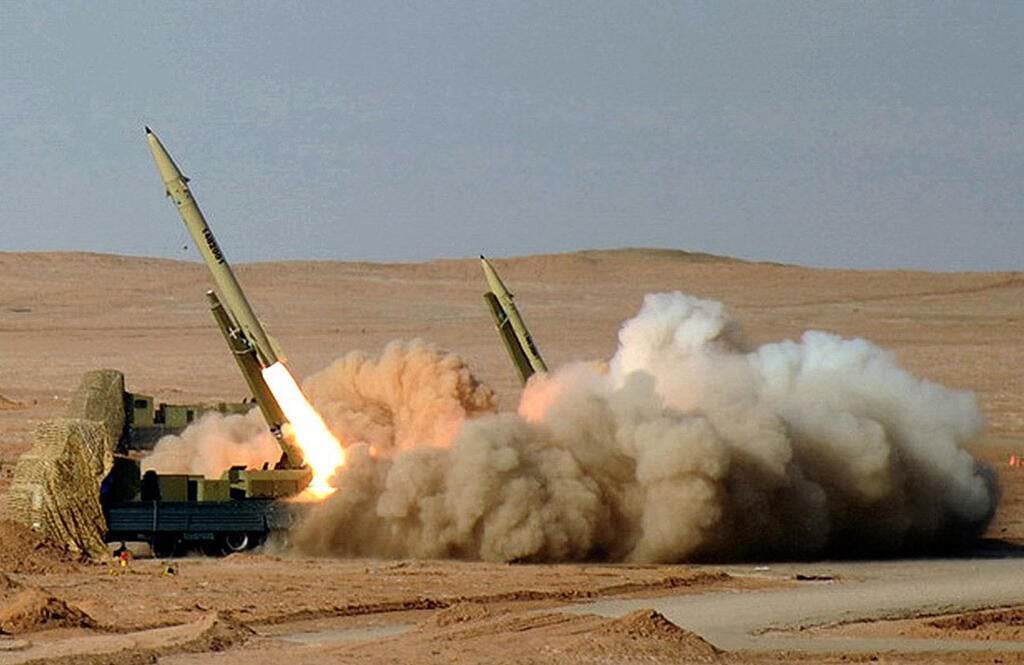
Iran’s Islamic Revolutionary Guard Corps (IRGC) is developing chemical and biological warheads for its long-range ballistic missiles, Iranian opposition outlet Iran International reported on Monday, citing informed military sources.
The sources said the effort is being led by the IRGC’s Aerospace Force and includes adapting ballistic missiles to carry unconventional payloads, alongside upgrades to related command-and-control systems. The activity comes as the IRGC transfers missile launchers to eastern regions of Iran, a move that has reportedly accelerated in recent months.
According to the report, the developments are taking place amid heightened regional tensions and growing concern in Tehran over the possibility of another direct confrontation with Israel and the United States.
Prime Minister Benjamin Netanyahu is currently in Florida and is expected to meet U.S. President Donald Trump on Monday. Netanyahu is expected to brief Trump on potential options for future strikes against Iran, amid Israeli concerns that Tehran is rebuilding ballistic missile production facilities and repairing air defense systems damaged during the 12-day war in June.
Iran International’s sources said the chemical and biological warhead programs are intended to serve as what Iranian decision-makers view as a “complementary deterrent factor” to Iran’s conventional missile arsenal, particularly in scenarios involving large-scale conflict.
The reported push for unconventional weapons comes about six months after Iran’s foreign minister described the country as “the largest victim of chemical weapons in modern history,” referencing a 1987 mustard gas attack by Saddam Hussein’s forces on the Kurdish town of Sardasht. According to documentation by the Organisation for the Prohibition of Chemical Weapons, more than 100 people were killed in that attack.
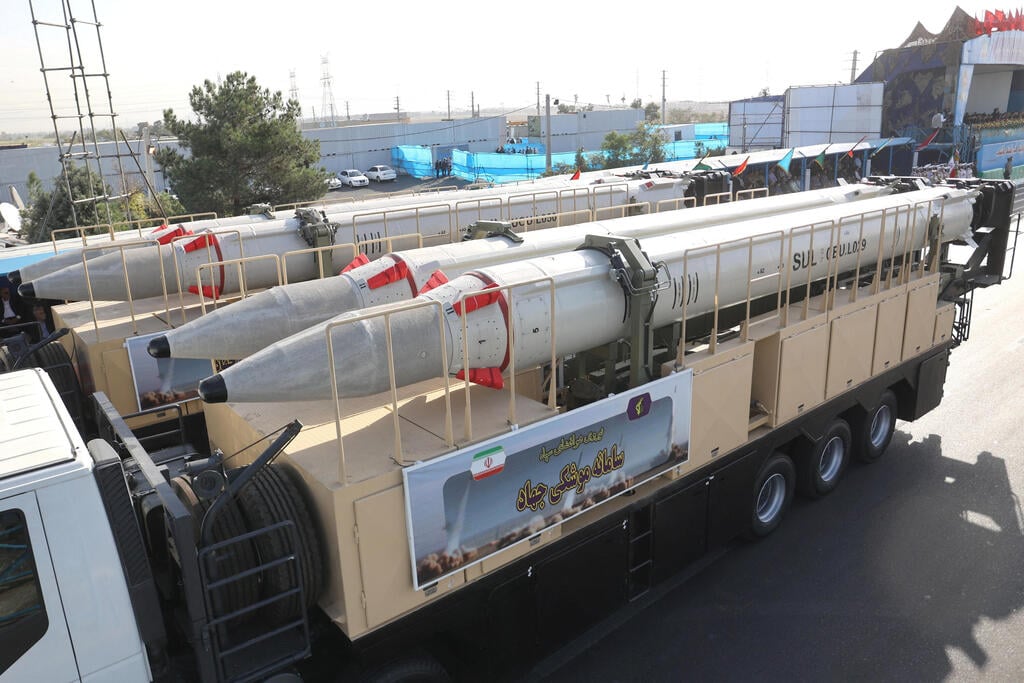
(Photo: Majid Asgaripour/WANA (West Asia News Agency) via REUTERS)
Asked about the apparent contradiction, one source told Iran International that Iran’s leadership views potential Israeli and American strikes as an existential threat and believes that, in such a scenario, sharply raising the cost for its adversaries would be justified. The source added that at the highest levels of the Islamic Republic, there is a belief that the use of unconventional weapons could be warranted under conditions of existential danger.
Last week, Iran International reported that Western intelligence agencies had identified “unusual” activity by the IRGC Aerospace Force and had stepped up monitoring of its movements. According to the report, intelligence services are tracking command-and-control signals as well as deployments and logistical activity linked to the force.
Military analysts cited by the outlet warned that if confirmed, the development of chemical and biological warheads could dramatically alter the region’s deterrence balance and trigger strong international reactions. Such a move would likely draw widespread condemnation and could lead to additional sanctions and increased diplomatic pressure on Tehran.
Iran has consistently denied seeking unconventional weapons and says it remains committed to its international obligations. At the same time, Tehran has steadily expanded the range, accuracy and diversity of its ballistic missile arsenal in recent years — a program that has long alarmed Western governments and regional states.