

Some details of the skirmish between the U.S. military and Iran on Thursday night have yet to be released. But President Donald Trump, as is often the case, disclosed several details about the incident.
Trump gave a vivid account of the Iranian attack on three U.S. destroyers, which were not damaged.
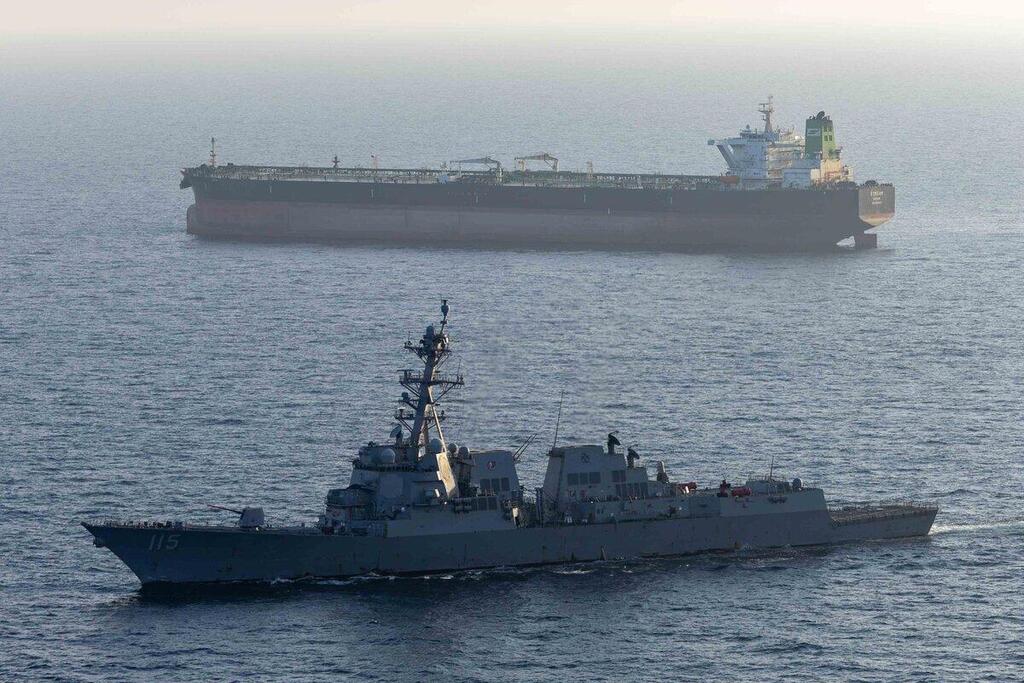
“Missiles were shot at our Destroyers, and were easily knocked down,” Trump wrote on Truth Social. “Likewise, drones came, and were incinerated while in the air. They dropped ever so beautifully down to the Ocean, very much like a butterfly dropping to its grave!”
Meanwhile, new satellite images from the company Soar appeared to show large, fresh oil slicks off Kharg Island, Iran’s main oil export hub. Tehran confirmed over the past week that oil production had been reduced because of the U.S. blockade, but the circumstances behind the slick remained unclear.
It could be the result of a leak. Other claims have suggested oil was pumped into the sea because storage space had run out due to the blockade. In newer images, the oil slick appeared to be moving south.
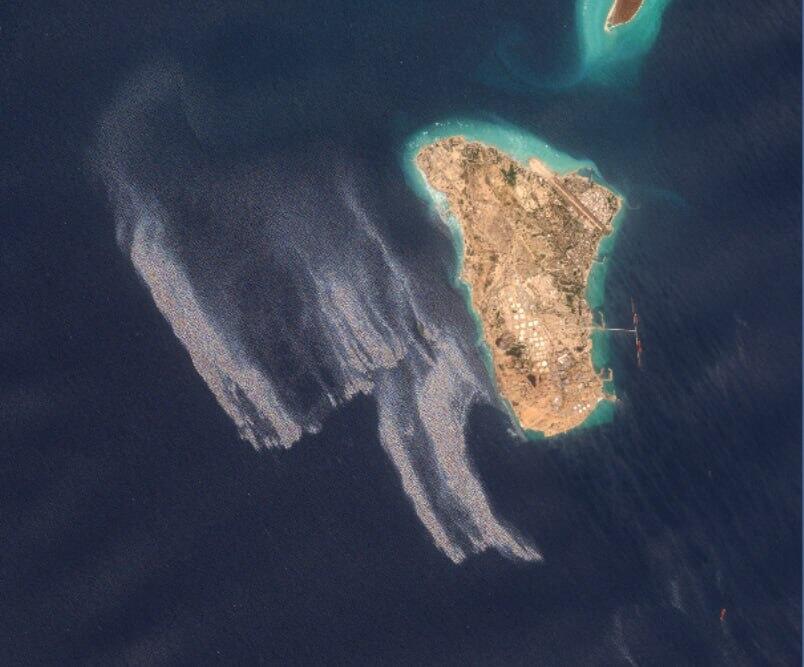
Satellite images appeared to show large, fresh oil slicks off Iran's Kharg Island
(Photo: Soar)
Social media users expressed concern over what appeared to be an oil spill in the satellite images.
“This must be dealt with quickly before the oil reaches the coasts of other Gulf states,” a Saudi influencer wrote on X, where he has more than 750,000 followers.
In a statement overnight, the U.S. military said the three destroyers involved in the exchange of fire with Iran and that crossed the Strait of Hormuz “successfully,” as Trump put it, were the USS Truxtun, USS Rafael Peralta and USS Mason.
It was still unclear whether the destroyers crossed into the Gulf or out of it. Earlier this week, the ships were reported to be in Gulf waters as part of Project Freedom, an initiative announced by Trump. He quickly canceled it, saying he did so at the request of Pakistan’s government.
Iran fires missiles toward US vessels in Strait of Hormuz


The three destroyers are Arleigh Burke-class ships. CNN has described them as the Navy’s “workhorses,” with 75 such ships in active service.
Each of the three ships, more than 500 feet long, is equipped with multiple defense systems designed to counter ballistic missiles, cruise missiles and shorter-range threats. Advanced Standard missiles can intercept ballistic and cruise missiles, while the Sea Sparrow system can respond to other threats.
Should targets get past those two systems, the destroyers can also use the Phalanx system, a radar-guided 20 mm Gatling gun capable of firing 4,500 rounds per minute and considered the ships’ “last line of defense.” The destroyers also have a 5-inch, or 127 mm, gun mounted on the bow, intended for targets such as Iran’s fast boats.
U.S. officials confirmed that Tehran sent fast boats toward the destroyers. Trump said “the Iranian attackers... were completely destroyed along with numerous small boats” and that they “went to the bottom of the Sea, quickly and efficiently.”
Iran reported that “the enemy,” later identified as the United States, had struck a pier on Qeshm Island. The U.S. said it struck Iranian military facilities responsible for the attack on U.S. forces, including missile and drone launch sites, command-and-control sites and intelligence, surveillance and reconnaissance facilities.
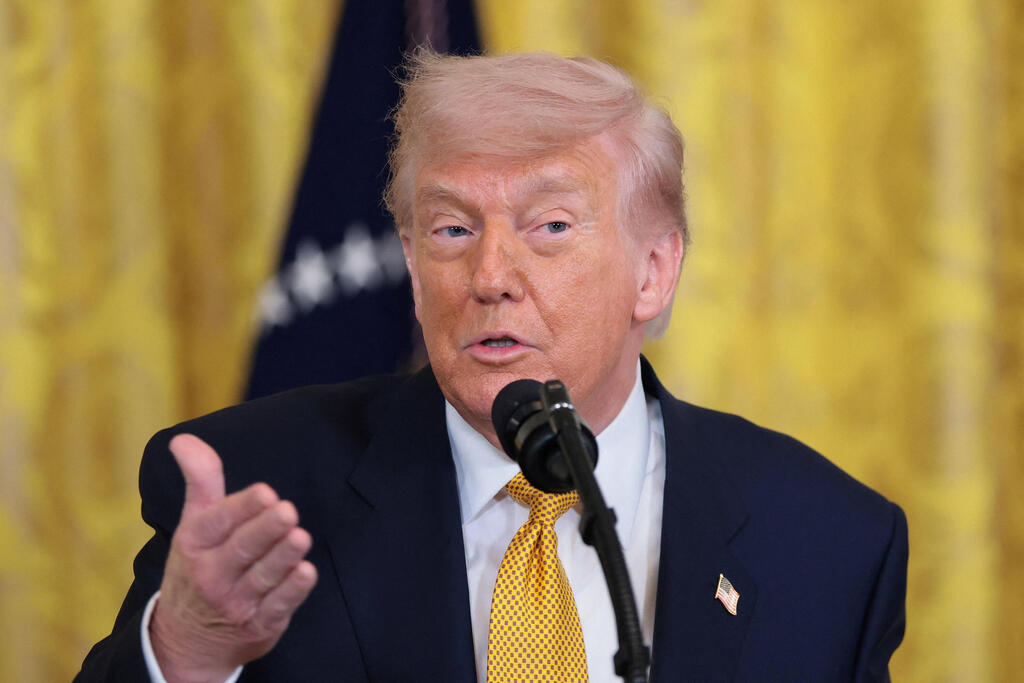
US President Donald Trump
(Photo: REUTERS/Kylie Cooper)
Speaking to ABC News' Rachel Scott, Trump described the exchange of blows between the sides as “just a love tap” and said that, as far as he was concerned, “the ceasefire is going.”
Iran, which initially blamed the United Arab Emirates, claimed it launched its attack in response to a violation of the ceasefire after the destroyers crossed the Strait of Hormuz. An Iranian military spokesman also threatened that Iran would respond “forcefully and without hesitation.” Later, however, Iranian television reported a “return to routine.”
Saudi officials appeared to be pushing back against reports from Thursday that Riyadh had demanded an end to Trump’s Project Freedom.
“Saudi Arabia seeks to calm the situation and supports Pakistan’s efforts to reach an agreement to end the war,” a Saudi source told the Saudi television network Al Arabiya. “There are parties seeking to present a misleading picture of Saudi Arabia’s position for suspicious reasons.”