

U.S. President Donald Trump’s sudden reversal on the plan to help ships pass through the Strait of Hormuz, came after Saudi Arabia suspended the U.S. military’s ability to use its bases and airspace for the operation, two U.S. officials told NBC.
According to the officials, Trump surprised Gulf allies when he announced Project Freedom on his Truth Social platform, angering the Saudi leadership. In response, Saudi Arabia informed the United States that it would not allow the U.S. military to operate aircraft from Prince Sultan Air Base, southeast of Riyadh, or cross Saudi airspace to support the operation.
A call between Trump and Saudi Crown Prince Mohammed bin Salman did not resolve the crisis, the two U.S. officials said, forcing the president to halt the project in order to restore the U.S. military’s access to vital airspace. Other close Gulf allies also were surprised by the move, with Trump speaking to Qatar’s leaders only after the effort was already underway.
Gallery
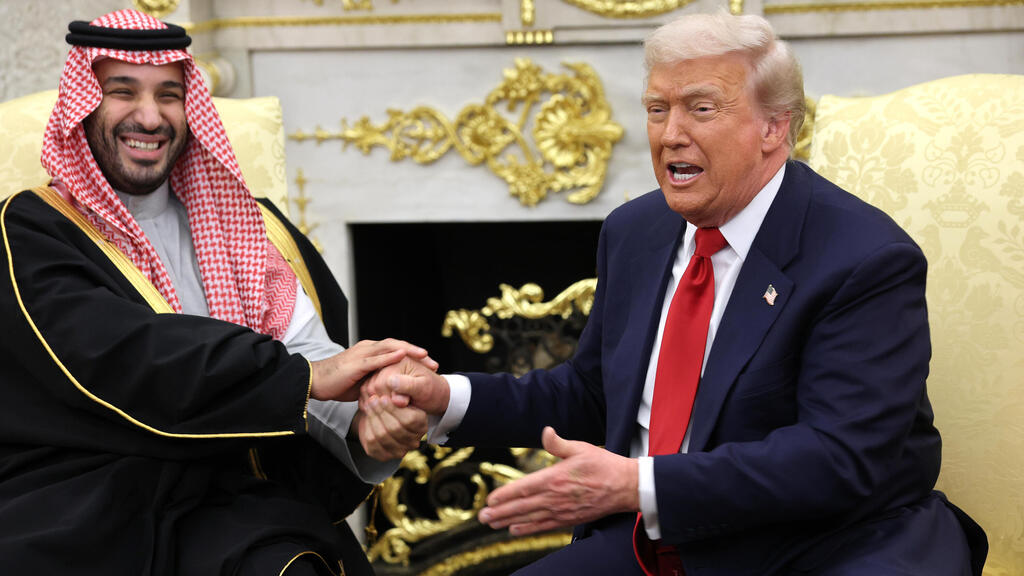
Trump and Saudi Crown Prince Mohammed bin Salman at the White House late last year
(Photo: Win McNamee/Getty Images)
A Saudi official told NBC that Trump and the crown prince “are in regular contact.” The official said Saudi officials also had been in contact with Trump, Vice President JD Vance, U.S. Central Command and Secretary of State Marco Rubio.
Asked whether the Project Freedom announcement surprised Saudi leaders, the official said: “The problem with that premise is that things are happening quickly and in real time.” The official said Saudi Arabia “strongly supports” Pakistan’s diplomatic efforts to mediate an agreement between Iran and the United States to end the war.
The White House rejected claims that the announcement surprised some Gulf leaders. A White House official said in response that “regional allies were briefed in advance.” However, a Middle Eastern diplomat said the United States did not coordinate the plan with Oman before Trump’s announcement. “The United States issued a statement — and then coordinated with us,” the diplomat said, adding: “We were not upset or angry.”
Trump announced the operation Sunday night, Israel time, as a way to break the Iranian blockade in the Strait of Hormuz. His senior national security officials spent much of Tuesday promoting the move in public briefings at the Pentagon and the White House, but the president abruptly halted it about 36 hours after it began.
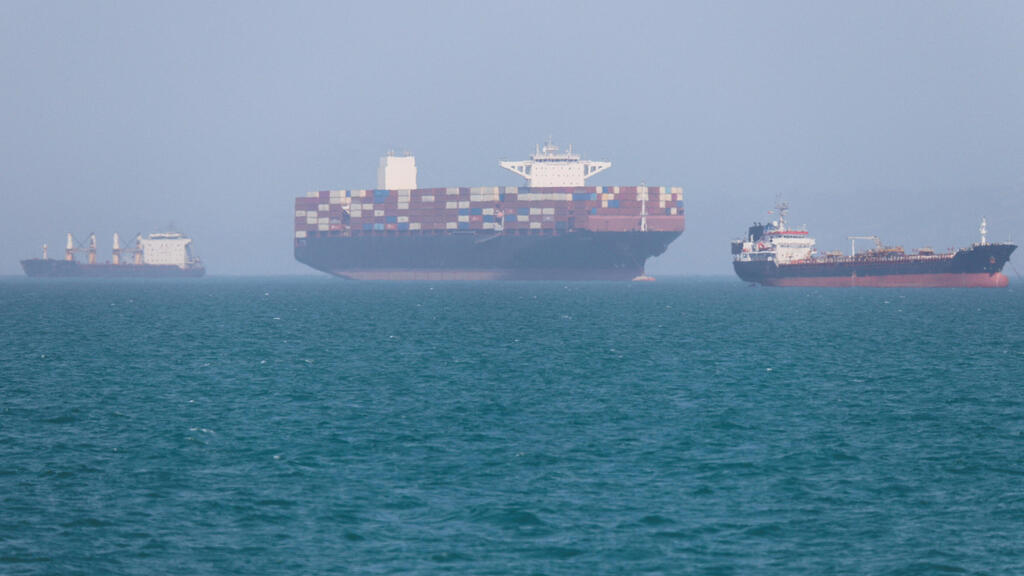
Ships in the Strait of Hormuz
(Photo: Amirhosein Khorgooi/ISNA/WANA (West Asia News Agency) via Reuters)
A U.S. official said the military had been preparing to move several more ships through the strait when the operation was halted. Earlier, U.S. Central Command said two U.S.-flagged vessels had already passed through the strait as part of Project Freedom. In a post, Trump wrote that the operation would be “paused for a short period” to see whether an agreement could be signed to end the war.
The U.S. military has fighter jets, refueling aircraft and air defense systems at Prince Sultan Air Base in Saudi Arabia. The Saudis had allowed the United States to operate aircraft from there in support of the war against Iran, and also allowed aircraft stationed in nearby countries to pass through Saudi airspace.
“Because of the geography, cooperation from regional partners is required to use their airspace along the borders,” a U.S. official told NBC. In some cases, the official said, there is effectively no alternative route. Military aircraft were essential to protecting the ships under Project Freedom, providing them with a kind of defensive umbrella.
The U.S. military refers to permission to use another country’s territory as ABO — access, basing and overflight. Fighter jets, refueling aircraft and support planes all need approval from key allies in the region. Saudi Arabia and Jordan are essential for basing aircraft on their territory, Kuwait is essential for overflight and Oman is essential for both overflight and maritime logistics.
After Project Freedom began, Trump called the emir of Qatar. A Qatari official said the two discussed the ceasefire agreement and “the implications for maritime security and global supply chains.” According to the statement, the emir stressed the importance of de-escalation.
The U.S. military continues to maintain a presence in and around the Gulf, and its footprint in the region is now larger than it was on February 28, when the war with Iran began. Two carrier strike groups are deployed in the region, and the Pentagon has reinforced its logistics and support capabilities and replenished stocks.
Under Project Freedom, the United States briefly provided military surveillance, firepower and personnel aboard ships to allow them to leave the Persian Gulf safely through the Strait of Hormuz. Iranian forces, meanwhile, continued to threaten ships and attack vessels passing through the critical maritime route. Pentagon officials said the operation was separate from Operation Epic Fury, which began February 28.