


The IDF is rushing new defenses to troops operating in southern Lebanon after Hezbollah released video showing FPV drones striking an Iron Dome battery, underscoring the growing challenge posed by cheap, precise unmanned aircraft even against one of the world’s best-known air defense systems.
The military said Sunday it was transferring thousands of meters of fishing nets across the border to maneuvering units in southern Lebanon. The nets are intended to trap drones and explosive-laden unmanned aircraft before they can detonate against troops or infrastructure.
Hezbollah FPV drone scores direct hit on Iron Dome battery


The improvised measure is being used alongside gunfire, detection systems, warning technology and other tools meant to identify and neutralize aerial threats. Israeli officials say drones and UAVs have become one of the most difficult battlefield challenges facing troops in Lebanon.
Hezbollah on Sunday published footage it said showed strikes on an Iron Dome battery on Thursday and Friday. The Israeli-developed short-range missile defense network used to intercept rockets fired at Israeli cities and towns has been heavily funded and supported by the United States.
The video highlighted a growing vulnerability: FPV, or first-person-view, drones. These small aircraft are guided by operators watching a live video feed and can be flown directly into targets. They have been used widely in the Russia-Ukraine war and are increasingly shaping the battlefield in the Middle East.
Israeli officials said Hezbollah is continuing to launch drones, UAVs, rockets and anti-tank missiles toward troops and northern Israeli communities, even as a ceasefire framework remains formally in place. Residents in northern Israel have expressed frustration over repeated alerts and fire from Lebanon as communities attempt to maintain daily life.
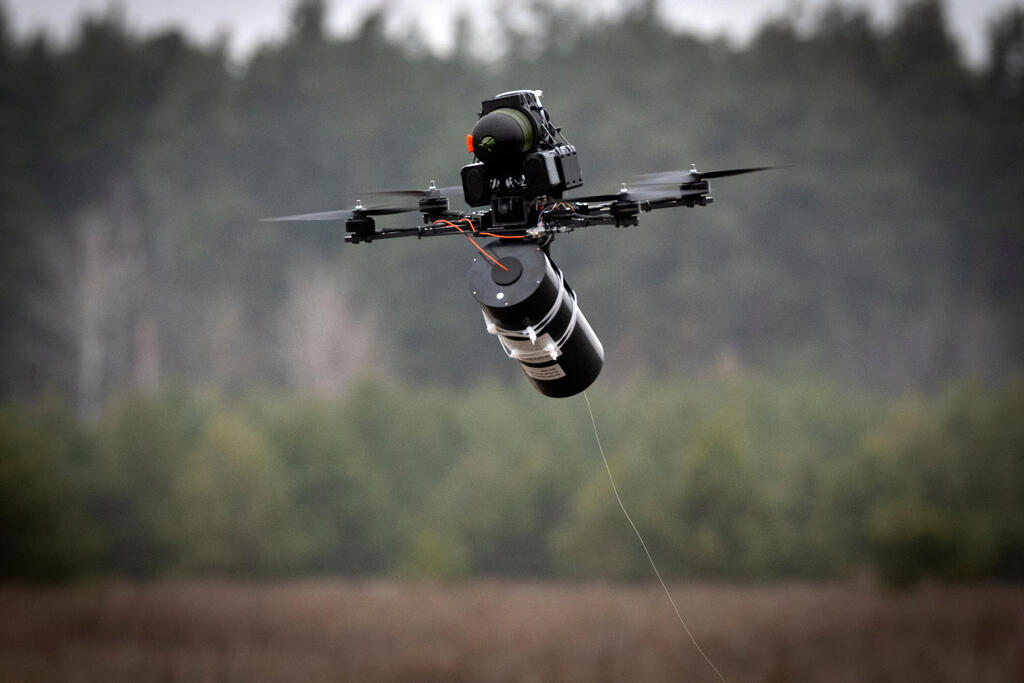
The military says there is no ceasefire for Israeli forces operating beyond the border. “There is no instruction to stop or limit offensive operational activity,” officials said, except for restrictions on deep strikes inside Lebanon as diplomatic talks between Israel and Lebanon are ongoing.
IDF Northern Command officials said the army is conducting a full-scale campaign using ground combat, artillery, fighter jets, attack drones and other means. They rejected claims that maneuvering battalions inside Lebanon are standing exposed as “sitting ducks,” saying no force is remaining stationary and that troops are clearing areas around and beyond the so-called "yellow line" ceasefire demarcation to find and destroy Hezbollah infrastructure.
The military said that only in the past 24 hours it struck 70 Hezbollah targets, and that it has carried out more than 800 strikes since the ceasefire was announced.
Officials said the current fighting is operating under diplomatic constraints, mainly a halt to attacks deep inside Lebanon. But they said those limits do not prevent Israel from acting when opportunities arise, including in Hezbollah strongholds such as Beirut’s Dahieh district.
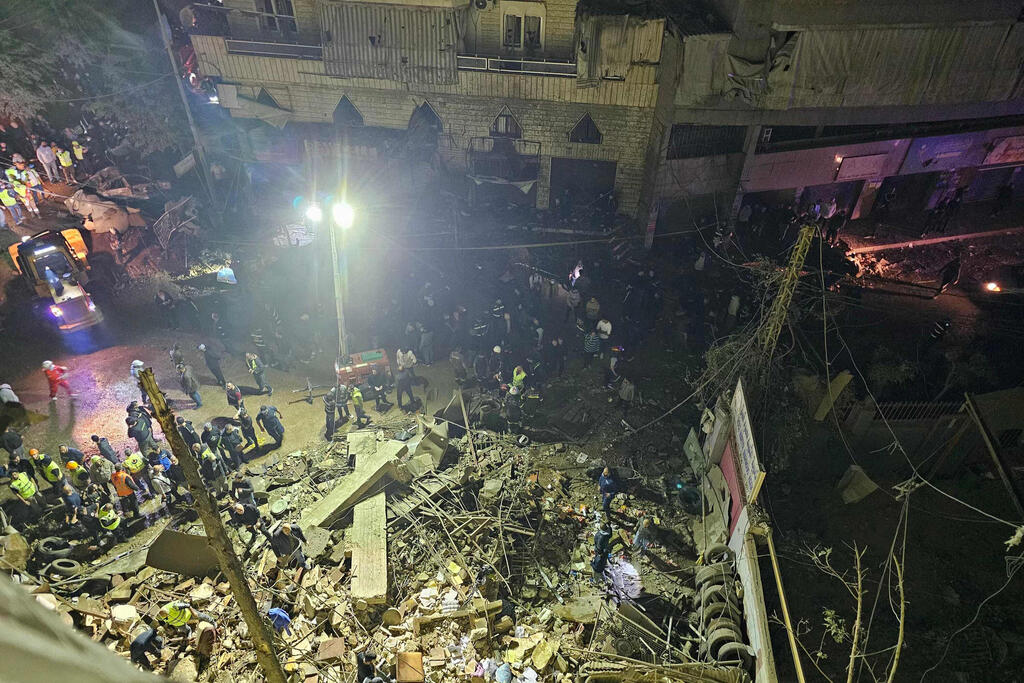
Aftermath of an Israeli strikes on Beirut's Dahieh district which killed Hezbollah Radwan Force commander Ahmed Ali Balout
(Photo: AFP)
“No one has immunity anywhere,” one Northern Command official said. “If there is an opportunity to thwart and strike senior enemy figures, we will reach them — even in Dahieh.”
The army said it has shifted its approach since the November 2024 ceasefire that followed Operation Northern Arrows against Hezbollah. Meanwhile, officials said Israel reduced its strikes and gave the Lebanese state an opportunity to act against Hezbollah deeper inside the country. They now describe that effort as a failure.
They say the military is no longer deterred from targeting Hezbollah operatives or commanders, even if the group responds with fire toward northern Israel.
After Israel killed Radwan Force commander Ahmed Ali Balout last Wednesday, Hezbollah fired rockets over the weekend toward Acre and the Haifa Bay area deep in northern Israel. Some fell short inside Lebanon, while others landed in open areas or were intercepted, causing no damage.
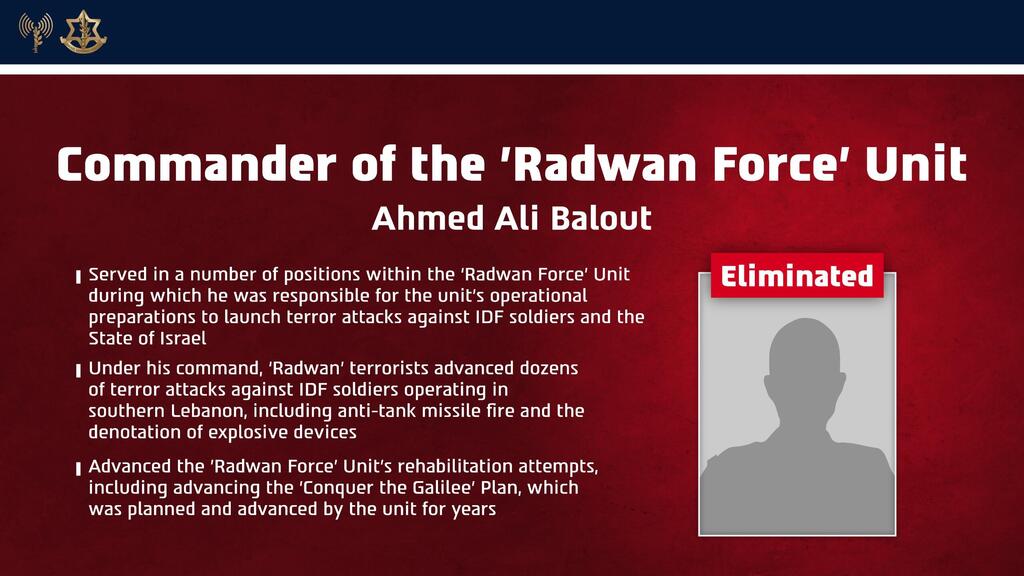
Hezbollah Radwan Force Commander Ahmed Ali Balout
(Illustration: IDF)
One official said Hezbollah’s response may have been intended to trigger a broader escalation. “The fact that we struck without taking into account the possibility that Hezbollah would respond is a significant conceptual shift,” the official said. “We were not surprised by Hezbollah’s response to the killing of the senior commander, but it also did not deter us from acting when there was an opportunity. We will continue to act with determination, push Hezbollah back and strike it.”
IDF Chief of Staff Lt. Gen. Eyal Zamir also addressed the northern front Sunday during a Knesset Foreign Affairs and Defense Committee hearing, saying, “There is no ceasefire.”
Zamir said the military had not been given the mission of disarming Hezbollah. Instead, he said, its objectives are to defend against anti-tank fire and raids, and to create conditions that would allow the Lebanese government to disarm the group.
Officials say the limits on deeper strikes in Lebanon and on expanding the campaign were set by political leaders, not the military. They say forces in southern Lebanon are continuing to operate without restrictions.
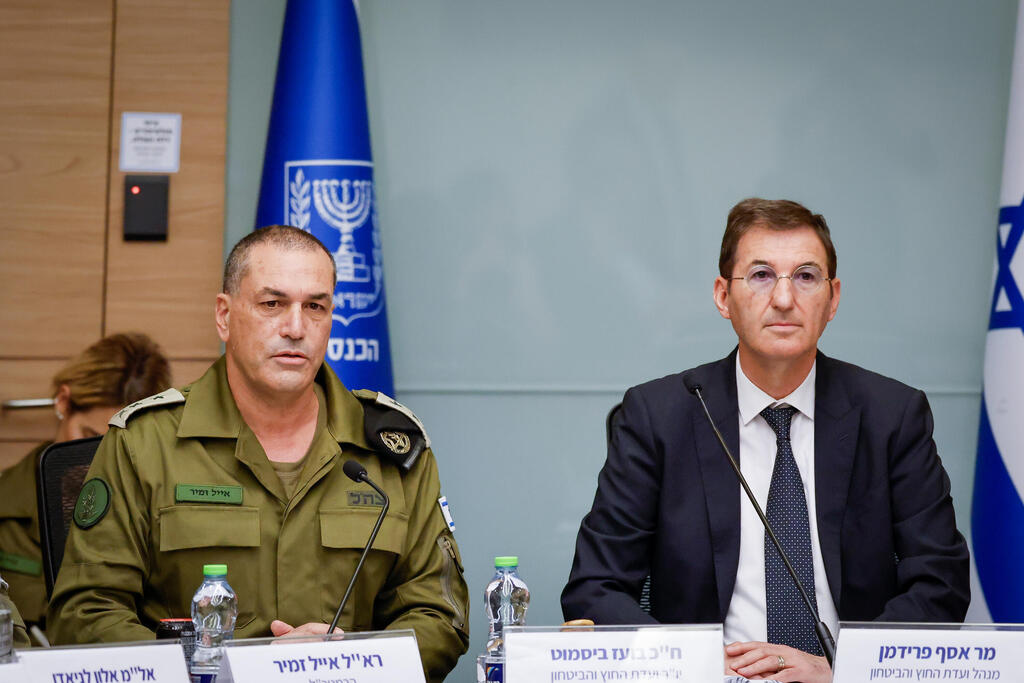
IDF Chief of Staff Lt. Gen. Eyal Zamir (left) during a Knesset Foreign Affairs and Defense Committee hearing
(Photo: Knesset)
The drone threat remains especially difficult. Israeli officials said no military, including those fighting in Ukraine and Russia, has found a perfect answer to the danger posed by small attack drones on the battlefield.
Hezbollah is estimated to fire several dozen short-range rockets, a small number of anti-tank missiles and more than 10 drones or UAVs at Israeli troops over an average day, officials said. Iron Dome provides relatively strong protection against rocket fire, but the military expects Hezbollah’s drone and UAV threat to remain a significant challenge for the foreseeable future.