

"I had an inner voice telling me, ‘Get up and go,’" says the character of Isaac Kumer in Shmuel Yosef Agnon’s novel "Only Yesterday," describing the emotions that led him to immigrate to the Land of Israel.
With a similar sense of purpose and excitement, a group of IDF reservists volunteered over the past year to establish a new light infantry division based on volunteer reservists—the 96th Division, also known as the David Division. Composed mainly of seasoned fighters who had aged out of mandatory reserve duty, the initiative quickly gained momentum by word of mouth. Others soon joined the effort, eager to help protect the communities where they live.
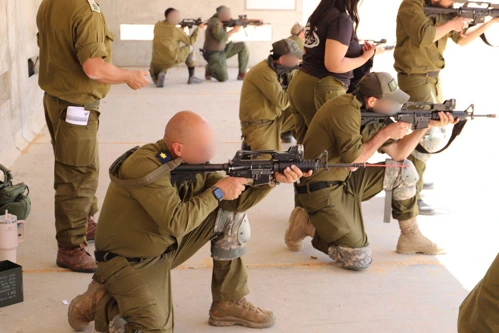
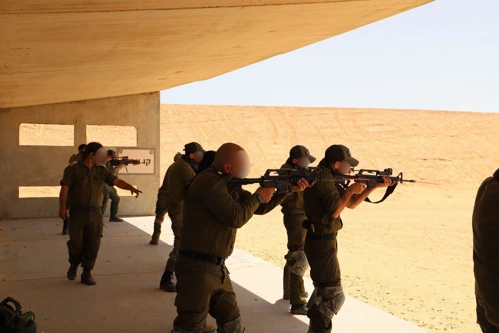
IDF 96th Division troops in training
(Photo: IDF)
How was a new division born?
The idea took shape shortly after the October 7 terrorist attack. "I remember getting into my car that Shabbat and heading north," recalls Lt. Col. (res.) O., commander of the 1891st Battalion, responsible for Be’er Sheva and the northern Negev region. "I joined the emergency storage unit where I had previously served in the reserves. We signed out equipment and reviewed combat procedures as part of the preparations for a potential conflagration with Hezbollah."
A resident of the southern town of Yeruham, A. says his time away from home in the north—and later while securing Gaza’s Netzarim Corridor—led to a key realization: "There needs to be a well-trained local force, with accessible combat gear, that can mobilize quickly and fight in its own backyard."
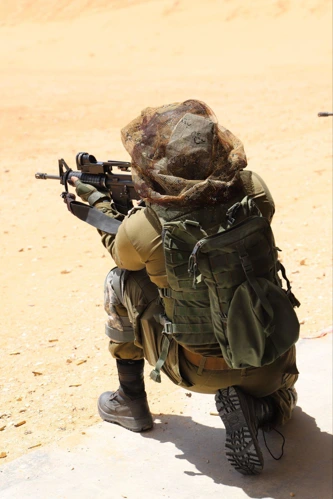
IDF 96th Division troops in training
(Photo: IDF)
Meanwhile, Lt. Col. (res.) R. joined the founding team as the division's operations officer and began working on its structure. "We drew a plan to divide the division into 25 operational zones. That’s how the idea was born: to create a full division with five brigades comprising a total of 25 battalions, based on where the fighters live."
By their second meeting with then-IDF Chief of Staff Lt. Gen. Herzi Halevi, they had already received the go-ahead and got to work. "We sat down with all the relevant officials in the Training Command and the Ground Forces Command," says Lt. Col. (res.) O. "That’s when words started turning into action, and the vision of building a new division no longer seemed so far off. You could see the people around you begin to understand what it meant—and gradually, they became partners in the mission."
Taking shape
The division’s chief operations officer, for example, was responsible for ensuring all systems were in sync. “As early as August, I began setting the objectives for each training session and exercise series,” Lt. Col. (res.) R. explains. “I outlined which courses the soldiers would undergo, compiled a list of logistical requirements, defined the recruitment and outreach goals and worked to coordinate all of this within the available budgets.”
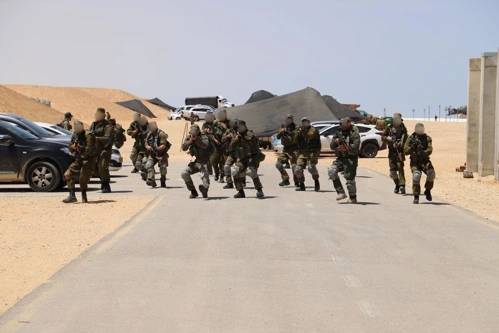
IDF 96th Division troops in training
(Photo: IDF)
Alongside the operational planning, the team also developed the division’s core values. “We held a three-day workshop with the officers who had already enlisted, and together we drafted the guiding principles,” recalls Lt. Col. (res.) A. “It was an emotional few days. Think about it—46 years had passed since the IDF last established a new division, and here we were, watching one come to life.”
Gradually, the division began to operate, and with a distinctive character. In addition to its geographical structure, it was shaped by another defining trait. “This division is built around fighters who had been exempt from reserve duty due to age—men over 40—who chose to re-enlist and return to meaningful service,” says Lt. Col. (res.) R. “It’s driven by a deep sense of purpose and a desire to protect their communities.”
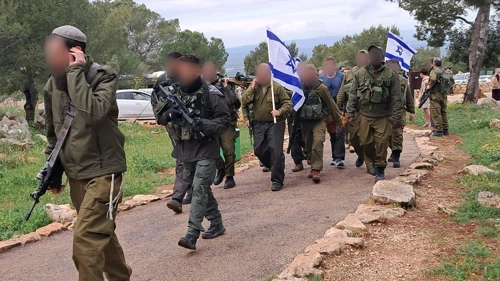
IDF 96th Division troops in training
(Photo: IDF)
Lt. Col. (res.) A., commander of the 1864th Battalion, responsible for the Afula and Beit She’an region, describes a powerful sense of camaraderie within the unit. “During nighttime training, if you step outside to the seating areas, you’ll see people playing music and singing classic Israeli songs. Some call us ‘the community division,’ and we really do emphasize a family atmosphere. Each battalion or brigade becomes its own social circle.”
Recruitment itself often happened through informal, local networks. Lt. Col. (res.) O. received a WhatsApp message via his basketball group. Others joined through neighborhood gatherings or casual conversations with their grocer. “We set up a mailing list and hosted in-home meetings, and people who wanted to join reached out to us,” he says. “At the same time, we established a divisional personnel office, allowing us to formally and systematically onboard new recruits.”
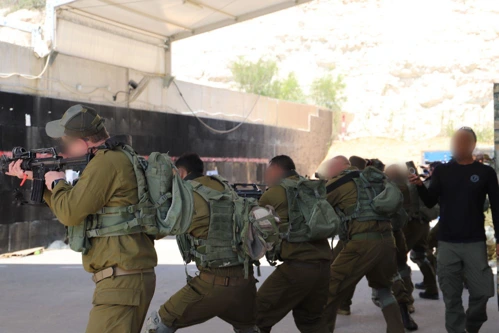
IDF 96th Division troops in training
(Photo: IDF)
Now, as the division enters a rigorous training phase that will prepare it for active security missions, excitement continues to build. “It’s an incredible feeling,” says the operations officer, clearly energized. “This was once just an idea, a dream—and now it’s becoming reality. At last week’s commanders’ training, I looked around and saw people full of motivation, eyes lit up with determination—it was amazing.”
“As a battalion commander, you sometimes feel like the engine of a train, responsible for pulling the cars behind you,” says Lt. Col. (res.) O. “But here, it feels like everyone has their own engine. Everyone is pushing forward, full throttle. There’s so much generosity and energy here—a military-civilian network that brings security, strength, light and spirit.”