


Israel has stepped up strikes against members of the Basij militia in Iran, targeting a force widely seen as a key instrument of the regime’s repression of dissent.
Following overnight airstrikes between Wednesday and Thursday that reportedly killed dozens, the opposition outlet Iran International reported that Basij members in Tehran moved their positions beneath bridges in an attempt to hide from further attacks.
Basij members in Tehran moved their positions beneath bridges


According to the report, the strikes have focused on local security posts, patrol units and street deployments used to enforce control in urban areas.
Iran’s Revolutionary Guard intelligence organization responded to the attacks by accusing its adversaries of attempting to stir unrest. In a statement carried by Iranian media, it said “the enemy is desperate to achieve its goals and once again seeks to spread fear and street chaos,” warning that a harsher response than the suppression of protests on Jan. 8 awaits what it called the “new ISIS.”
The Basij operates under the Islamic Revolutionary Guard Corps and functions as a paramilitary militia composed of volunteers. Its exact size is unclear, but estimates suggest it includes hundreds of thousands of members, with millions more who can be mobilized in an emergency.
Members of the Basij are generally divided into three groups: full-time participants who are regularly active, part-time volunteers who take part in activities such as reporting on local events and suspected dissent, and registered members who are affiliated with the organization but not actively involved.
The Wall Street Journal meanwhile reported that Israel has also relied on intelligence provided by Iranian civilians to help identify targets during the attacks.
A senior Israeli security official told the newspaper that such information was used during the latest overnight strikes, which reportedly targeted Basij checkpoints in Tehran using Hermes drones.
According to the official, details about potential targets were sent to Israeli-operated social media accounts in Persian. The information was then verified before strikes were carried out.
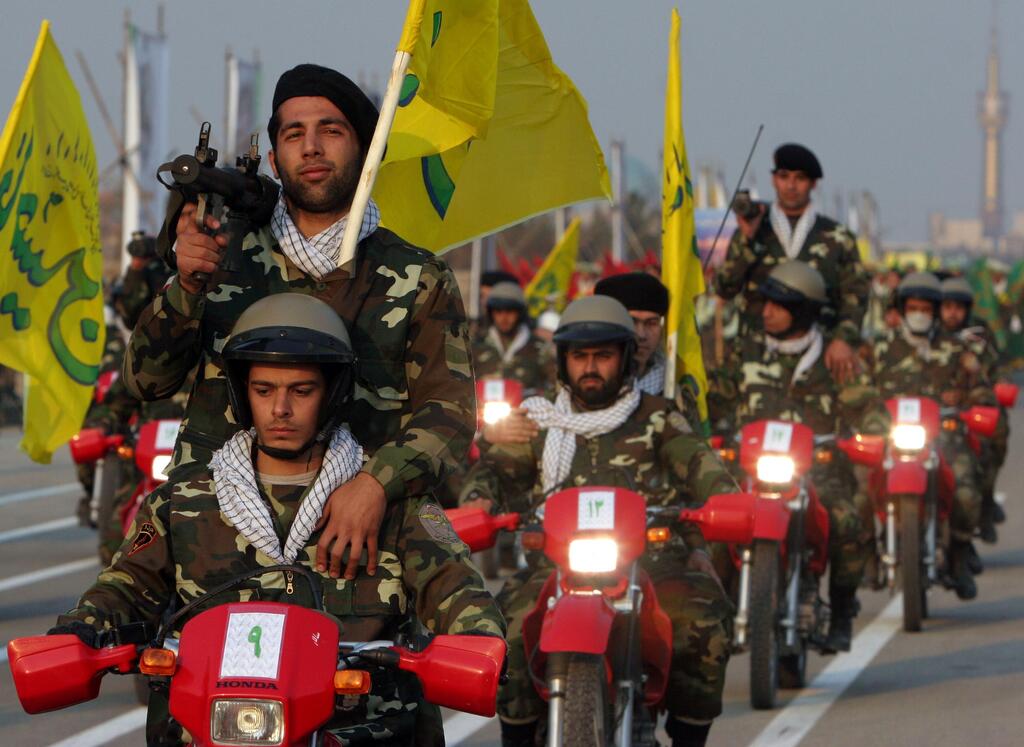
Basij volunteers march near Tehran
(Photo: Vahid Salemi/AP)
Earlier, the military confirmed reports that the air force had struck Basij checkpoints in Tehran. The militia, subordinate to the Revolutionary Guard, has played a central role in suppressing opposition to the clerical establishment and has been widely blamed for the deadly crackdown during the most recent wave of protests.
The military also released a video it described as “special footage from the skies over Tehran,” showing strikes on road checkpoints that Basij forces had recently set up.
Officials in Israel said the scale of the attacks was significant. However, with reports suggesting the Basij network includes millions of volunteers, it remains unclear how much the strikes will affect the militia’s overall capabilities.
Security officials familiar with the operations said the campaign initially focused on Iran’s nuclear and ballistic missile programs but is now shifting toward targeting the regime itself and its mechanisms of repression.
“The goal is to weaken the repression apparatus to make it easier for the people to take to the streets,” one official said.