

The Israeli military confirmed Thursday evening that the Air Force bombed checkpoints belonging to Iran’s Basij militia — a force subordinate to the Islamic Revolutionary Guard Corps that plays a central role in suppressing opposition to the regime and is widely blamed for the deadly crackdown on protesters during the most recent wave of demonstrations.
The Israel Defense Forces also released what it described as “special footage from the skies over Tehran,” showing strikes on roadblocks that it said Basij forces had recently set up across the city.
Footage of strikes on checkpoints and fighters of the Basij unit recently set up in Tehran
(Video: IDF Spokesperson)


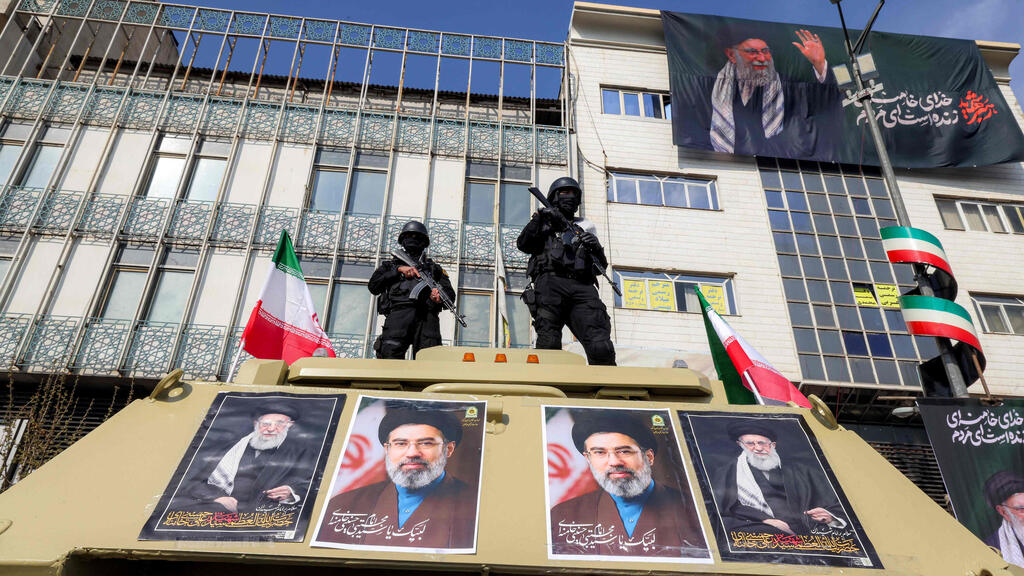
Israeli officials said the damage was on a massive scale, though the actual impact of the strikes remains unclear given that the militia is believed to include millions of volunteers.
“Following the wide-scale degradation of many Iranian Security Internal and Basij Forces assets, the IDF recently identified that soldiers of the Basij Unit had established roadblocks in several locations across Tehran,” the military said in a statement. “After identifying the deployment, over the past day, the Israeli Air Force, acting on IDF intelligence, has targeted the Basij roadblocks and operatives.”
“These armed forces are part of the Iranian terrorist regime’s security apparatus and have been responsible for carrying out terror attacks for years,” the statement added.
The IDF also said the forces have led the regime’s primary repression of internal protests, particularly in recent months, “employing severe violence, mass arrests, and the use of force against civilian demonstrators.” The military said it would continue targeting “the Iranian terror regime's military systems and operatives anywhere they operate.”
The strikes, it added, are part of a new phase aimed at deepening the damage to the Iranian regime’s core structures.
Millions of volunteers on call
Senior Israeli officials familiar with the details of the attacks said the damage inflicted on the Basij overnight was “enormous.” Until now, they said, Israel had focused primarily on Iran’s nuclear program and ballistic missiles, but attention is now shifting toward weakening the regime itself and its repression mechanisms.
“There have also been many strikes on their headquarters on a large scale to enable the Iranian people to rise up,” the officials said. “The goal is to weaken the repression apparatus in order to make it easier for the public to take to the streets.”
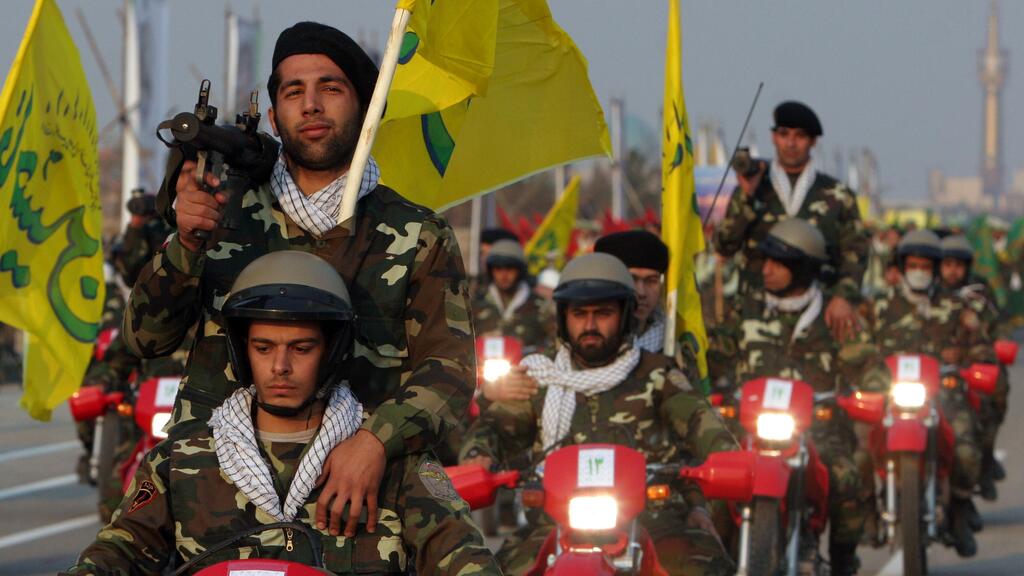
A parade of Basij volunteers near Tehran, April 2024
(Photo: Vahid Salemi/AP)
The Basij operates under the Revolutionary Guards. It is a paramilitary force made up of large numbers of volunteers — men and women, students and older citizens.
Its exact size is unclear. Various estimates suggest the militia has several hundred thousand active volunteers — up to about 600,000 — with millions more who could be mobilized quickly in an emergency. Estimates of the broader reserve range from several million to as many as 20 million.
Members of the Basij can be divided into three groups. The first includes year-round activists who operate much like members of the Revolutionary Guards. The second group consists of “informants” — people who participate occasionally and primarily report suspicious activities. The third includes individuals who have simply registered with the Basij but are not actively involved.
In recent years Basij volunteers have helped the regime confront anti-government activity. Among other roles, they have assisted police and security forces in dispersing public protests, and have carried out security, cultural and religious tasks, including activities connected to Iran’s morality police.
According to Al Jazeera, Basij volunteers also organize ceremonies and propaganda campaigns for the Revolutionary Guards across the country.
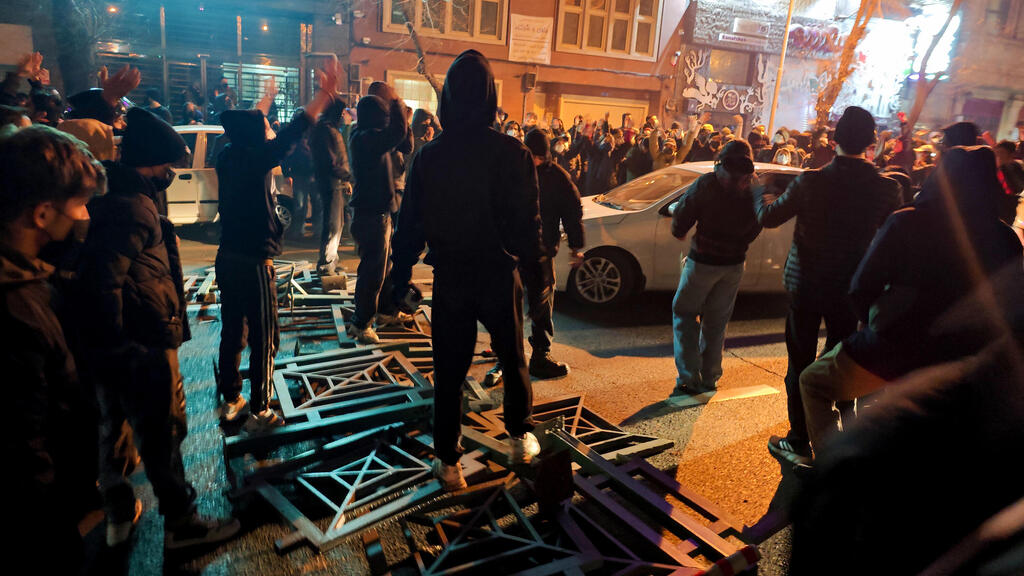
Anti-regime protest in Tehran, January 8
(Photo: Anonymous/Getty Images)
During protests that erupted in late December and peaked in the second week of January, the Iranian regime deployed Revolutionary Guard forces and Basij volunteers to city streets. According to reports, they received explicit authorization from Supreme Leader Ali Khamenei — who was killed on the first day of the war — to open live fire on demonstrators in an effort to suppress the protests at any cost.
Some reports estimate the death toll from the crackdown at more than 30,000 people. Iranian authorities described the protesters as “terrorists” acting on behalf of the United States and Israel, while Khamenei himself claimed the demonstrations were part of an attempted coup allegedly orchestrated by the Mossad and the CIA.
Basij commander Gholamreza Soleimani said in February, after the protests were suppressed, that “the nation is ready to resist the enemy. The Basij is prepared to create the greatest and most glorious defense against enemies.”
The war has dealt a heavy blow to Iran’s senior leadership, but at the local level, the Revolutionary Guards and the Basij forces under their command appear to have remained resilient.
Iranians who fled areas targeted in the strikes said Basij members now appear more heavily armed than usual.
“They are waiting for the slightest sign of disobedience,” said a lawyer who fled her hometown following the attacks.