


While officials insist on presenting a reality of “ceasefire” and calm, soldiers in outposts, bases and along routes in southern Lebanon are facing a daily war, centered on Hezbollah’s explosive drones and UAVs.
On Tuesday morning, an explosive drone launched at IDF forces detonated inside Israeli territory near the Lebanese border. Shortly before that attack, an unmanned aircraft that crossed into Israel from Lebanon was intercepted, and interceptor debris fell in a western Galilee kibbutz, causing minor damage.
However, instead of a broad, lifesaving defensive response being funded and managed as a national interest, the reality on the ground is forcing tactical commanders to rely on private initiatives: worried parents raise money to buy protective nets, and battalion officials sometimes find themselves swiping their personal credit cards to protect exposed weak points.
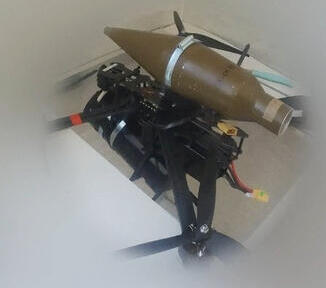
The IDF says it has deployed about 118,000 square meters of protective netting, but military officials acknowledge shortages remain. One professional source explained the operational math: “A brigade operating in a sector needs about 15,000 square meters of netting for infantry forces, armored fighting vehicles and protection of ‘hot spots.’ About 120,000 meters have been distributed so far, but much more is needed. There are deception operations and other elements that require nets, so there are definitely shortages.”
Not every net is suitable for the mission. The IDF tested eight types of netting, and only four met the required standard.
The shortage of physical protection is especially evident at the most sensitive points in the sector. Explosives loaded with shells are placed outside armored vehicles. These areas, along with antennas, communications trucks and radar systems, are high-value targets for enemy drones, as clearly seen in Hezbollah propaganda videos.
“The incidents we saw in Hezbollah videos are being investigated,” a military source said. “Most hot spots are protected, but some still are not, and efforts are underway to protect them too. The soldiers received instructional videos. It takes time.”
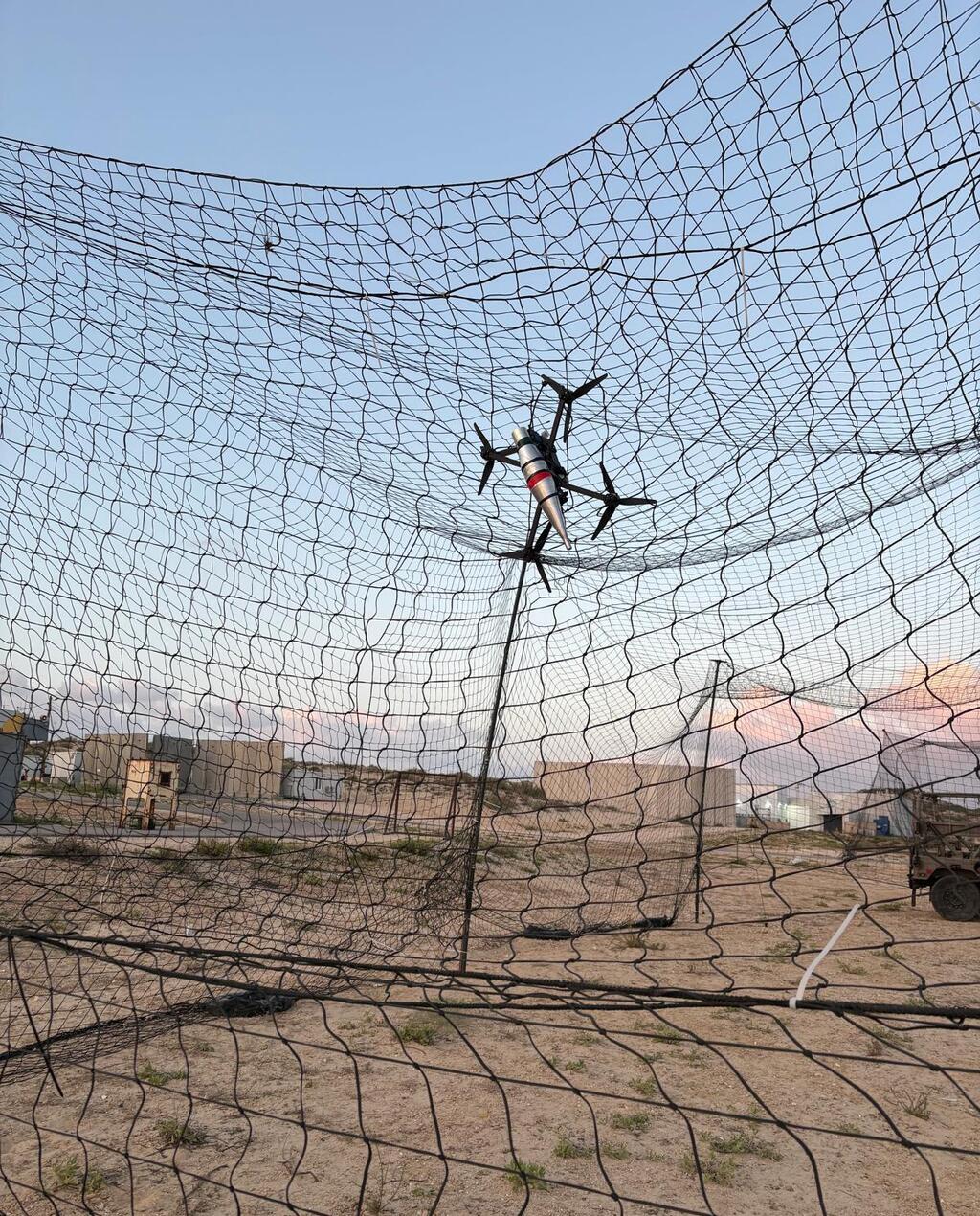
A Hezbollah drone caught in a net
(Photo: IDF Spokesperson's Unit)
The operational demand from the field is for a continuous 24/7 layer of physical protection, requiring a plan to immediately activate civilian contractors and logistics teams to professionally net the outposts.
Ynet and Yedioth Ahronoth have learned that in recent days Northern Command established a special monitoring team tasked with moving between bases and forces to ensure troops are using the nets properly. According to a military source in the field, there are still “growing pains” when it comes to troop proficiency: “There are forces that move from house to house, deploy nets, but after moving on leave the net in the previous house. There are also cases of units that completed maneuvers and took the nets with them to the next rotations. Bottom line, there are shortages, but more nets will arrive soon.”
Alongside efforts at physical protection, the military is trying to close the interception gap through creative means. Troops in the field will soon receive dedicated magazines of fragmenting 5.56 mm rounds. Each bullet splits after firing into five to eight projectiles, with the goal of widening the hit area and increasing the chance of downing a drone in flight.
net and Yedioth Ahronoth also have learned that the IDF is currently conducting operational suitability tests for shotgun-type rifles seized as war booty in Hezbollah strongholds in southern Lebanon. Since the IDF does not routinely use such weapons, it is now examining whether to deploy them in a targeted role against drones, as shotgun rounds are especially effective in widening the impact area at short ranges.
The military understands that protection and tactical drone interception will have to take place several kilometers inside Lebanese territory. However, security officials stress that passive and active defense will not be enough.
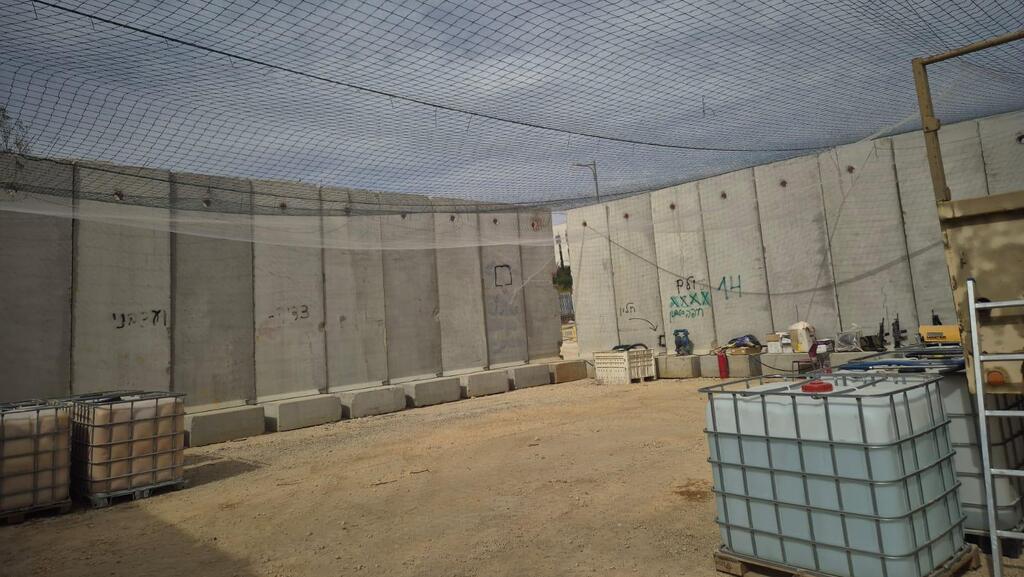
A net against the threat of drones from Lebanon
(Photo: IDF Spokesperson's Unit)
“Dealing with the drone threat will not come from defense alone,” one official said. “It is closely tied to striking the chain — supply routes, the heads of Hezbollah’s drone array and, of course, the launchers themselves.”
But that is precisely the problem now: While the Ground Forces Command identified the strategic need and established a special task force to advance the issue of low-altitude threats, plans to establish brigade-level command cells for drone defense are being delayed and are not progressing at the required pace.
The government, it appears, is avoiding sharp strategic decisions and relying on a political reality dictated by the United States — one that sanctifies a “ceasefire” that exists mainly on paper. At the start of the campaign, no political official imagined the northern campaign would last this long, certainly not in its current format, in which the IDF remains limited and constrained by diplomatic considerations and is, at this stage, refraining from hitting Hezbollah where it hurts and crushing the drone array the organization has built.