


Since the ceasefire between Israel and Lebanon took effect in mid-last month, Hezbollah has continued launching First Person View (FPV) drones toward forces operating in the “Yellow Line” area and toward communities in northern Israel. The FPV drones currently used by Hezbollah are based on fiber-optic guidance and have become the group’s main attack tool.
FPV drones enable precise strikes at distances of tens of kilometers while overcoming electronic warfare capabilities. In a review published by the Meir Amit Intelligence and Terrorism Information Center (ITIC), it was noted that Hezbollah operates makeshift production facilities in southern Lebanon and the Beqaa valley to assemble these small aerial vehicles, which cost only $300–$400 each. The report also said that last year the Lebanese army seized a shipment of 5,000 drones smuggled into the country but dozens of other shipments still made it to Hezbollah.
Hezbollah drone strikes the IDF forces in Lebanon


“The use of drones allows Hezbollah to increase pressure on the IDF at low cost while amplifying the psychological impact due to the difficulty of intercepting them before impact,” the ITIC report said. “We assess that for this reason the use of drones is expected to continue and even expand while improving capabilities and integrating them into more complex combat systems.”
The FPV drones are relatively small and are controlled in real time through an onboard camera that transmits a direct image to the operator. They can carry a small payload of a few kilograms and be directed with high precision toward a target. The most common type on the battlefield is fiber-optic guided drones, which are connected to the operator via a thin cable that can reach tens of kilometers and prevents disruption by electronic warfare systems.
These drones have become a central and dominant tool in the Russia-Ukraine war. A report by the French Institute of International Relations found that most casualties in 2025 were caused by low-cost drones, concluding that this represents “a new pattern of warfare.” Hezbollah began integrating FPV drones at the start of the war. However, in the current campaign, which began alongside operation “Roaring Lion” in Iran, these drones have become one of the group’s primary attack capabilities.
According to data from ITIC, since early March Hezbollah has claimed more than 70 FPV drone attacks. The report added that since the ceasefire in Lebanon took effect in mid-April, drones have become the leading method of attack against IDF forces. According to the data, more than half of Hezbollah’s attack claims in the past two weeks included the use of FPV drones, resulting in killed and wounded IDF soldiers operating in southern Lebanon.
In-house production and a large stockpile
ITIC noted that Hezbollah operates workshops for domestic production, assembling drones from off-the-shelf components at relatively low cost. “Hezbollah relies on experience gained in the Syrian civil war along with lessons from the Russia-Ukraine war and knowledge and technologies from Iran,” the report said. It also stated that according to sources Hezbollah has accumulated a large stockpile of drones.
According to the report cited in the review, in June last year Lebanese security forces seized a shipment of 5,000 drones capable of flying 50 kilometers and carrying seven kilograms of explosives but dozens of other shipments still reached Hezbollah. The report also said Hezbollah developed fiber-optic drones itself and that the organization possesses different types of drones allowing strikes up to 15 kilometers into Israeli territory including against armored vehicles.
'The strategic surprise of the campaign'
Media outlets affiliated with Hezbollah and the “Axis of Resistance” have emphasized the importance of drones as “a significant tactical tool on the battlefield that can undermine the IDF’s technological advantages at low cost.” The Intelligence and Terrorism Information Center cited several prominent analyses, including comparisons to Kornet anti-tank missiles from the Second Lebanon War. “Fiber-optic FPV drones represent the most prominent strategic surprise of the campaign,” affiliated with Hezbollah Al-Manar channel wrote. Al-Manar also cited a Beirut research institute report stating that drones have “undermined Israel’s air superiority concept and created a new layer of threat on the battlefield.”
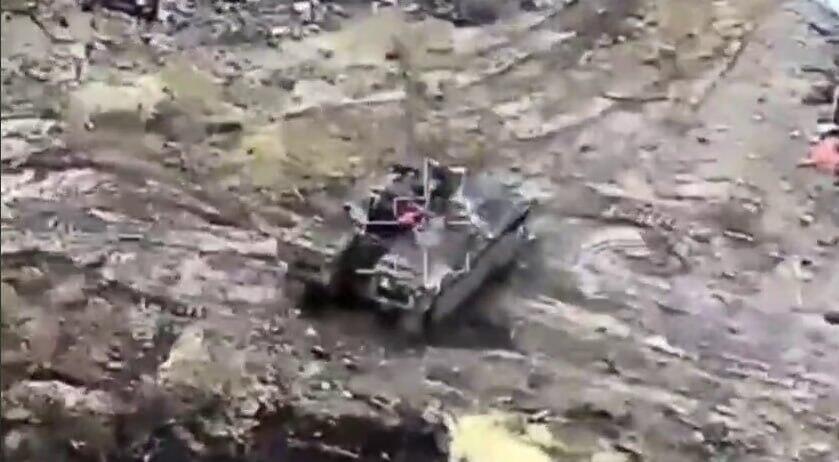
Hezbollah drone strikes the IDF forces in Lebanon
The Lebanese report further described drones as enabling a single fighter with relatively limited training to strike expensive and well-protected targets while creating an economic and operational gap between the cost of the system and the damage caused. The study concluded that FPV drones “prove that the last word on the modern battlefield is not written only by the roar of fighter jets but by the hum of small drones that strike silently, are neither seen nor heard but hit lethal weak points.”
In another Hezbollah-affiliated newspaper, Al-Ahed, it was written that fiber-optic drones “are redefining the rules of engagement.” The newspaper said traditional defense systems are now facing a challenge and that improvements in range and payload capacity will expand their use. “The center of gravity will shift from destroying assets to striking the system’s operational backbone,” it said. “The drone is not just another weapon but a tool that changes the cost-benefit balance and the limits of the adversary’s operational freedom.”
The Hezbollah-aligned website Al-Khanadeq also said drones are “changing the rules of the game,” noting they “create a new equation through precise strikes, low cost and rapid execution.” It added: “Geographic depth is no longer the decisive factor. In southern Lebanon new rules of warfare are being imposed that restrict the IDF and limit its ability to penetrate and strike.”
Psychological warfare
The Lebanese Hezbollah-affiliated Al-Mayadeen network said, citing sources, that “drones create a significant psychological effect through documentation and dissemination of strikes, contributing to shaping a new combat equation that limits freedom of action on the ground.” Videos of the attacks were published on Hezbollah channels and amplified by supporters promoting narratives of “cheap weapons versus expensive targets” and “there is no safe place.”
Improvising solutions against Hezbollah FPV drones
(Use under Section 27A of the Copyright Law)
Al-Hanadek reported that discourse in Israel around drones highlights a significant psychological effect, including “a constant sense of threat, damage to soldiers’ sense of security and civilians’ resilience and erosion of civil morale.” Lebanese sources also claimed the growing phenomenon of drone strikes has created public and professional debate in Israel similar to the impact of anti-tank missiles in the Second Lebanon War and is increasing the cost of ground operations and the difficulty of maintaining a prolonged presence in a threatened area.
Meanwhile, the IDF has deployed a new system in southern Lebanon that uses armed drones with nets to intercept Hezbollah’s fiber-optic FPV drones. The system is currently in a trial phase and has not yet demonstrated significant success.
The system, called the Iron Drone Raider System, is designed to intercept drones using radar and an interceptor drone that fires a net to capture them. Defense officials in the IDF drone field told ynet the system had been tested about a year ago but did not show effective detection performance.
“We are trying everything,” the military said, describing an ongoing race to find solutions to Hezbollah’s fiber-optic drones. So far, no effective system has been identified.
Prime Minister Benjamin Netanyahu addressed the issue yesterday, saying: “A few weeks ago I instructed the establishment of a special project to counter the drone threat. Today I will already be presented with a progress report. It will take time – but we are on it.”
First published: 11:42, 05.04.26