

Nine minutes before midnight, the creak of a door broke the silence and detectives tensed. Until then, it had been a quiet Saturday night in the northern town of Nesher. In a safehouse on Te’ena Street, detectives from the Coastal District’s central unit had taken up positions.
Their target: Ali Said, known as “Arbid,” a 42-year-old from Kafr Qara who in recent years has become one of the most feared figures in Arab organized crime. Police regard him as a de facto crime boss. That January night, however, he was at his ex-partner’s apartment, unaware he was under surveillance.
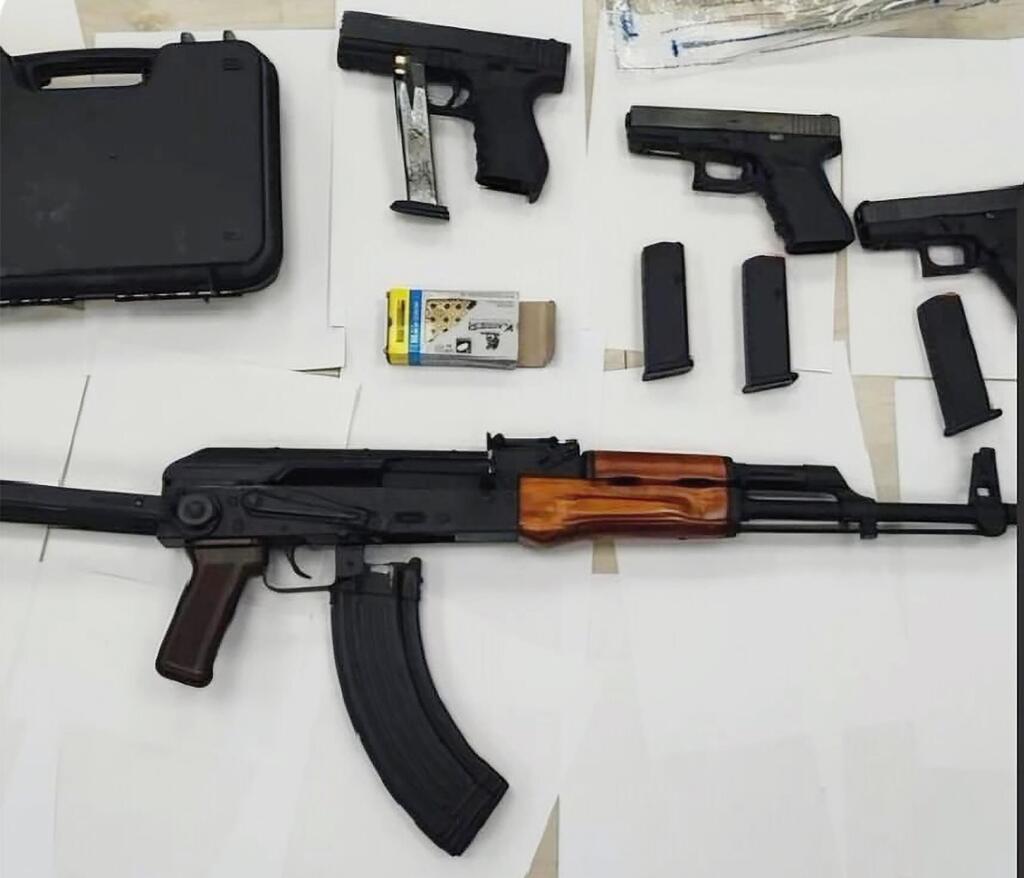
The stakeout followed a bloody feud. Less than six months earlier, Arbid’s 13-year-old nephew and his brother-in-law were gunned down from a passing car. The next day, in Kafr Qara again, Imam Sheikh Sami Abd al-Latif was murdered near a mosque. The killings shocked residents and spurred protests, but the gunmen were never caught, and few doubted the bloodshed would continue.
Under cover of darkness, Arbid stepped onto a third-floor balcony and broke the silence, drawing and cocking a weapon. Detectives exchanged glances. This was the moment. The signal was given, and the team stormed the apartment. Caught off guard, Arbid was still holding the gun. “It’s not real, just airsoft,” he protested. “A toy, a gift.”
But tests at the police firearms lab revealed it was an airsoft rifle converted into a lethal weapon. “Arbid has been a target of ours for years,” said Superintendent Bian Mula, head of the Special Operations Department in the Coastal District’s central unit. “He is an ‘enforcer’ for crime families. We link him to dozens of hits, extortion rackets and threats — but it’s very difficult to catch him in the act.”
Arbid was convicted of weapons possession and sentenced to 10 months in prison. He has since been released and fled abroad. Police believe he is now regrouping in Dubai.
He is not alone. The use of airsoft rifles — originally designed for sport but modified into real firearms — has surged in recent years in the criminal underworld and among terrorist groups. The gun used by an attacker who killed five people in a mass shooting in Pardes Katz in 2022 turned out to be a converted airsoft rifle.
“These converted weapons are unreliable, unstable and unsafe. They can jam or even explode on the shooter,” said Chief Superintendent Shaul Chernoborda, head of the firearms lab in the police forensics division.

Rabbi Eitam Henkin and his wife Naama
(Photo: Courtesy of the family)
One such rifle reached the lab after the October 2015 terror attack in which Rabbi Eitam Henkin and his wife Naama were murdered. The attackers, firing from a passing vehicle as the couple drove with their four children to the West Bank settlement of Neria, were also armed with a converted airsoft gun.
The wave of violence continued. A year later, a converted airsoft rifle was used in the 2016 Jerusalem attacks at Ammunition Hill, where police officer First Sergeant Yossi Kirma and former Knesset staffer Levana Malihi were killed in two separate shootings.
The same type of weapon was used in the 2021 attack near Homesh in the West Bank, which killed Yehuda Dimentman and wounded two yeshiva students. In recent years, several shootings targeting IDF troops in the territory have also been traced to converted airsoft guns.
What makes converted airsoft so attractive to terrorists and criminals? Primarily, its accessibility and low cost. “An airsoft gun sells for about 1,000 shekels (before conversion into a live weapon), and its wide availability has made it so common,” said Superintendent Eti Swisa, head of the police ordnance intelligence unit. “Many shootings in Arab communities — at weddings, during robberies, for threats, protection rackets, drive-by shootings at cars and houses — have been carried out with converted airsoft. The list is long.”
To counter the threat, an amendment to Israel’s firearms law championed by National Security Minister Itamar Ben-Gvir took effect in recent months. Possessing or carrying imitation weapons that can be converted into lethal firearms, outside of licensed sporting venues, is now a criminal offense punishable by up to one year in prison.
The move could reduce crime and murder rates, which have risen in recent years. Still, with ongoing security escalations, the risk remains that cheap and easily obtained converted airsoft rifles will spread further into Israel’s already volatile landscape.
Significantly cheaper than real rifles
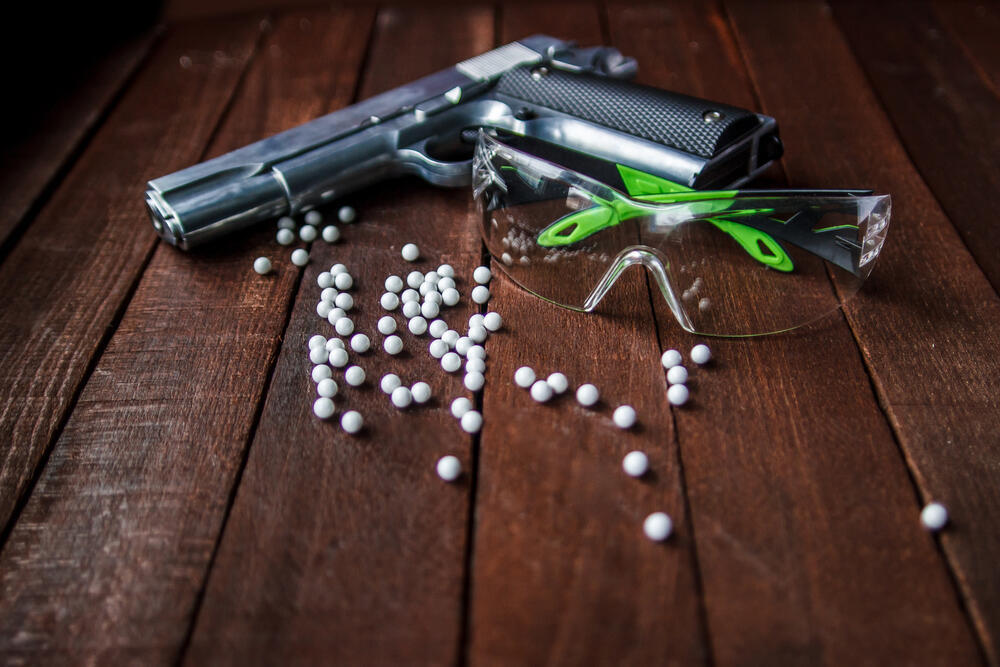
Airsoft originated in Japan in the 1970s as competitive equipment that is legal in many countries, including Israel. But once converted into a firearm, it is no longer a game. The replicas come in the form of rifles, pistols or machine guns, often mimicking military weapons.
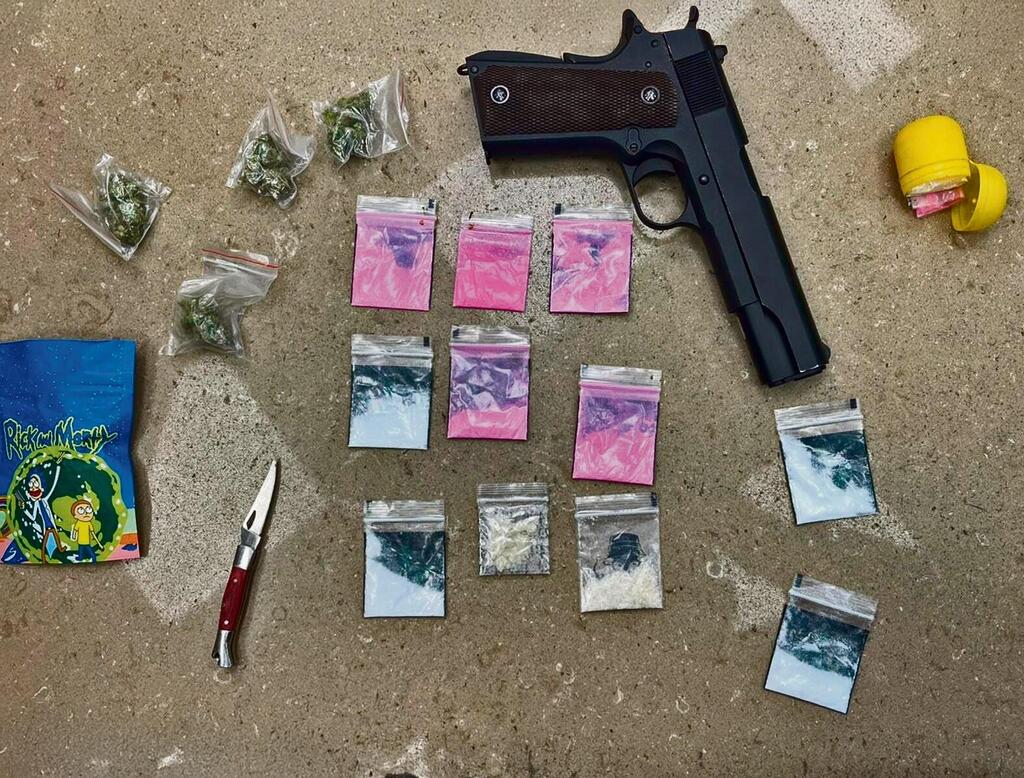
(Photo: Israel Police)
“Originally, this was an innocent training tool,” said Superintendent Dr. Pavel Givertz, a senior expert at the police firearms lab. “It’s used in competitive sports, war games or training in places where real weapons can’t be fired. It shoots small 6-millimeter pellets, and users wear protective goggles and gear to prevent bruises or injuries.”
Airsoft is produced in three main types: manual cocking, battery-powered automatic and gas-powered. “The gas type comes with a cartridge-shaped canister and operates with a mechanism very similar to a real firearm, often of very high quality,” Givertz said.
Before criminal and terror groups converted it into a deadly weapon, airsoft began as a tool for extreme combat sport. “It was used to simulate all kinds of battlefield scenarios,” said Bejan Sadjaia, co-founder of the Airsoft Israel association, who fears the new firearms law threatens his sport.
“Airsoft was invented by a photographer named Ichiro Nagata, who was a shooting enthusiast,” Sadjaia explained. “Because of Japan’s strict ban on private gun ownership, he created realistic replicas of rifles and pistols that fired pellets. Over time it became popular in militaries worldwide for training, because the weapons don’t cause injuries.”
Airsoft arrived in Israel in the early 2000s and gained traction over the past decade, with clubs now operating nationwide. “At first, it was especially popular among immigrants from the former Soviet Union, and later it expanded,” Sadjaia said. “Today, Airsoft Israel is like a family with 1,400 players from across the country and from all backgrounds. Each team operates with a military-style hierarchy — captain, deputy and players. We have four clubs, which supply protective goggles, helmets, vests and full gear.”
The price range for a manual airsoft rifle runs between 500 and 1,000 shekels. An electric rifle costs 1,000 to 1,500 shekels, while a gas-powered rifle runs between 4,500 and 6,000 shekels. A gas pistol costs 2,700 to 3,200 shekels. “A single gas canister for a rifle lasts four or five training sessions,” Sadjaia said. “We meet every Saturday to play.”
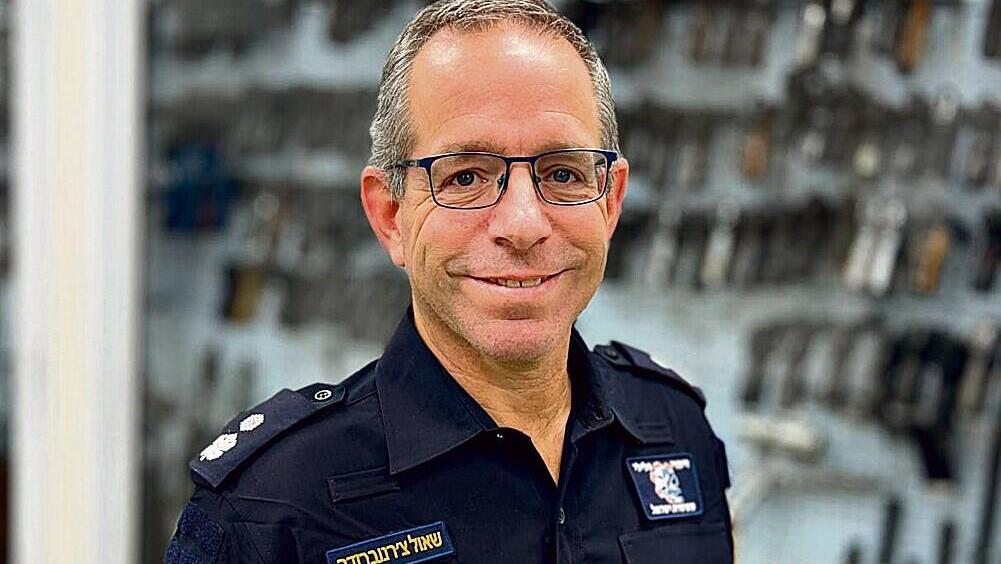
Chief Superintendent Shaul Chernoborda
(Photo: Israel Police)
But unlike hobbyists competing legally, criminals and terrorists discovered a decade ago the potential of converting airsoft into lethal weapons. The first modified airsoft gun turned up in the police firearms lab 11 years ago, said Chernoborda, and the trend has only grown. “In recent years, we’ve seen more and more of these weapons used in murders — both in terror attacks and in criminal incidents,” he said.
What did criminals and terrorists realize about airsoft a decade ago?
“That a standard M16 in good condition costs 80,000 shekels, while a converted airsoft rifle goes for just 45,000 shekels,” Chernoborda said. “It’s accessible and cheap, even cheaper on Telegram. Some criminals only use parts, like the barrel, to fire live ammunition. A whole illegal industry has sprung up around this, with companies producing converted airsoft guns with high precision, complete with logos and serial numbers.”
How are converted airsoft weapons smuggled into Israel?
“Through illegal border smuggling, by being ‘exported’ from Israel to machine shops in the West Bank and then brought back, even hidden in toy containers. Undercover agents report that gun dealers now ask clients outright: Do you want a standard M16 or a converted airsoft rifle?”
How many such weapons are in circulation?
“In recent years, hundreds of converted guns have reached us, which means we’re only seeing the tip of the iceberg. There are thousands more out there.”
Serving criminals and terrorists alike
Converted airsoft weapons have become a major security threat, fueling an underground industry worth millions of shekels each year — and operating openly in Israeli neighborhoods.
In Isfiya, police uncovered a conversion lab inside an apartment building in 2023, seizing assault rifles, pistols and airsoft magazines adapted to fire live ammunition. That same year, a cache of converted rifles was discovered in the home of a local criminal, ready for use.
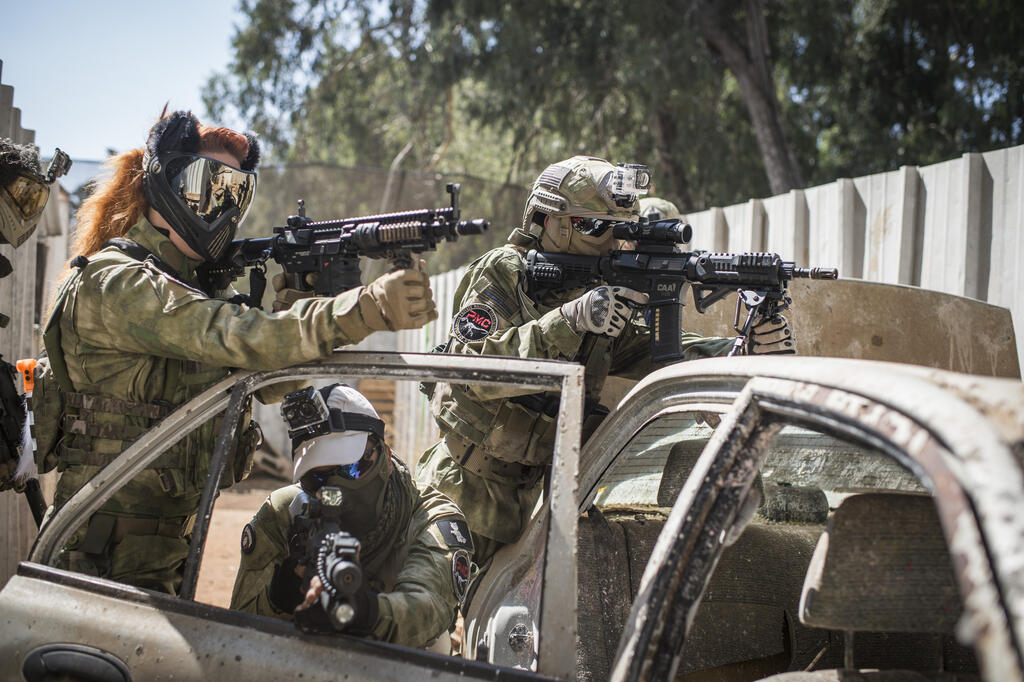
An Airsoft tournament
(Photo: Gettyimages)
Also that year, in Ramat Gan, police seized 95 pistols and rifles from an illegal dealer who also ran an unauthorized shooting range. The shop was permanently shut down.
In Netanya last year, a gang that had been terrorizing residents was arrested after a bomb blast and a shooting that wounded one man. Police raided an apartment, arresting four suspects and confiscating a converted airsoft weapon.
Similar incidents unfolded in Nazareth, where three men tied to the Bakri crime family were caught with a Glock pistol and a converted airsoft gun. In Jaffa, a local crime figure used a converted airsoft weapon to threaten revelers on the street, injuring a man who tried to disarm him.
Jaffa also saw a deadly incident in December 2022, when 19-year-old Muhammad Zaytouna was killed in a botched airsoft gun deal. The seller, a former commando, claimed he fired in self-defense after three young men tried to rob him. Through his lawyer, Ben Maoz, he argued that he had no choice but to shoot. Prosecutors later closed the case, ruling it was impossible to prove Zaytouna’s death was caused by the seller’s gunfire, and no charges were filed.
Meanwhile, the industry has grown at such a pace that demand is fueling another layer of crime — thefts from airsoft shops. In 2022, the Supreme Court extended the prison sentence of a Bedouin man by 18 months for breaking into a store in Sderot with two accomplices and stealing 40 airsoft weapons and pellets, later hidden in a cemetery. Each was sold for about 1,000 shekels.
At the same time, another Sderot shop owner, Yuri Shaulov, was sentenced to 14 months for aiding an attempt to manufacture firearms and selling dangerous “toys” without a license. He had supplied a large batch of convertible airsoft rifles to a gun dealer from Hebron. The parts were later assembled into M16 rifles in the West Bank.
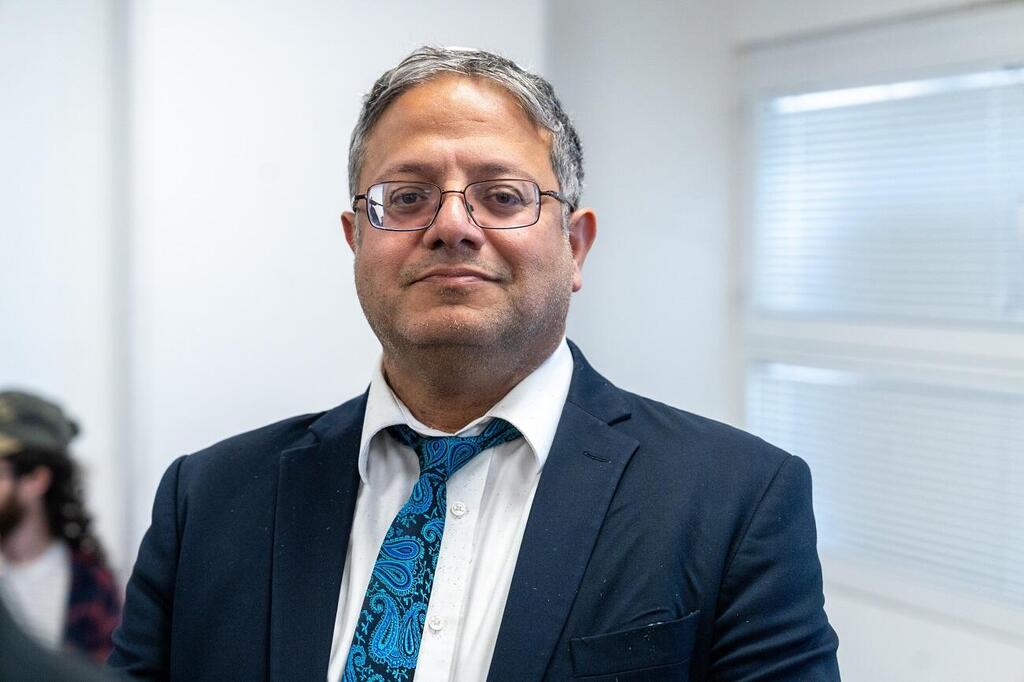
National Security Minister Itamar Ben-Gvir
(Photo: Shalev Shalom)
Airsoft has also been tied to assassination plots. In May 2022, three East Jerusalem residents were arrested on suspicion of planning to kill Ben-Gvir using converted airsoft rifles. Prosecutors charged that ringleader Mansour Safadi, working with a Hamas operative, formed two cells to carry out attacks in Israel, including soldier kidnappings, shootings and Ben Gvir’s assassination. He supplied recruits with converted M16-style rifles and trained them. While the case is ongoing, one suspect has since been released in a deal.
Sometimes threats against public officials have been carried out. Last year, the wife and two sons of Ar’ara council head Taleb Abu-Arar were lightly to moderately wounded in a shooting. Months later, police seized three converted airsoft weapons and military gear in the town, detaining two suspects. A subsequent clan feud erupted into masked gunmen spraying bullets in the streets. Police suspect some of the weapons were converted airsoft rifles.
During one incident, two suspects fleeing a shooting crashed their car at a mosque entrance. Police who arrived found converted airsoft rifles and another weapon hidden in a refrigerator. An angry crowd surrounded officers, who arrested 14 suspects at the scene.
Legislative changes
The reasons behind the deadly airsoft trend are clear, but not inevitable. State Comptroller reports had warned about the issue in 2017. “The previous audit revealed that Israel had no oversight of trade in imitation firearms,” a follow-up report noted. “That regulation is still incomplete.” The comptroller urged the Economy Ministry and the National Security Ministry (then the Public Security Ministry) to work with police to establish import controls “as soon as possible” to combat rising criminal use.
In October 2021, the government approved a plan to address crime in the Arab sector, including a clause to advance legislation on imitation firearms, their conversion and parts, including airsoft. It instructed the Economy Ministry to halt imports of airsoft weapons and components until regulation was in place.
National Security Ministry figures show fluctuating enforcement: a 28% drop in seized converted airsoft guns in 2021–22, followed by a 109% spike the next year, then a 55% decline in 2024.
(Photo: Shutterstock)
Police attribute the decline to fallout from the war. “Last year’s drop stems from the flood of standard military weapons that reached criminal hands during the Iron Swords war,” said Eti Siso, a co-author of the police report.
“When I entered office as national security minister, I made tackling airsoft weapons a top priority,” said Ben-Gvir, recalling his tenure. During that time, he pushed through a law stiffening penalties for possession of converted airsoft rifles. “I was shown troubling data. Not only were crime families openly using these weapons in the streets, but we also saw a rise in their use in nationalist terror attacks. Despite obstacles, I led the move decisively to outlaw these harmful weapons. We succeeded in adding positions, budgets and manpower, and I am confident the amendment will reduce murders, curb illegal weapons use and hit crime families hard.”
But with thousands of converted airsoft rifles already in circulation, police face an uphill battle enforcing the law. “The legislation defining what does not count as a standard firearm was passed in August 2023 and was meant to take effect in February 2024. Implementation was delayed due to the war,” said Daniel Briner, head of licensing at the National Security Ministry.
What changes now?
“Licenses for airsoft will only be issued through authorized clubs. That allows police to conduct intelligence checks on anyone handling such weapons.”
Attorney David Bavli, who helped shape the legislation, said the original intent was to stamp a serial number on every imported airsoft gun, just as with standard firearms. “It wasn’t possible because importers would have had to hire outside suppliers to engrave them, which raised costs and killed the deal,” he explained. “Instead, we allowed stamping in Israel. To prevent forgery, importers must now be registered, have no criminal record and pass a police background check confirming no ties to crime families. Until now, an offender with an airsoft rifle couldn’t be prosecuted. Now they can be charged both for possession and for lacking a serial number.”
What about members of Airsoft Israel, the sporting clubs?
“Even a registered player with a serial-numbered rifle cannot take it home. That’s illegal,” Briner said. “In the future, if we see clubs are not being used as a cover for private possession, the ministry may revisit the policy.”
Weapons rivaling elite military units
Will the new law really deter criminals? That depends on who you ask. “I doubt it,” said defense attorney Yaron Gigi, who represents clients tied to Arab crime families. “The market is flooded with thousands of these weapons. In recent years, we’ve seen a revolution in the underworld, and crime groups are reveling in it. In almost every other case I handle, I encounter the ease with which an air rifle can be converted into a lethal weapon.”

Defense attorney Yaron Gigן
Gigi’s skepticism is rooted in experience. “There is cooperation between criminals inside Israel and those in the West Bank, where conversions can be done easily in machine shops. Airsoft guns already come with everything needed — special sights, night vision attachments. You no longer need to buy weapons, steal from the army or smuggle across the borders. Everything is cheap and within reach,” he said.
So you don’t think tougher laws will make criminals back down?
“I have clients who own converted weapons that wouldn’t embarrass elite military units. I don’t see them giving them up. Anyone who thinks otherwise is not being realistic.”
Those who do fear the new law are law-abiding citizens. “This law turned us into criminals,” said Sadjaia. “I’m a normal person, not a criminal, and it frustrates me. Even in talks with police, I feel they understand us.”
But given the widespread use of converted airsoft by both terrorists and crime families, is the damage to the sport unavoidable?
“This field is wide open — anyone can get a weapon easily. Airsoft looks identical to real guns. If I pull and cock one, nobody knows it’s fake. But we are players, not criminals. What does that have to do with us, just because crime groups smuggle, steal and convert them?”
That’s exactly the problem: the weapons are easy to obtain and lethal once converted.
“Then let’s regulate it. I’m ready to establish an association that issues licenses under the law to authorized players.”
Until then?
“I won’t carry my rifle anymore. We’ll switch to electric airsoft.”
A blow for veterans of the sport who prefer gas-powered rifles?
“Between us, longtime players don’t love gas rifles anyway. They’re weather-dependent — stronger compression in heat, weaker in cold. In tactical training, I run with security forces, we use electric airsoft.”
While the debate over the law’s effectiveness continues, reality has a way of deciding. The incidents keep piling up. Last year, police in Rahat recovered a converted airsoft rifle after gunfire. A few months later, residents of Baqa al-Gharbiya reported shots fired in an olive grove; responding officers found a converted rifle alongside grenades and Glock pistols.
The threat is not a ticking bomb but one that keeps going off in unexpected places — even at a car wash in Arraba, where police found converted rifles hidden in a car earlier this year. One employee was caught on video holding an array of weapons. The business was shut for 21 days and the worker indicted in Haifa District Court.
In the sphere of nationalist terror, investigators are now examining whether a deadly attack in Ma’ale Adumim last year also involved a converted airsoft rifle. Terrorists opened fire in a traffic jam, killing Matan Elmaliach and wounding 10 others, including a pregnant woman. “That’s our suspicion. We’re waiting on a lab report,” said Swissa.
The recent cases show the battle is far from over. The problem is unlikely to vanish with legislation alone. Police now face a new player in Israel’s already crowded black market — a weapon that is cheap, lethal and increasingly popular. To truly counter the trend, the law will need to keep pace with the threat’s evolution, and enforcement must be broad and effective. Otherwise, instead of a real solution, Israel risks shooting in the dark.