

The head of the Central Elections Committee on Thursday asked the Shin Bet domestic security agency to investigate serious allegations of foreign interference in Tuesday's parliamentary election, including suspected overseas funding and election bribery involving foreign actors.
Supreme Court Deputy Chief Justice Noam Sohlberg sent an unusual letter to Shin Bet Director David Zini urging him to use the agency's investigative powers to determine whether foreign entities had attempted to improperly influence the election. Sohlberg sent the letter to Zini following a meeting between the two on Wednesday.
Gallery
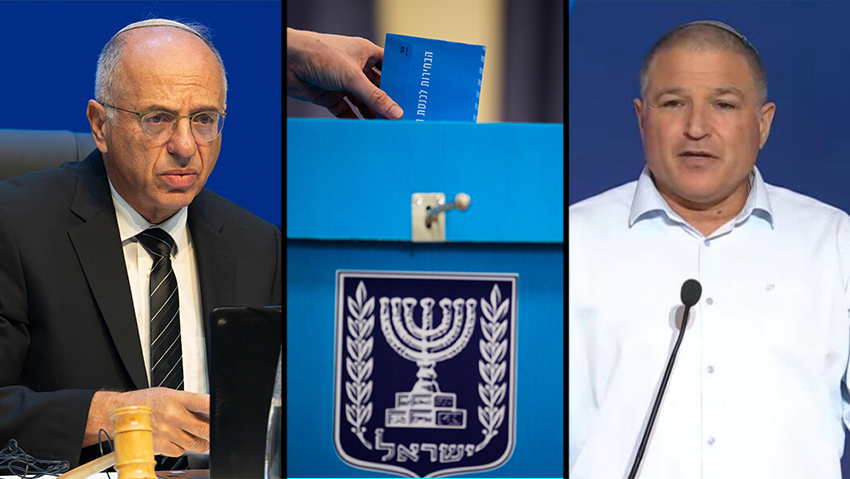
Noam Sohlberg, David Zinin
(Photo: Central Elections Committee, AP Photo/David Goldman, Roy Yadovsky)
The suspected foreign interference appears to involve an attempt by Qatar to influence Israel's election, with officials from the Central Elections Committee describing the intelligence as "solid."
The Shin Bet had reportedly possessed the intelligence for several days but waited to see whether the suspected vote-buying would actually take place. The agency declined to comment on the ongoing investigation.
"The integrity of elections is the heart of democracy. Take integrity away from democracy, and you deprive it of its vitality," Sohlberg wrote.
He said allegations had been brought to his attention suggesting that foreign actors working against Israeli interests may have sought to influence the election through financial means.
"Serious suspicions have been brought before me concerning improper influence on the elections through foreign funding provided by external actors operating against Israeli interests," he wrote.
Sohlberg acknowledged that he could not independently assess the credibility of the allegations but stressed that their potential implications warranted a thorough investigation.
"I cannot attest to the substance of these suspicions," he wrote. "However, given that they concern foreign actors, there is an obligation to investigate them properly to safeguard the integrity of Knesset elections and prevent unlawful activity intended to undermine the democratic system and subversive activity."
The judge instructed Zini to make every effort to establish whether the allegations were supported by evidence, or whether they could be disproved.
"I ask you to do everything in your power to get to the bottom of these suspicions and to use the powers of the Israel Security Agency to uncover evidence that would substantiate or refute them," Sohlberg wrote, using the Shin Bet's formal name
"Only in this way can we ensure public confidence in the electoral process and the integrity of the democratic process."
Sohlberg also requested that the agency report its findings, if any, within the coming week, citing legal deadlines for challenging election results.
"In light of the statutory deadlines for filing election appeals, I ask that you make every effort to present me with findings, insofar as there are any, within the next week," he wrote.
The letter comes amid growing political controversy over the election results after Prime Minister Benjamin Netanyahu's Likud party accused Arab political parties Wednesday of stealing the vote through widespread criminal activity.
Likud alleged that Arab parties supporting terrorism and the destruction of the Jewish state had manipulated the results through serious criminal offenses, including vote-buying, threats against election officials, fraudulent voting and the use of prohibited software to mobilize supporters.
The party said it had submitted evidence of suspected irregularities to police, Shin Bet and the Central Elections Committee and demanded an investigation.
Sohlberg's letter did not identify the foreign actors allegedly involved, specify the source of the suspected funding or establish a connection between the allegations of foreign interference and Likud's claims against Arab political parties.
Finance Minister Bezalel Smotrich called for the Shin Bet to investigate Arab party leaders. "The suspicion of election manipulation using foreign Islamist money is a test for the State of Israel," he wrote on X. "The leaders of the Arab parties must be questioned by the Shin Bet today. The State of Israel will not be sold to radical Islam with terror money."
Avigdor Liberman, leader of the opposition Yisrael Beytenu party, also weighed in, describing Sohlberg's letter as "a dramatic and unprecedented development."
"I call on law enforcement authorities to act swiftly to establish the truth as soon as possible," Liberman wrote.
Gadi Eisenkot, leader of the Yashar! party, is in contact with the relevant authorities and is receiving updates on allegations of foreign interference in Israel's election, his office said in a statement.
"Israel must safeguard the integrity of its elections against any attempts at interference, political spin or manipulation, and thoroughly investigate every complaint," the statement said.
"At the same time, political actors must not be allowed to exploit the situation to influence the timing of the 26th Knesset's swearing-in."
Police, however, have rejected claims of widespread election fraud, saying there was no investigative or intelligence evidence to support the allegations and that election-related irregularities had declined significantly compared with the previous vote.
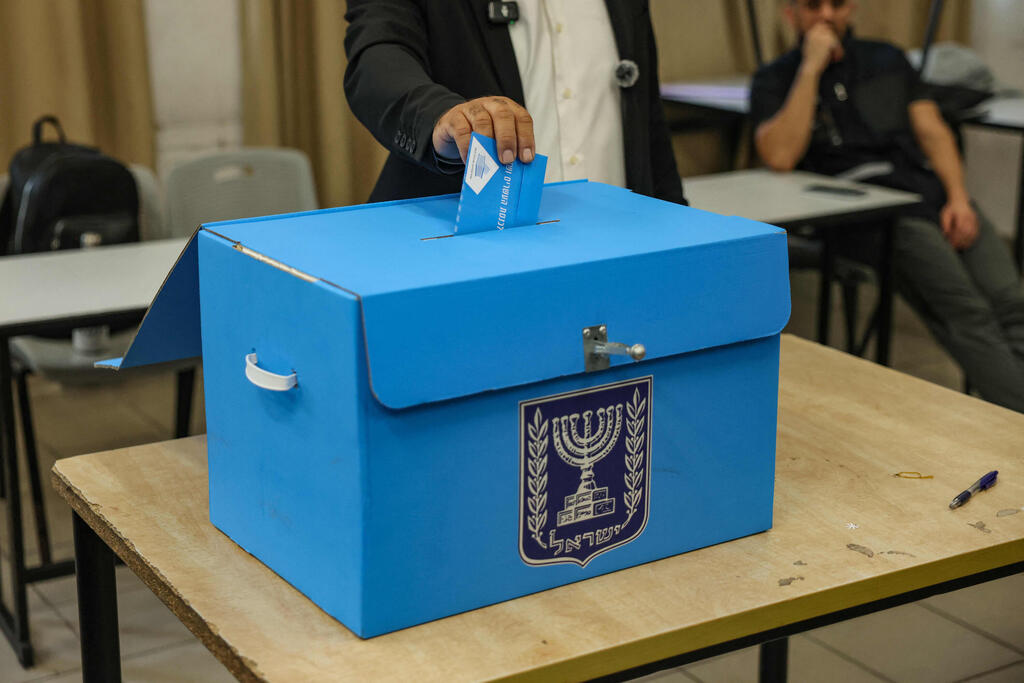
A voter casts a ballot in the Arab city of Umm al-Fahm
(Photo: AHMAD GHARABLI / AFP)
"Election Day passed with a small number of exceptional incidents involving election integrity, including in comparison with previous elections," police said. "It should be emphasized that there is no investigative or intelligence evidence supporting the allegations raised in your inquiry."
The dispute comes after a surge in Arab voter turnout helped predominantly Arab parties make significant electoral gains, potentially giving them a decisive role in determining the next government. Neither Netanyahu's right-wing and religious bloc nor the rival bloc led by former military chief Gadi Eisenkot emerged from the election with a clear majority in the 120-seat Knesset.
In a sharply worded statement posted on X, Likud accused Arab political parties of orchestrating widespread electoral fraud.
"The elections in the State of Israel were stolen by Arab parties that support terrorism and the destruction of the Jewish state through serious criminal offenses involving bribery, threats, violence, forgery and the use of prohibited software to mobilize voters," the party said.
Likud said it had collected hundreds of testimonies and pieces of evidence from polling stations in Arab communities and was transferring the material to police, the Shin Bet domestic security agency and the Central Elections Committee.
The party cited what it described as thousands of envelopes containing cash alongside ballot slips for Ra'am, an Islamist party led by Mansour Abbas. It also alleged threats and violence against polling station officials, multiple voters entering voting booths together, people casting ballots under more than one identity and discrepancies between the number of ballot envelopes and registered voters.
Likud further accused unnamed political operatives of using prohibited voter-mobilization software.
"We demand that the police and Shin Bet conduct a thorough investigation into the theft of the elections by the Arab parties and bring the perpetrators to justice," the party said.
It also demanded immediate action from the Central Elections Committee, arguing that the alleged offenses had compromised the legitimacy of the election results.
"This is a serious blow to Israeli democracy and the voting rights of Israeli citizens," Likud said. "Law enforcement agencies must act firmly and immediately."
Police, however, said their assessment did not support allegations of widespread irregularities.
"We are not aware of any exceptional incidents concerning election integrity," a police official said. "In fact, during the current election, the number of incidents related to election integrity fell by nearly 40% compared with the previous election."
Likud says authorities ignored 1,183 complaints
Despite the police assessment, Likud officials insisted that their allegations had not received adequate scrutiny.
Sagi Keizler, the party's election integrity director for the Arab sector, said Likud had submitted 1,183 complaints to the Central Elections Committee on Election Day, including descriptions of individual incidents and telephone numbers for polling station officials who could corroborate the allegations.
According to Keizler, the complaints included 38 cases of suspected bribery, 25 allegations of improper police intervention, 66 reports of violence or threats, 115 suspected instances of double voting and 408 complaints involving the extraction of voter information.
The categories he identified accounted for 652 complaints. He did not provide a breakdown of the remaining 531.
"These are the complaint figures we submitted to the Central Elections Committee on Election Day itself, including details of the incidents and telephone numbers of committee members who can testify about the complaints," Keizler said.
He also accused police and election authorities of failing to contact witnesses identified by the party.
"Neither the police nor the Elections Committee called a single witness," Keizler said. "Apparently, the conclusion had already been reached in advance."
Police cast doubt on suspected vote-buying case
The suspects, residents of the Bedouin communities of Segev Shalom and Ar'ara in the Negev desert, were detained during an operation by the Southern District's Central Unit.
Police said searches of their homes uncovered envelopes containing tens of thousands of shekels in cash, along with ballot slips and other materials suspected of being connected to election offenses. Some envelopes reportedly bore Ra'am's logo.
Investigators initially suspected that the money was intended for distribution to voters in exchange for supporting the party.
The suspects reportedly included a doctor, a transportation driver and another political activist. All three denied wrongdoing.
A court subsequently released the doctor despite police objections, while extending the detention of the other two suspects by five days.
The doctor's attorney said his client had organized meetings to encourage support for Ra'am but had not participated in bribery. The driver's lawyer maintained that the cash discovered at his home was intended to cover transportation expenses.
Another suspect said money found in envelopes was intended as charitable donations for needy families on behalf of the Islamic Movement, the religious and political movement associated with Ra'am.
Police said that although the investigation remains open, investigators have not uncovered significant evidence of wrongdoing and expect the case to be closed. However, several additional suspects were arrested on Thursday.
Ra'am has rejected the allegations, accusing authorities of politically motivated arrests intended to suppress Arab voter turnout.
The party said its activists were detained at their homes before polling stations opened, rather than while attempting to influence voters. It also accused authorities of selectively targeting its members and reported that Ra'am ballot slips had been removed or damaged at polling stations in several Arab communities.
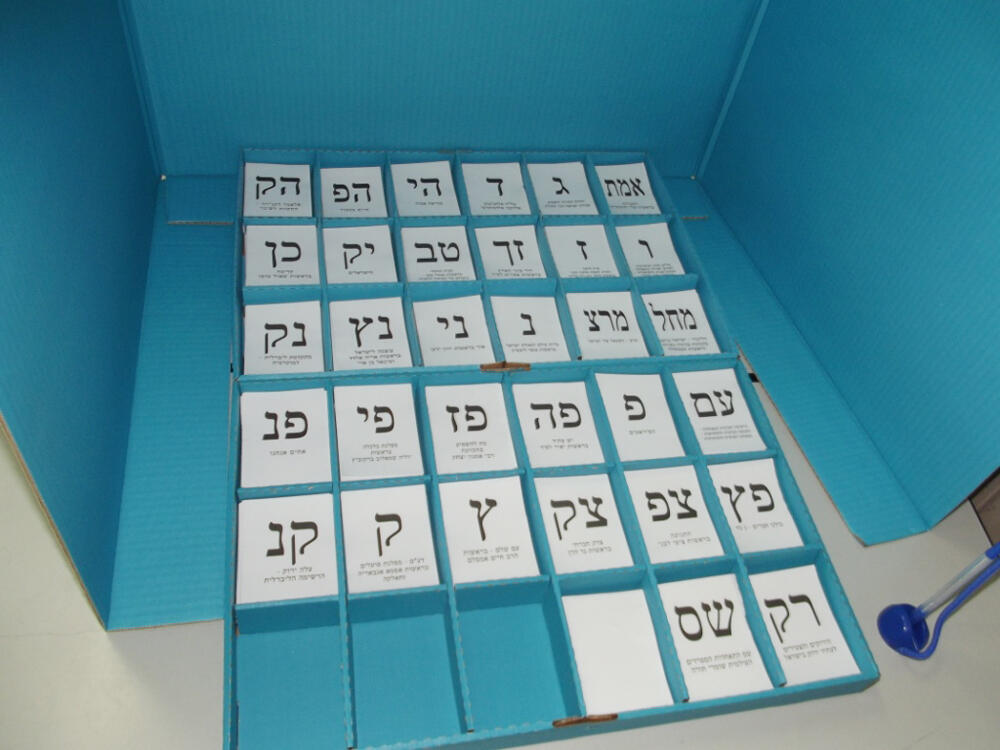
A polling station
(Photo: Hassan Shaalan)
Police have not alleged that Ra'am's leadership was involved in the suspected bribery scheme.
The arrests prompted a criminal investigation into specific allegations of vote-buying but have not substantiated Likud's broader claims of coordinated fraud across Arab polling stations.
Shin Bet chief praises election safeguards
Police were not the only Israeli security authorities to express confidence in the integrity of the election.
During a visit Tuesday to the Central Elections Committee's command center, Zini said the voting process was secure and properly supervised.
"Elections in Israel are secure, properly conducted and supervised in an inspiring manner," Zini said.
"There are challenges, and there are those who try to undermine the process, but under the leadership of Justice Sohlberg and the Israel Police, we are succeeding," he added.
Arab parties' gains complicate coalition negotiations
The allegations have emerged against the backdrop of a politically inconclusive election in which increased participation by Arab citizens helped strengthen the parliamentary representation of predominantly Arab parties.
Preliminary results Wednesday projected that the Joint List, an alliance of Arab political factions led by Yousef Jabareen, would win 11-12 seats, while Ra'am would secure seven to eight. Together, the two parties were expected to hold 18-19 seats in the 120-member Knesset.
The gains could prove decisive because neither Netanyahu's right-wing and religious allies nor the parties seeking to replace him have secured the 61 seats needed for a parliamentary majority.
The results have raised the possibility that opposition parties could seek to form a government with the support of Arab lawmakers, either through a formal coalition agreement or outside parliamentary backing.
Netanyahu and his political allies have repeatedly rejected such arrangements, portraying reliance on Arab parties as a threat to the country's security and political stability.
Ra'am, formally known as the United Arab List, is associated with the southern branch of the Islamic Movement. Under Abbas, the party has pursued a pragmatic approach to parliamentary politics, seeking agreements with Jewish-led parties in exchange for commitments to address longstanding problems affecting Arab communities.
In 2021, Ra'am became the first independent Arab party to formally join a governing coalition when it entered the government led by Naftali Bennett and Yair Lapid.
During the latest election campaign, Abbas indicated that he would consider participating in another government if it committed to addressing violent crime, home demolitions, discrimination and other issues affecting Arab citizens of Israel.
The Joint List, meanwhile, represents a separate alliance of Arab political factions with a different approach to participation in Israeli national politics.