

Prime Minister Benjamin Netanyahu was seen Tuesday evening speaking with Ukrainian President Volodymyr Zelensky at the start of a memorial service in Washington for Sen. Lindsey Graham, in what was a relatively rare meeting between the two leaders. The encounter came amid Iranian threats to retaliate for Ukraine’s unusual attack over the weekend on an Iranian vessel in the Caspian Sea.
The last meeting between Netanyahu and Zelensky took place in September 2023 on the sidelines of the U.N. General Assembly in New York, a month before Hamas’ October 7 attack. The two also held a phone conversation in August 2024 regarding the arrival of Breslov Hasidim to Uman, but since then relations between them had been strained and attempts to coordinate a meeting had failed.
At Graham's funeral: Netanyahu and Zelensky were seen talking
(Credit: CBS)


An attempt to arrange a private one-on-one meeting during their current visit to Washington also did not succeed, with Ukrainian officials claiming the Israeli side rejected the proposal due to scheduling constraints. But at the memorial service, the two leaders were seen speaking for several moments and smiling. At the end of the ceremony, they shook hands again and held another brief conversation.
The meeting came just hours after Foreign Minister Gideon Saar announced that he had spoken by phone with Ukrainian Foreign Minister Andrii Sybiha, who was also seen speaking with Netanyahu at the Washington ceremony and later sitting alongside Netanyahu’s wife, Sara.
“We discussed the discussed the challenges facing our nations, including the threat posed by Iran,” Saar said in a statement. “I expressed my deep sorrow over the heavy losses suffered by the Ukrainian people in the war and wished a full recovery to all those injured and suffering.
Gallery
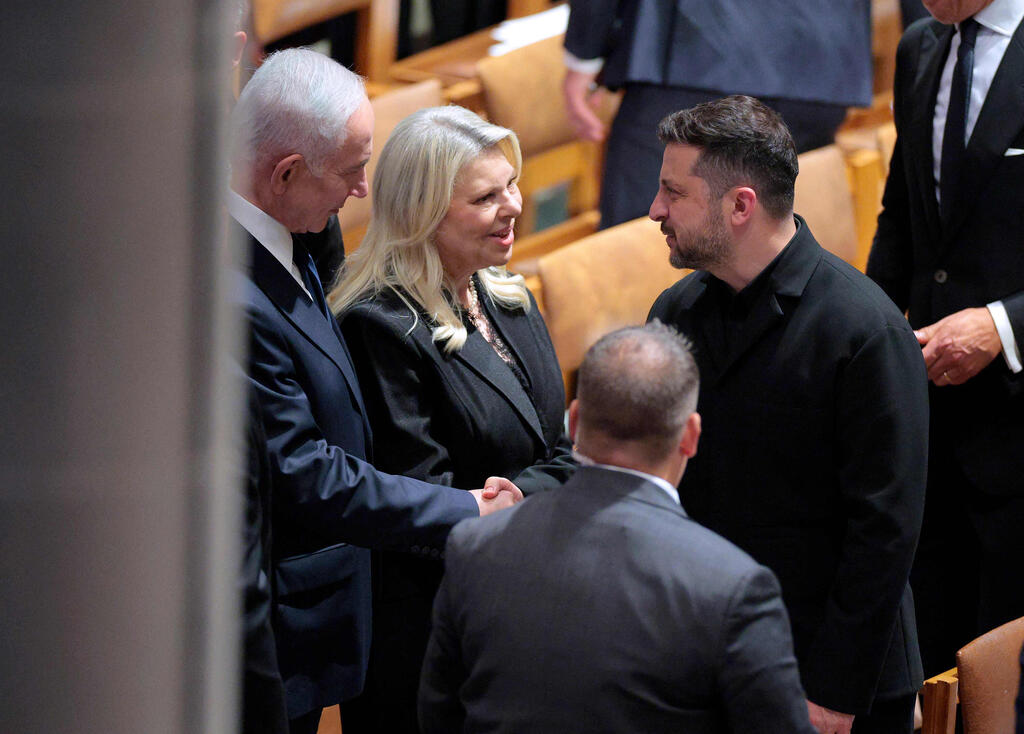
Netanyahu and Zelensky shake hands at Graham's funeral in Washington
(Photo: CHIP SOMODEVILLA / GETTY IMAGES NORTH AMERICA / AFP)
“I invited Minister Sybiha to visit Israel as we mark 35 years of diplomatic relations between our countries. Israel and Ukraine are friends, and I look forward to further deepening our cooperation, including through the establishment of new education centres in Ukrainian hospitals. I look forward to continuing our close dialogue and strengthening the friendship between our countries..”
The backdrop to the discussions was Iran’s threat to respond to last weekend’s Ukrainian attack, in which Tehran said one Iranian sailor was killed when a vessel was struck in the Caspian Sea.
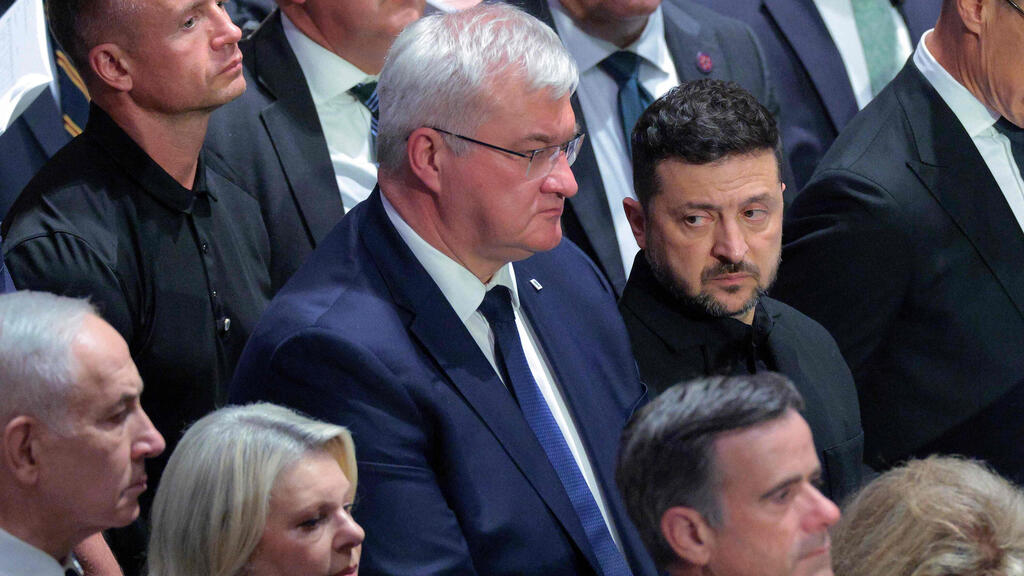
Zelensky looks towards the Netanyahu couple, with the Ukrainian Foreign Minister Sibyl standing between them
(Photo: CHIP SOMODEVILLA / GETTY IMAGES NORTH AMERICA / AFP)
Zelensky announced the attack almost in passing on Saturday while describing a series of strikes carried out by the Ukrainian military against Russian targets. He said Ukraine had “achieved very good results in long-range strikes in the Caspian Sea, including against military shipments involving Iran.”
Only later that day did Iran announce that one sailor had been killed in a Ukrainian attack on one of its vessels, named Anna. Tehran claimed the ship was hit while docked about 5 kilometers from the mouth of the Volga River.
According to Ukraine’s ambassador to Israel, Yevgen Korniychuk, the vessel was not carrying a routine commercial shipment but rather components for drones and missiles transferred from Iran to Russia. He said Israel and Ukraine are both fighting what he called the “axis of evil,” referring to the strategic alliance between Tehran and Moscow, under which Iran has supplied Russia with numerous drones and missiles throughout the war in Ukraine.
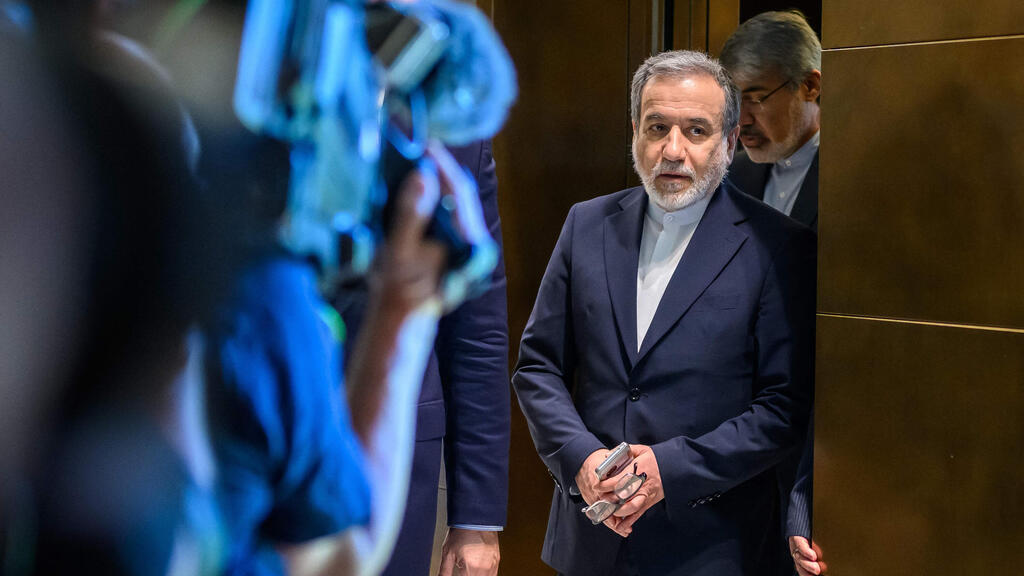
Iranian Foreign Minister Araghchi. He also threatened - but now Tehran is signaling that it will settle for 'compensation'
(Photo: Fabrice Coffrini / POOL / AFP)
Russia, in turn, has provided assistance of its own to Iran, including satellite intelligence on American targets in the Middle East, according to Ukrainian claims. The Ukrainian Security Service (SBU) said that during the unusual Caspian Sea operation, Ukrainian drones also struck an oil facility in the northern Caspian Sea, alongside a Russian missile ship and “commercial vessels subject to international sanctions.”
The Ukrainian attack was the first known direct confrontation between Kyiv and Tehran. Iran subsequently threatened retaliation against Ukrainian targets.
“Zelensky attacked an Iranian commercial vessel and caused the death of a sailor. This is a blatant violation of the U.N. Charter, carried out on Israel’s orders in an attempt to drag Europe into its war,” Iranian Foreign Minister Abbas Araghchi accused on Monday. In a post on X, he added that the Ukrainian attack “cannot go unanswered.”
Sybiha later shared Araghchi’s post, adding the caption: “Iranian lies.” The Ukrainian foreign minister wrote: “Iran’s threats are unjustified and baseless. The regime in Tehran is a direct accomplice in Russia’s aggression against Ukraine, fueling Moscow’s criminal war with weapons that have been killing Ukrainians since 2022. Iran has no right to play the victim, let alone justify its threats with absurd references to the UN Charter.”
Iranian threats continued Tuesday. Among other things, Iranian television published a map showing what it claimed were Ukrainian targets in the Middle East, under the headline: “What could be Iran’s revenge targets against Ukraine?”
The map also marked the Leviathan gas field and the El Arish-Ashkelon pipeline. Iranian television further warned that Tehran’s response could include European energy infrastructure, such as pipelines and oil and gas fields connected to Europe.
However, in what appeared to be an effort to prevent escalation and the opening of a new front between Kyiv and Tehran, Ukrainian Foreign Minister Sybiha and his Iranian counterpart Araghchi spoke Tuesday evening.
Araghchi claimed that Sybiha told him the attack on the Iranian vessel “was not intentional” and that Kyiv was not seeking escalation.
“Iran is not seeking escalation, but made clear that any attack against its citizens or interests is unacceptable and requires compensation for the losses,” Araghchi said.
Sybiha said he warned Araghchi against escalation and called on him to end Iran’s support for Russia.
“I emphasised the necessity to refrain from any escalatory steps, as well as to end any support for Russia’s war against Ukraine. This war is illegal and it must end,” Sybiha said.
He emphasized that Ukraine’s actions “aimed solely at defending our country from Russian aggression and never intended to target civilian vessels or people.”