



Israel woke up Wednesday to a political stalemate few had anticipated. The opposition bloc failed to unseat Prime Minister Benjamin Netanyahu, but Netanyahu himself fell short of victory. With both camps digging in their heels, Israel could be headed for yet another election — one that may do little to break the deadlock.
How can the election results be translated into a functioning government? Who will be given the first opportunity to form a coalition, and what are the chances of reshuffling the political deck as a last resort? It appears that much of the outcome may depend on two figures who do not hold seats in the Knesset.
Gallery
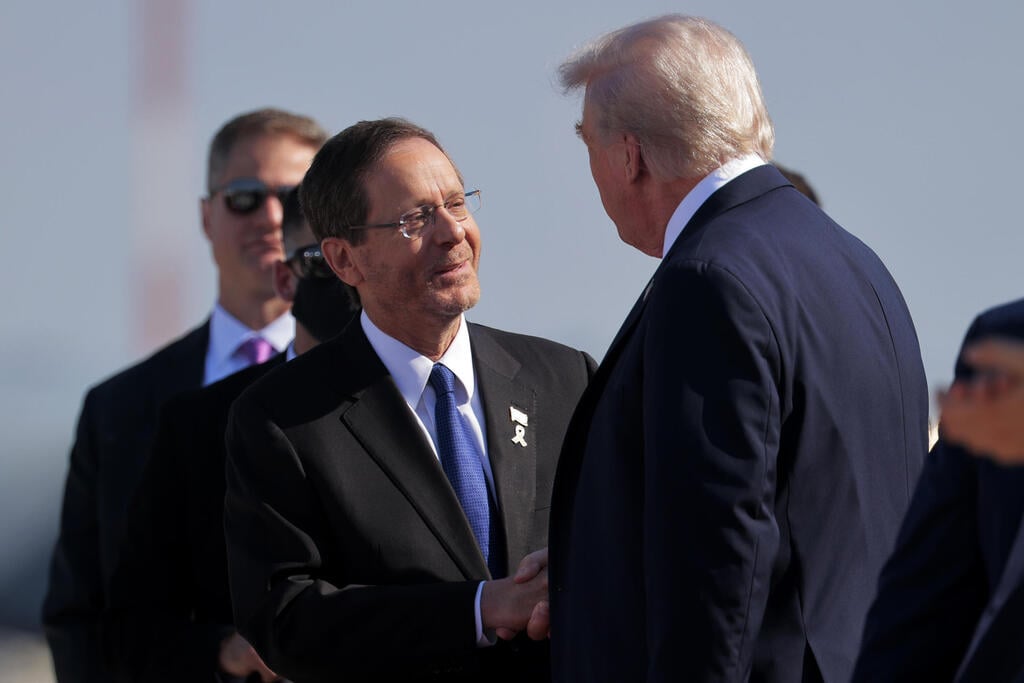
Herzog is working toward a unity government, while Trump has one major reservation
(Photo: Chip Somodevilla/Getty Images)
Two weeks before Election Day, ynet revealed that President Isaac Herzog was working to establish a unity government in the event of an inconclusive election. Knesset members who spoke with him said Herzog was concerned about the election's economic consequences, the prospect of a state budget not being approved and the continuation of deep divisions in Israeli society.
At the time, the President's Residence denied the report. But Wednesday morning, the issue gained renewed relevance, with some arguing that Herzog should intervene and push the rival camps toward a unity government.
The question of Herzog's involvement is particularly significant because, beyond his desire to bring about national unity, he is also the official empowered to exercise discretion in deciding which political leader will receive the mandate to form a government. Herzog has considerable discretion in the matter, and given the stakes, he is likely to face enormous pressure from both camps — pressure he will presumably seek to avoid.
The president in Jerusalem will need considerable help in persuading some political players to break fundamental campaign promises. And it appears he is hoping for assistance from another president, this one in Washington.
Donald Trump, who intervened in the election campaign on Netanyahu's behalf, wants the prime minister to remain in office, but with one major reservation: He detests Itamar Ben-Gvir and has a strong aversion to Bezalel Smotrich. It is possible that at least one of them will pay the political price.
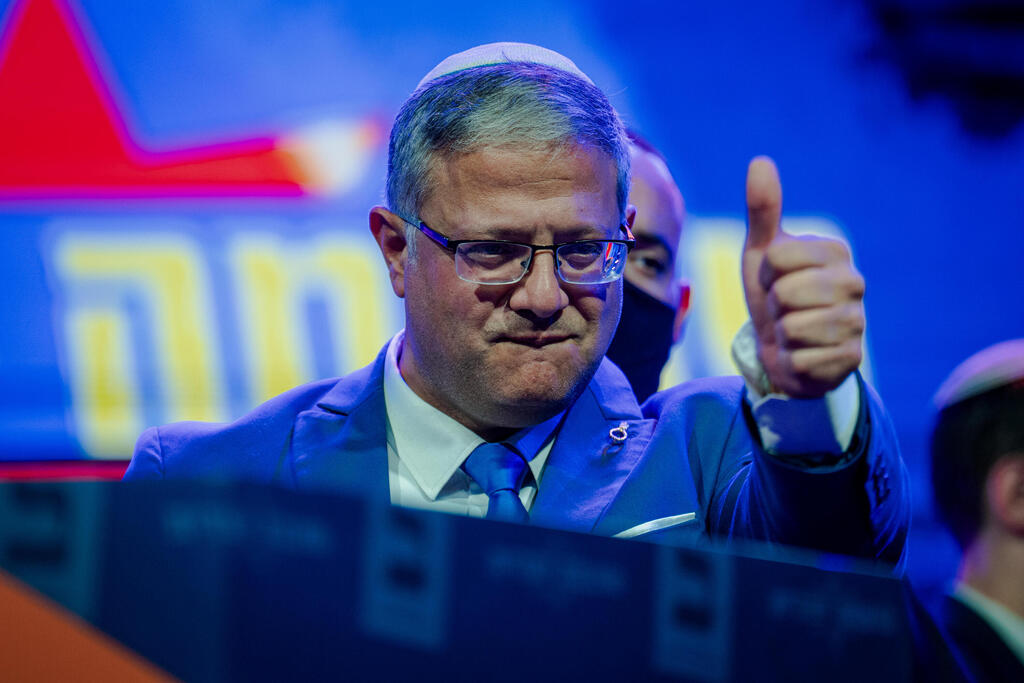
Will he be left out of a unity government? Itamar Ben-Gvir
(Photo: Erik Marmor/Getty Images)
Although Trump's public endorsement came at a critical moment in Netanyahu's campaign, its impact has yet to become decisively clear.
Behind the scenes, several questions are being raised: Did Trump offer his support in exchange for a commitment to exclude Ben-Gvir from the next government? Will Netanyahu work with Trump to reach a different arrangement for a broad coalition, one that has not necessarily been on the table until now?
One indication of the uncertainty lies in Netanyahu's conduct since the election. Although he declared in his election-night speech that all his coalition partners would remain with him, he had not bothered to call any of them to close ranks by midday Wednesday.
Is that because Netanyahu is weighing his options, or are there other reasons?
A growing number of political figures believe that once Trump gets through the U.S. midterm elections, he will turn his attention to Israel's political headache. By then, he is expected to have a firm position — and perhaps an expectation that comes with a demand.
Throughout the campaign, Ben-Gvir claimed that Netanyahu was planning to leave him out of the next government.
The moment of truth has arrived. Both presidents will soon enter the picture, and the outcome remains far from clear.