

In its first response to the Gaza smuggling affair, following the filing of indictments including against the brother of David Zini, the Shin Bet chief, the Israel Defense Forces said it views smuggling into the Gaza Strip as “a very serious phenomenon that poses a major threat to national security. If IDF service members, whether in regular or reserve service, are involved, the matter is even more severe.”
The smugglers alongside Bezalel Zini
Bezalel Zini is accused of smuggling cigarettes into Gaza in exchange for 365,000 shekels. According to the indictment, after one of the smuggling operations he told another defendant, Aviel Ben David, that he had an acquaintance in Unit 8200 who warned they might be exposed and claimed he had the ability to help ensure their details would not appear in the system.

In return, the indictment states, Zini was asked to arrange military equipment for the acquaintance’s unit. Zini allegedly requested about 100,000 shekels from Ben David, who agreed and transferred the money. The indictment does not specify what became of that request, how Zini used the money, or whether the acquaintance actually exists. The IDF addressed the claim, saying: “Following reports of suspected involvement by a Unit 8200 service member, the IDF is not familiar with the incident described.”
Under Hamas’ auspices: The smuggling mechanism from Israel to Gaza
According to a Gaza-based source familiar with the details, the smuggling mechanism from Israel into the Strip relied on a network of merchants and intermediaries operating without direct coordination with Hamas, but with its knowledge and under its governing auspices. The source said the smuggling was carried out via contacts operating on the Israeli side of the crossings, who opened direct communication channels with merchants in Gaza. The activity was coordinated through one central trader, described as the “big boss.”
According to the source, there were cases in which trucks bearing Israeli license plates entered Gaza and remained there. He claimed that payments to merchants on the Israeli side, near the Kerem Shalom and Kissufim crossings, were already transferred at the beginning of the ceasefire more than three months ago. One shipment was valued at $8 million, with three different Gaza-based merchants involved in the entry of that truck. The source said the smuggling included not only cigarettes but also drugs and sensitive equipment. Among the drugs were captagon pills concealed in boxes of iPhone 17 Pro Max devices and inside truck wheels. In one case, he claimed, no fewer than 10,000 captagon pills were smuggled into Gaza.
One million shekels to coordinate a feta cheese truck
The source further alleged that the entry of goods defined as “dual-use” was carried out through special permits and coordination. According to him, Fadi Dib, one of Gaza’s largest traders, who was arrested late last year by the Hamas government and ordered to pay the terrorist organization a ransom of millions of shekels, received direct access to the smuggling mechanism along with other merchants.
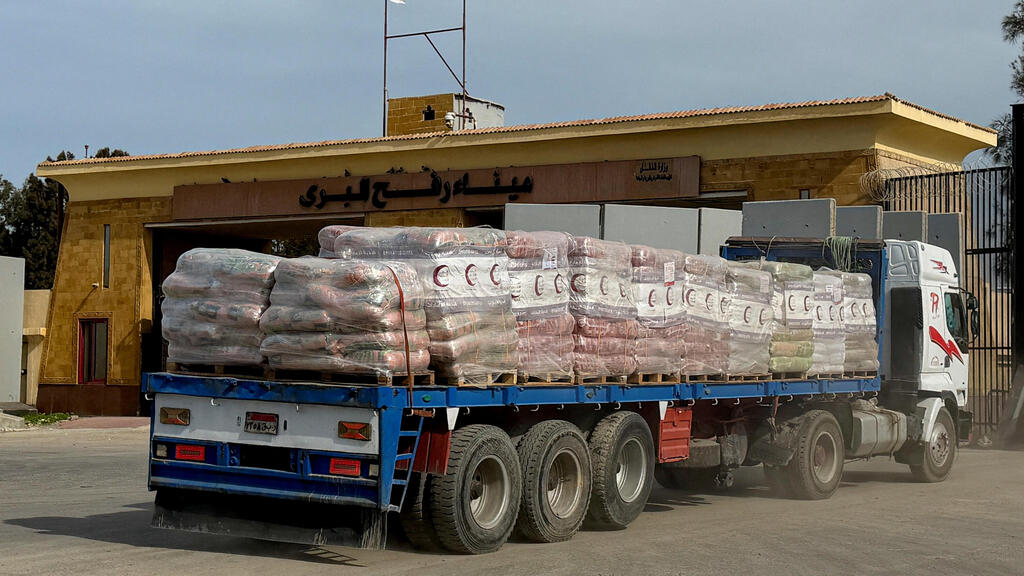
The Rafah crossing
(Photo: Reuters/Stringer)
The source emphasized that Hamas did not operate in direct partnership with Israel, but that the activity took place with its knowledge. He said Hamas acted as a governing authority, collecting taxes, fees and transit charges, and exploiting the ceasefire to generate revenue. According to the source, about 12 million shekels were collected at one collection point, and about 35 million shekels in another area. He said the mechanism also involved business partners outside Gaza, including traders operating in partnerships with entities in China, as well as individuals with economic ties in Israel and the Palestinian Authority, as also described in the indictment.
One trader allegedly paid more than $400,000 to coordinate a single transaction. The payment system, according to the source, was tiered, including fees for coordination, the truck, insurance for the goods and sometimes transfers between crossings. For example, the coordination fee for the entry of a truck carrying feta cheese reached about 1 million shekels, plus about 300,000 shekels for insurance, not including transport and truck costs.
Dib, described as one of the central traders in Gaza, served according to some accounts as a liaison between Israeli actors and Gaza merchants. One claim holds that the first shipment into Gaza after the ceasefire passed through him and under his coordination. According to the source, Dib was active as a trader before the war and during it, and was not involved in military activity. He is one of several major traders who took control of the field, effectively creating a monopoly over the smuggling mechanism and managing the entry of goods into Gaza almost exclusively, while exploiting the ceasefire conditions and limited oversight.