



After four years together in government, cooperation between Likud and Religious Zionism continues to deepen ahead of the upcoming elections. The parties have launched a joint campaign to "save the right-wing bloc," with the central goal of strengthening and expanding their political power.
Sources in both parties say personal ties between their leaders, Benjamin Netanyahu and Bezalel Smotrich, have also grown closer during the past term, particularly following Itamar Ben-Gvir's temporary withdrawal from the government over the hostage deal, while the finance minister remained loyal and paid a political price for doing so.
Gallery
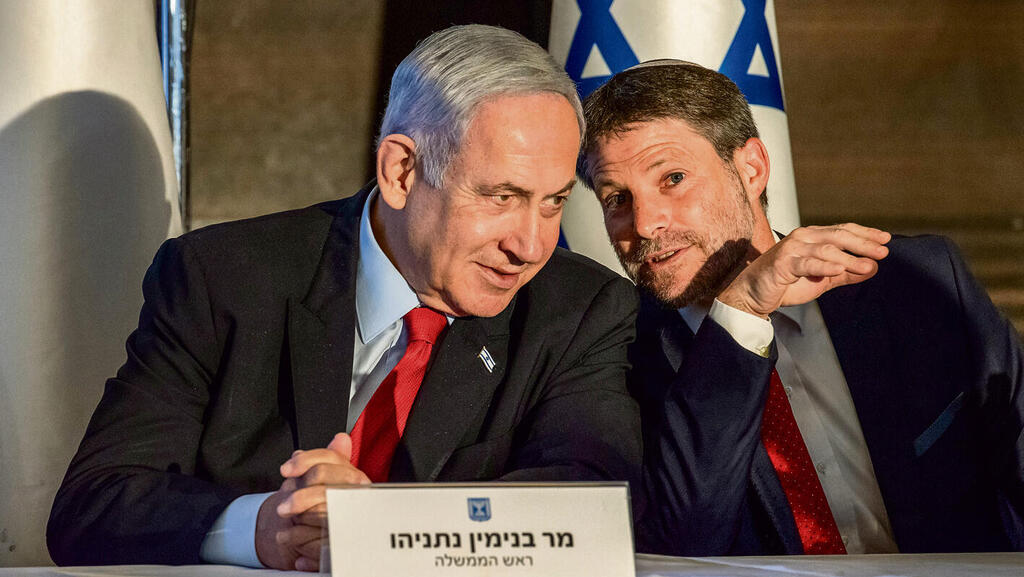
Ties between Benjamin Netanyahu and Bezalel Smotrich have also grown closer during the past term
(Photo: Amit Shaabi)
The strengthening alliance includes several measures: establishing a joint field campaign headquarters; mobilizing hundreds of activists, both volunteers and paid staff, to work on behalf of both parties; jointly mapping potential voter groups to increase turnout and maximize electoral opportunities; and preparing a detailed, coordinated schedule for Election Day.
The joint field campaign headquarters was recently established under the leadership of Yesha Council Chairman Yisrael Gantz, representing Likud, and Yesha Council Director-General Omer Rahamim, representing Smotrich.
The two are analyzing previous election results, identifying areas with untapped voting potential and working to significantly increase turnout in those cities.
With the help of numerous campaign workers and volunteers, they are dividing areas of responsibility among activists and plan to go door to door on Election Day to encourage people to vote and ensure that as many potential supporters of both parties as possible cast their ballots. The joint operation aims to help voters reach polling stations, including providing transportation when necessary.
Beyond their field operations, Likud and Religious Zionism also are cooperating on the parliamentary front, having signed a vote-sharing agreement.
"On the one hand, Likud and Religious Zionism appeal to different audiences, so their messages are also different," a source in Smotrich's party said. "On the other hand, we're all coming together for one goal: forming a broad coalition and winning the election."
Failed efforts to forge a broader alliance
Last week, Smotrich held his first major Religious Zionism conference, attended by yeshiva heads, rabbis, prominent activists and members of his grassroots communities.
He invited Netanyahu, who immediately confirmed his attendance to project a united front. During the conference, the two sat side by side and appeared closely coordinated.
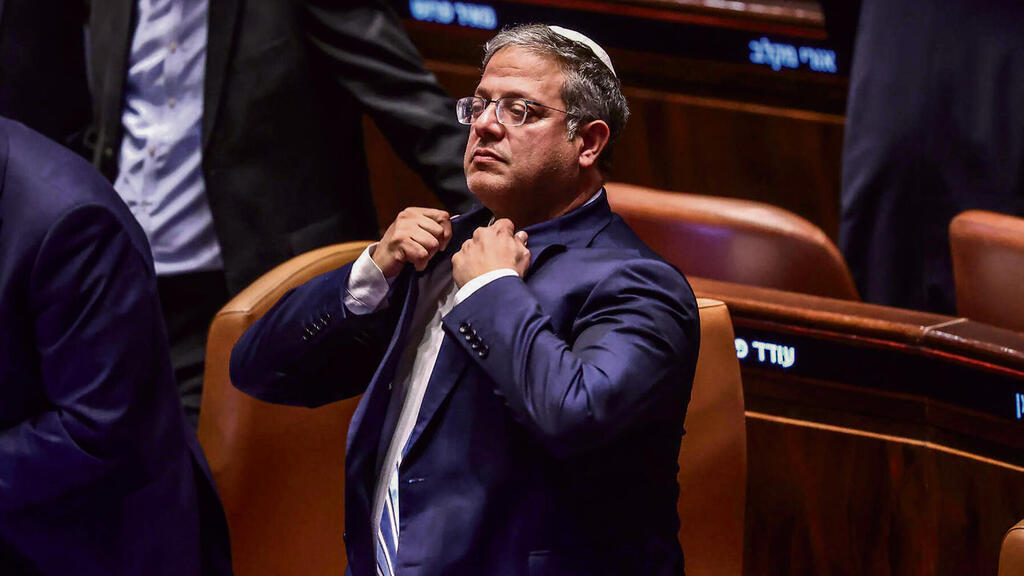
Ben-Gvir appears to be gong it alone
(Photo: Alex Kolomoisky)
This was particularly noticeable when it emerged that Itamar Ben-Gvir, their fellow member of the right-wing bloc, had not been invited to the event at all.
The national security minister also has complained that the prime minister refuses to be photographed near him or appear alongside him at public events.
As cooperation between Likud and Religious Zionism intensifies, the growing distance from Ben-Gvir has become increasingly apparent.
Officials in both parties blame Ben-Gvir, arguing that he has deliberately isolated himself.
Likud officials believe that while Shas and Religious Zionism are playing a coordinated bloc-wide game, the national security minister is pursuing a personal political strategy focused solely on his own success.
"Ben-Gvir wants to grow at Likud's expense, and that's what his entire campaign looks like," a senior Likud official said. "He isn't cooperating on anything related to winning the election for the bloc. He barely focuses on messages against the opposition and instead highlights internal conflicts within the bloc. He's deliberately creating a situation in which he is left out. That's his campaign."
Netanyahu's party says it held several discussions with representatives of Otzma Yehudit about cooperation, but claims Ben-Gvir showed no willingness to participate, either operationally or financially.
Because of that lack of cooperation, Likud officials believe many of the seats currently projected for Ben-Gvir in the polls represent voters whose support remains uncertain. They intend to try to win those voters back ahead of the election.
The Defense Ministry at the center of the dispute
Relations between Likud and Otzma Yehudit have become even more strained recently following Ben-Gvir's new campaign, which declared that "if Ben-Gvir had been defense minister, October 7 would not have happened."
The national security minister's coalition partners viewed the statement as provocative and interpreted it as further evidence that Ben-Gvir was focused on strengthening his party at their expense. This, in turn, further reinforced the Netanyahu-Smotrich alliance.
Likud's assessment is that Ben-Gvir is the only figure in Netanyahu's bloc competing directly for the same voters as the party. As a result, a political battle has developed between Likud and Otzma Yehudit over a large pool of undecided right-wing voters.
Throughout the recent period, Ben-Gvir's office has maintained that his support for Netanyahu is unconditional. In practice, however, from Ben-Gvir's perspective, the contest on the right is no longer about who will be prime minister, but rather who will serve as Netanyahu's defense minister.
Ben-Gvir has publicly identified the Defense Ministry as his next political goal.
Netanyahu understands that to prevent Ben-Gvir from achieving that ambition and force him to lower his expectations, he must weaken Otzma Yehudit and reduce the number of seats it wins in the election.
"Instead of directing his energy outward, Ben-Gvir is creating a situation in which the election is being fought within the right-wing bloc: Either Netanyahu or Ben-Gvir. That's completely unreasonable," a Religious Zionism source said.
"For two months, Smotrich talked about cooperation and coordination within the bloc. He wanted everyone together, but Winter and Ben-Gvir decided to go it alone. That's part of what led to the closer relationship with Likud."