


The Houthis’ sweeping offensive across western Yemen reached the strategic Bab al-Mandab Strait on Thursday, with a report claiming the Iran-backed rebels had seized Perim Island, a tiny but potentially crucial position at the narrowest point of one of the world’s most important shipping routes.
Qatar-based Al-Araby reported that the Houthis captured Perim, also known as Mayyun, as part of the blitz that saw them seize large stretches of Yemen’s southwestern coast from forces aligned with the internationally recognized, Saudi-backed government. The claim has not been independently confirmed and remains the only specific report that Perim itself has fallen.
Explosions and flames at a military camp in northern Yemen: Houthi footage of an attack on what they called 'Saudi weapons trucks'


But separate reports indicate that Houthi forces have reached several other strategically important islands nearby. Reuters, citing military sources in Yemen’s internationally recognized government, reported that the rebels had reached the Hanish Islands after capturing the nearby port city of Al-Mokha earlier Thursday. The report did not say whether Zuqar, Greater Hanish or Lesser Hanish had been taken. A military source quoted by AFP said the Houthis had captured at least Zuqar after firing missiles at the island and sending fighters there by boat.
Perim’s location gives the report particular significance. The roughly 13-square-kilometer island lies in the middle of Bab al-Mandab, separating the waterway into two channels between Yemen and the Horn of Africa. Control of the island could allow the Houthis to monitor shipping more closely and potentially threaten vessels passing through the strait without relying solely on the long-range missiles and drones they have used in previous attacks.
Opponents of the Houthis have also warned that a permanent presence there could give the group greater ability to mine the waterway, potentially forcing an extensive international naval operation to remove them.
Bab al-Mandab links the Indian Ocean and Asia to the Red Sea, Suez Canal and Europe, making it a critical artery for global trade. Its importance has increased further since Iran closed the Strait of Hormuz after its war with the United States began in late February.
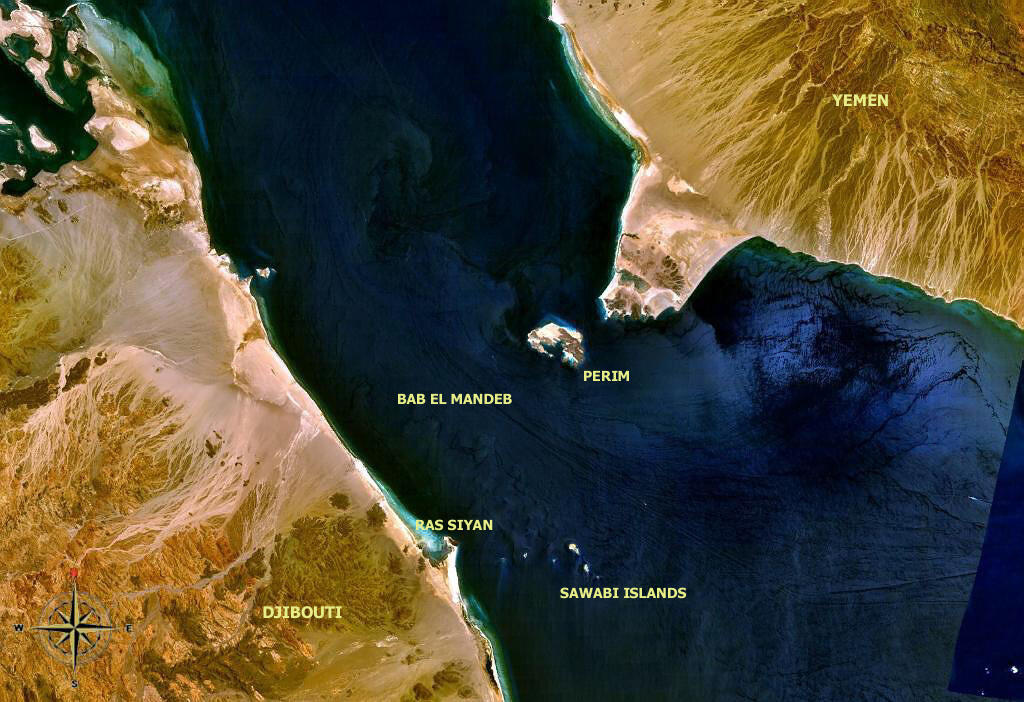
The possibility that Tehran’s Houthi allies could strengthen their position around a second major maritime chokepoint has added pressure to already volatile energy markets. Brent crude rose at least 4% Thursday to around $105 a barrel amid fears that shipping through Bab al-Mandab could face greater disruption.
The gains could also strengthen Iran’s hand in its confrontation with U.S. President Donald Trump, giving Tehran another potential source of leverage as it seeks relief from an American blockade that has severely restricted its oil exports.
Iranian media celebrated the Houthi advance. Iran’s Al-Alam television claimed the rebels had captured Dhubab, which it described as the last major Saudi-backed government stronghold on Yemen’s western coast, as well as nearby Zuqar Island.
“Bab al-Mandab is under the control of the forces after the complete capture of Dhubab,” the channel reported.
The Houthis later described their operations as “defensive” and pledged that international freedom of navigation through Bab al-Mandab would continue. At the same time, the group is enforcing what it calls a “naval blockade” against Saudi Arabia and has attacked Saudi tankers and other vessels in recent weeks.
Yemen’s internationally recognized government accused Tehran of driving the offensive.
“Iran seeks to give the Houthis the ability to influence the Bab al-Mandab Strait and the Red Sea,” said Rashad al-Alimi, chairman of Yemen’s Presidential Leadership Council. “Attempts to change the military situation near the Bab al-Mandab Strait cannot be treated as a purely internal Yemeni matter.”
“Any threat to the Bab al-Mandab Strait directly affects the Red Sea, the Suez Canal and global trade,” he added, arguing that restoring government control over Yemen’s coastline and territorial waters was a shared international interest.
Al-Mokha falls as thousands flee
The latest advance came after government officials acknowledged Thursday morning that their forces had withdrawn from the strategic port city of Al-Mokha, roughly 80 kilometers from Perim.
Witnesses told AFP that Houthi fighters entered the city chanting “Death to America, death to Israel.”
The forces opposing the Houthis are divided among several factions. Al-Mokha had been held by the National Resistance Forces led by Gen. Tareq Saleh, which fight alongside the internationally recognized government. Saleh said Thursday that he had moved his command center to “a safe location” and acknowledged that his forces and their allies had paid “a heavy price in recent days.” He also accused Iran of planning and supporting the offensive.
Houthis enter Al-Mokha chanting, 'Death to America, death to Israel'
At least 20,000 people had already been displaced by the latest fighting in several areas before the fall of Al-Mokha, with reports suggesting the number rose sharply overnight as residents fled toward Aden, the seat of the internationally recognized government.
One 46-year-old resident who fled Al-Mokha during the night described an “apocalyptic” atmosphere to AFP. Another said families were robbed by gangs while trying to escape.
AFP reported earlier this week that at least 500 people had been killed in the renewed fighting, most of them combatants but including dozens of civilians. The toll is believed to have risen as the Houthi offensive expanded.
Saudi oil facilities also under attack
The Houthi blitz comes amid the sharpest escalation in Yemen in years. Earlier this week, government forces said they had captured territory from the rebels in the northern province of Al-Jawf, while the Houthis launched a major missile and drone attack against oil facilities in southern Saudi Arabia.
The Houthis said the strikes were retaliation for Saudi attacks. Riyadh reported at least 73 people wounded and several energy facilities damaged and temporarily knocked out of operation.
Saudi Arabia has responded with extensive airstrikes across Yemen in support of government forces. Houthi officials claimed Riyadh carried out around 40 strikes on Thursday morning alone in areas including Taiz, Hodeidah, Al-Jawf and Marib.
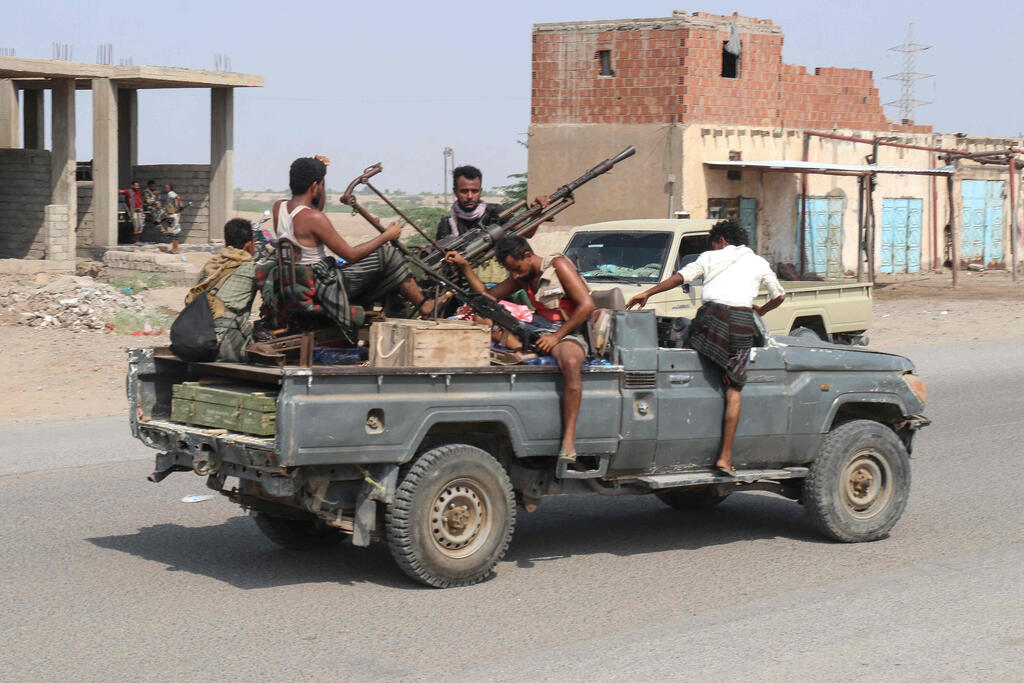
Fighters loyal to Yemen’s Saudi-backed government forces at a checkpoint near Hodeidah amid renewed fighting with the Houthis, Sept. 5
(Photo: Khaled ZIAD / AFP)
Yemen’s civil war began in 2014 when the Houthis seized the capital, Sanaa, after exploiting the weakness of the government established following the Arab Spring upheaval. Saudi Arabia intervened the following year at the head of an Arab coalition seeking to restore the internationally recognized government.
The coalition prevented the Houthis from conquering the entire country but failed to defeat them. The rebels retained control over most of northwestern Yemen and repeatedly launched missiles and drones at Saudi cities, airports and oil infrastructure.
Saudi Arabia later shifted course, reaching a truce with the Houthis in 2022 and restoring diplomatic relations with Iran the following year. That relative calm began breaking down again in July, when Saudi Arabia struck Sanaa airport to prevent an Iranian aircraft from landing in the Houthi-controlled capital.
The Houthis subsequently stepped up attacks on Saudi airports, oil facilities and shipping and declared their naval blockade against the kingdom. In recent days, that confrontation has expanded into major ground fighting.
Saudi Arabia’s new alliance faces its first test
The crisis is also testing the trilateral defense alliance Saudi Arabia signed with Turkey and Pakistan last month.
The agreement, dubbed the “Mecca Alliance” after the city where it was signed, contains a mutual-defense provision. Both Ankara and Islamabad have condemned the Houthi attacks on Saudi Arabia but have so far taken no significant military action on Riyadh’s behalf.
Reuters reported earlier this week that Pakistan relayed a Saudi warning to Tehran calling on Iran to restrain the Houthis before the confrontation spiraled further. A senior Iranian official responded that “Iran does not control the Houthis.”
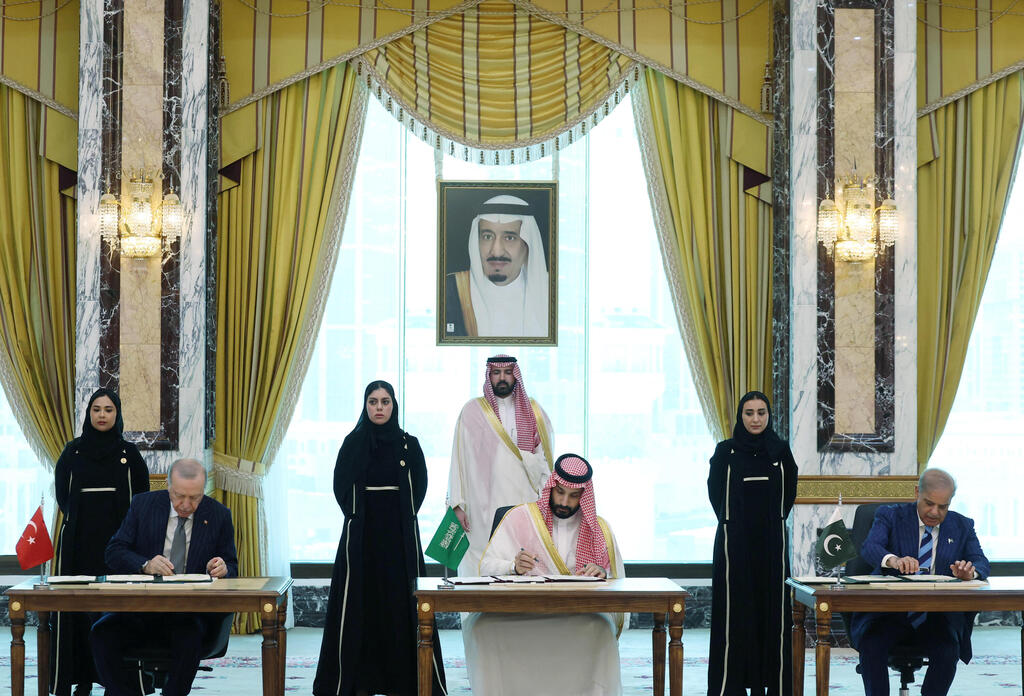
Signing of the agreement between Saudi Arabia, Pakistan and Turkey
(Photo: Murat Cetinmuhurdar/Turkish Presidential Press Office/Handout via REUTERS )
Danny Citrinowicz, a former head of the Iran branch in Israeli military intelligence’s research division and now a senior researcher at Israel’s Institute for National Security Studies, said the fighting represented the alliance’s first major strategic test.
“The importance of an alliance is not measured by the declarations made when it is established, but by what its members are willing to do when one of them is attacked,” he wrote on X.
The question, he said, was whether the Mecca Alliance would develop into a genuine regional security architecture or become a “paper tiger” precisely when Saudi Arabia needed it.
For Washington, he added, the crisis also exposes the gap between encouraging Middle Eastern partners to take greater responsibility for their own security and creating alliances whose members are willing to share risks when deterrence fails.
“An alliance that works only in peacetime,” he wrote, “is not a real alliance.”