


After four years of a truce in Yemen that largely held despite occasional flare-ups, the country’s civil war appears to be resuming, while Houthi attacks on Saudi Arabia are also expanding.
Explosions and flames at a military camp in northern Yemen: Houthis release footage of an attack on Saudi weapons trucks


The Houthis said Tuesday that they had launched a large-scale missile and drone attack against oil facilities in southern Saudi Arabia, claiming it was retaliation for Saudi attacks against them. Riyadh reported at least 73 people wounded and several energy facilities shut down after being damaged, and vowed revenge that came within hours: By midday, Saudi airstrikes were reported in Marib province in central Yemen, followed later by strikes in Taiz and Al-Wazi’iyah in the southwest.
The escalation comes as fighting on the ground in Yemen also has widened in recent days between the Houthis and forces loyal to the internationally recognized government, which is backed by Saudi Arabia. By midday, the Yemeni government said it had captured new territory from the Houthis in Al-Jawf province in northern Yemen.
Gallery
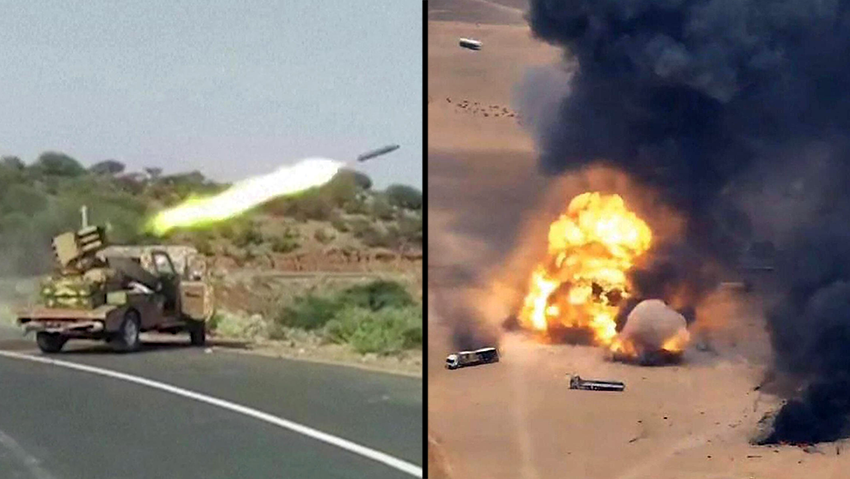
Houthis footage which they claim shows an attack on weapons equipment that Saudi Arabia transferred to a military camp in northern Yemen
(Photos:ANSARULLAH MEDIA CENTRE/AFP, NATIONAL RESISTANCE FORCES IN YEMEN / HANDOUT/AFP)
The latest escalation in Yemen began in July, when the Iran-backed rebels tried to break the air and sea blockade imposed on them for about a decade by the Saudi-led Arab coalition, using an Iranian aircraft that attempted to land in the capital Sanaa, which has been under Houthi control since the civil war began in 2014. Saudi Arabia struck the airport to prevent the landing, and the Houthis subsequently retaliated with several attacks of their own on Saudi airports and oil facilities. They also declared a “naval blockade” of Saudi Arabia, attacking Saudi tankers and ships attempting to cross the Bab el-Mandeb Strait, a strategic waterway linking the Indian Ocean with the Red Sea and, from there, the Suez Canal.
That escalation came alongside tensions between Iran and the United States, and in recent days it has expanded from airstrikes into actual ground fighting between Houthi forces, which control large parts of northwestern Yemen, and forces of the government based in the southern city of Aden, which also controls broad areas in the country’s east.
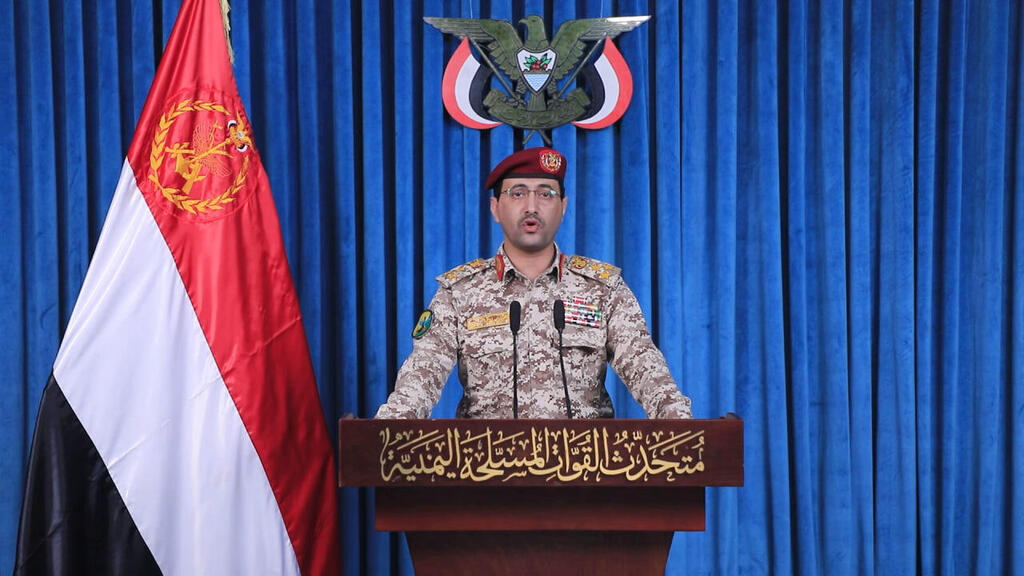
ahya Saree spokesman for the Houthi army
The Houthi attack overnight, first reported at around 3:30 a.m., targeted the cities of Abha, Khamis Mushait, Jazan and Najran, all in southern Saudi Arabia. The Energy Ministry in Riyadh said several energy facilities were damaged.
“The attacks caused fires, leading to the temporary shutdown of some activity. The relevant authorities are continuing to deal with the consequences of the attacks,” the ministry said.
Turki al-Maliki, spokesman for the Saudi-led coalition fighting the Houthis, said 73 civilians were wounded in the attacks, including women and children.
“The Houthi attacks on Saudi Arabia constitute a dangerous escalation,” he said, stressing that the assault targeted “civilian and economic sites.”
The statement added that the attack was a “blatant violation of Saudi sovereignty and a direct threat to the security and safety of its citizens and residents. The coalition forces command will take all necessary operational measures to deter the Houthis, respond to the sources of the threat and neutralize the danger posed.”
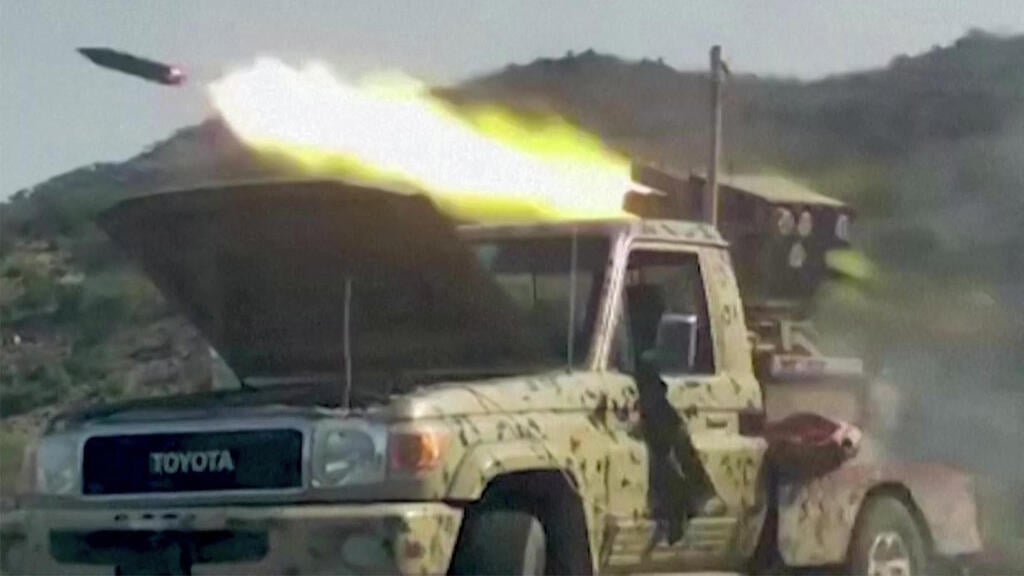
Footage released by Saudi-backed Yemeni government forces of battles against the Houthis in the Taiz region in southwestern Yemen, Sept. 8
(Photo: NATIONAL RESISTANCE FORCES IN YEMEN / HANDOUT/AFP)
Houthi military spokesman Yahya Saree said Tuesday morning that the attack included “dozens” of ballistic missiles and drones, and claimed it caused “significant damage” to the energy facilities that were struck.
He said the targets included facilities in Abha belonging to Saudi oil giant Aramco, the world’s largest oil company, as well as an air base in Khamis Mushait. Saree said the attack was the rebels’ response to “escalatory measures” by Riyadh and warned that “any aggression against our country will be met with a decisive response.”
He added: “We will not hesitate to launch even stronger and broader attacks against the Saudi enemy. We will be even more determined to confront any aggression and any attack. We will continue our operations deep inside Saudi Arabia and maintain the equation of ‘blockade for blockade’ until the aggression ends and the siege on our country is lifted.”
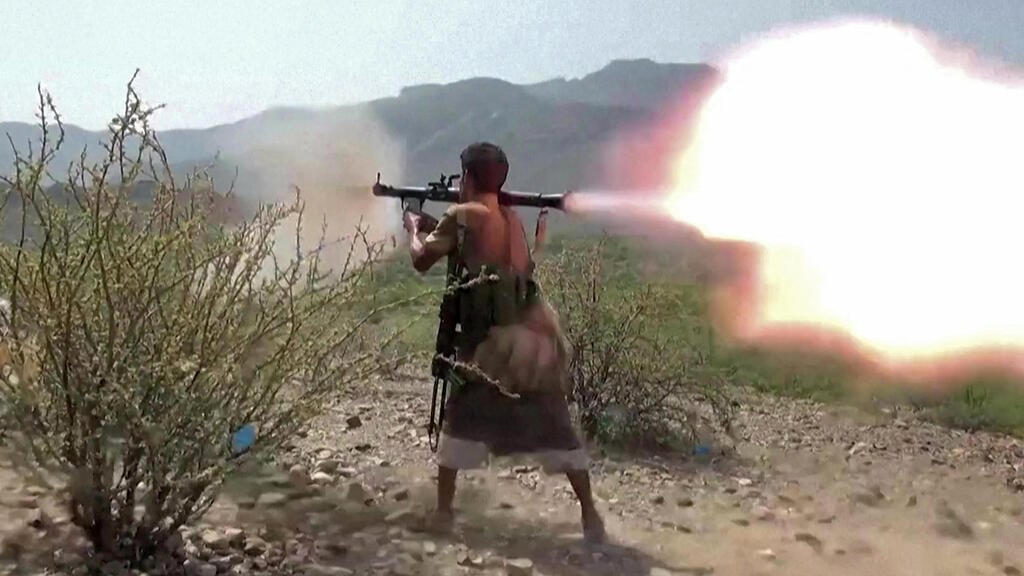
Footage released by Saudi-backed Yemeni government forces of battles against the Houthis in the Taiz region in southwestern Yemen, Sept. 8
(Photo: NATIONAL RESISTANCE FORCES IN YEMEN / HANDOUT/AFP)
The strikes came hours after the Houthis accused Saudi Arabia of bombing a prison in Al-Jawf province in northern Yemen, saying at least seven people, including one child, were killed.
At the same time, ground fighting against Yemeni government forces also appeared to be intensifying. By midday, government forces, backed by Saudi Arabia, said they had taken control of new areas in Al-Jawf.
“The Al-Yatmah area in Al-Jawf province has been liberated from the Houthis. The advance of the forces on the ground is continuing,” government forces said in a statement, after claiming in recent days to have captured territory from the rebels in the Hodeidah and Taiz areas of southwestern Yemen.
Fighting between government forces and the Houthis was also reported in Marib and Al-Bayda provinces in central Yemen, as well as Al-Jawf in the north.
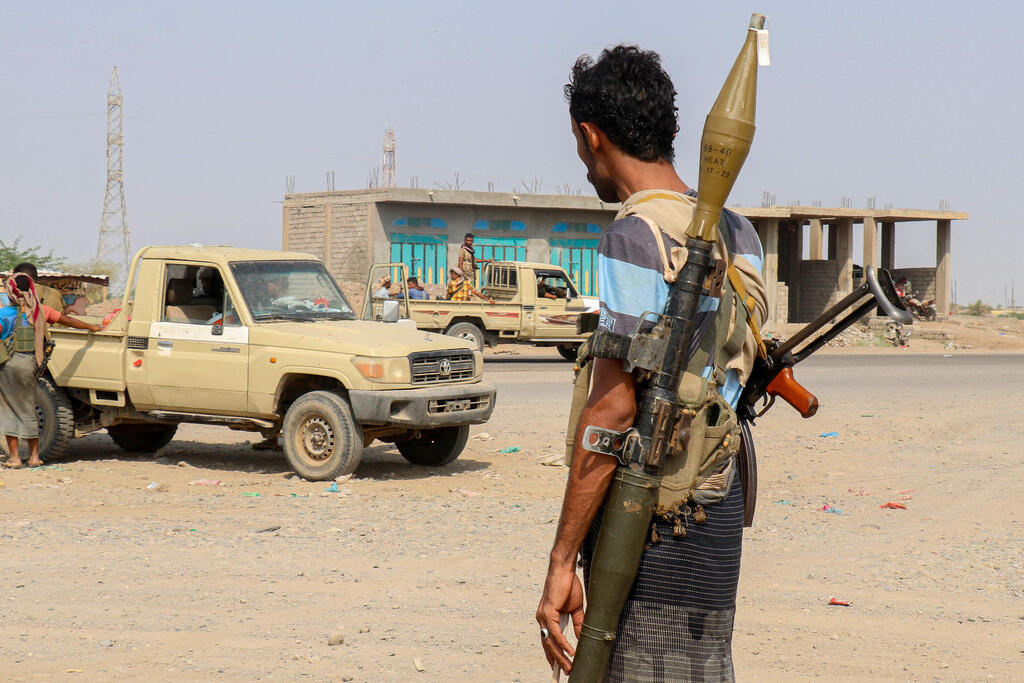
Fighters loyal to the Saudi-backed Yemeni government forces at a checkpoint near Hodeidah amid renewed fighting in Yemen against the Houthis
(Photo: Khaled Ziad / AFP)
As part of the escalation, the Houthis themselves have also launched missile and drone attacks on government forces. On Monday, they published footage that they said showed a large fire at the Al-Wadi’ah camp in northern Yemen, near the Saudi border, following a missile attack they had launched on the site.
In a statement, they claimed that trucks “loaded” with military equipment allegedly transferred from Saudi Arabia had caught fire there.
The renewed civil war in Yemen, which in the previous decade caused one of the world’s largest humanitarian crises and left more than 150,000 people dead, is now creating a new wave of displacement. According to the United Nations, the latest flare-up has forced at least 18,500 people to flee their homes in the Taiz and Hodeidah areas.
“Families are arriving with nothing: no shelter, no food and no way of knowing whether it is safe to return,” said Abdusattor Esoev, head of the U.N. International Organization for Migration mission in Yemen. “Many of them are people who have already been displaced from their homes once, twice and even four times before.”
Yemen’s civil war began in 2014 against the backdrop of the Arab Spring protests earlier in the decade, which led in 2011 to the ouster of longtime ruler Ali Abdullah Saleh after decades in power. Three years later, taking advantage of the weakness of Yemen’s new government, Houthi rebels launched a broad offensive and seized the capital Sanaa.
Saudi Arabia viewed the takeover as a direct threat to its security and regional influence, and in 2015 formed a military coalition of Arab states and launched a major campaign that included thousands of airstrikes, an air and sea blockade and support for Yemeni government forces, with the aim of halting the Houthi advance and restoring the government to power.
Although the coalition prevented the Houthis from taking control of all of Yemen, it failed to defeat them. The Houthis continued to control the country’s northwest and over the years launched missiles and drones at Saudi cities, airports and oil facilities.
At the same time, the war led to one of the world’s worst humanitarian crises, and the Saudi-led coalition faced sharp international criticism over civilian casualties and damage to infrastructure. Against that backdrop, Saudi Arabia changed course and in 2022 reached a truce with the Houthis, a shift that a year later was also reflected in the restoration of diplomatic relations with Iran, until then Saudi Arabia’s bitter rival.
Now, after four years of a truce that largely held despite occasional attacks, and against the backdrop of the parallel escalation with Iran, the civil war appears to be resuming.
Still, Saudi Foreign Minister Faisal bin Farhan stressed Tuesday afternoon that Riyadh continues to hope the current round can be brought to an end through negotiations.
“The Houthis prioritize their own interests over the interests of the Yemeni people. The latest Houthi escalation is part of their approach. The path to diplomacy with the Houthis remains open,” he said.
But he added: “Saudi Arabia will not hesitate to defend itself against attacks. We will not hesitate to support what serves the interests of Yemen and the region.”
Bin Farhan spoke during a visit to Moscow, where Russian Foreign Minister Sergey Lavrov criticized the Houthis, despite previous reports that Russia had assisted the rebels in attacks on ships in the Red Sea.
Lavrov said the overnight attack on Saudi Arabia would have “negative” consequences for the global economy and added that it was “unacceptable” to resolve issues through military means.