


Even as relations between Justice Minister Yariv Levin and Attorney General Gali Baharav-Miara have reached an unprecedented low, there is one issue on which they have worked together: the law to prosecute the Nukhba terrorists who carried out the Oct. 7 atrocities.
The bill, expected to pass in the Knesset on Monday, would create a special legal framework for the trials of more than 400 Hamas terrorists accused of taking part in the massacres, kidnappings, rapes and looting between Oct. 7 and Oct. 10, 2023, as well as crimes committed later against hostages taken from Israel to Gaza.
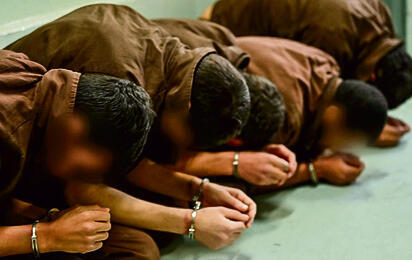
While Levin was trying to remove Baharav-Miara from office, the two worked professionally on the legislation, setting aside personal and institutional hostility so those responsible for the attacks could be brought to justice.
The legal groundwork was led by Maj. Gen. (res.) Sharon Afek, a former military advocate general who now serves as deputy attorney general for special affairs. Dozens of police investigators, including Supt. Rinat Saban and Cmdr. Ruti Hauslich, worked on the case files. Evidence was also collected during IDF operations in Gaza by soldiers and Shin Bet operatives.
Prosecutors from the Southern District Attorney’s Office, led by attorney Erez Padan, reviewed forensic findings from massacre sites, interrogation transcripts of detained Nukhba terrorists and hundreds of videos documenting murder, rape and abduction.
Some prosecutors say they have suffered insomnia, nightmares and impaired daily functioning after watching the footage repeatedly in order to turn the horrors into admissible evidence for criminal trials expected to be followed around the world.
Three lawmakers helped push the legislation to the finish line: opposition lawmaker Yulia Malinovsky of Yisrael Beytenu, Constitution Committee chairman Simcha Rothman and Levin, who guided the bill as the government’s liaison to the committee.
“Since the Eichmann trial, and later the Demjanjuk trial, Israel has not held a trial of this kind,” a senior legal official said. “Such a proceeding could be seen as a show trial for propaganda purposes, with no connection to justice. That is why it was so important that the trials be conducted according to the rules of evidence accepted in a democracy.”
Attorney Lilach Wagner, who heads the serious crime unit in the Justice Ministry’s legislation department, coordinated the changes in the Constitution Committee.
“It is important that people in Israel and around the world see how the trials are conducted, with witnesses, prosecutors, evidence and offenses,” she said. “In dozens of Knesset hearings, it was important for us to deviate as little as possible from Israel’s existing legal system.”
She said police and prosecutors “did the impossible” by linking evidence to acts of violence in chaotic scenes that were often disrupted by rescue, evacuation and collection efforts, as well as by fighting.
“Because of our thoroughness, we discovered, for example, infiltration points into communities that the army had not known about before,” she said.
The legislation was delayed until after the return of the last living hostage, out of concern that a law allowing the death penalty for Nukhba terrorists could harm efforts to free hostages or endanger those still in captivity.
The law defines the crimes as offenses against the Jewish people, crimes against humanity and war crimes. The indictments will be filed in a special military court in Jerusalem, which will also be authorized to hear related Oct. 7 offenses under laws including the Prevention of Genocide Law, offenses against state sovereignty and the Counterterrorism Law. This would allow the death penalty not only for murder but also for crimes such as rape.
The trials will be divided by scenes of attack, such as Be’eri, the Nova festival or Nir Oz.
Under the updated draft, each panel will include three judges. At least one must be the president of a military court, or alternatively a district court president, vice president or judge called up for reserve duty.
Appeals will be heard by a three-judge panel headed by a retired Supreme Court justice, alongside a serving or retired district court president and additional judges who are presidents or vice presidents of district courts. If a death sentence is imposed, an appeal will be automatic even if the defendant does not request one.
Each defendant will be entitled to legal representation and may choose an attorney licensed to practice in Israel or the West Bank. If a defendant is not represented, the court will appoint a lawyer, though not from the Public Defender’s Office. In such cases, the state will seek to recover the cost of representation from the Palestinian Authority by deducting it from funds transferred to it.
In most hearings, defendants will not be physically present in court and will participate by video from prison. They will be brought to the courtroom for five types of hearings: responding to the indictment, testifying, hearing the verdict, testifying at sentencing and hearing the sentence.
Special emphasis will be placed on victims’ rights, including the families of those murdered and kidnapped, returned hostages and victims of rape and abuse. The Crime Victims’ Rights Law will apply, and victims will be able to attend hearings or watch from a separate hall. The chief military prosecutor will establish a dedicated unit to protect those rights.
The hearings will be public and recorded on video and audio, with the material preserved in the State Archives. Key hearings, including the opening of the trial, opening statements, the reading of the verdict and sentencing, will be broadcast on a dedicated website.
Anyone will be able to ask the court to publish footage of a hearing not held behind closed doors. Judges will approve publication only if they are convinced the public interest outweighs harm to victims’ privacy or to the proper conduct of the trial.
The law’s message is clear: Justice must not only be done, but be seen — not at the expense of those whose worlds were destroyed.