

The new academic year began Sunday for 336,350 students across Israel—after two years marked by war, long reserve deployments, and emotional tolls. More than 70,000 students were called up for extended periods, losing months of coursework, routine, and in some cases, friends.
A nationwide survey by the National Union of Israeli Students highlights the war’s ongoing impact on the student population. Among 15,000 respondents representing a cross-section of Israeli higher education, including reservists, partners of soldiers, evacuees, victims of attacks, wounded veterans, bereaved families, and families of hostages.
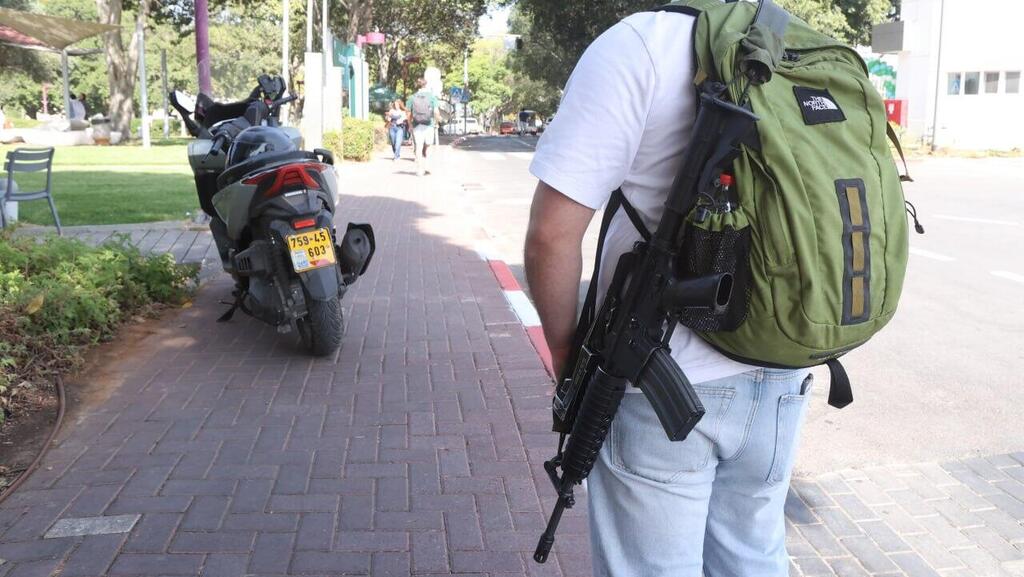
The results are grim: 34% of students said they had considered dropping out of their studies, while 67% expressed concern that the ongoing security situation could disrupt or even derail their academic progress. Only 54% managed to complete the academic year as planned, and 21% were forced to postpone courses or change their study tracks altogether.
Among those directly affected by the war, the numbers are even starker: 66% of reservists reported emotional or social difficulties returning to campus, and 61% said their academic performance suffered significantly. Half of them sought help from their institutions.
Among evacuees, 61% reported major academic setbacks, 54% sought assistance, and 41% considered quitting.

(Photo: Shaul Golan)
'A whole generation is paying the price'
“The survey paints a bleak picture of an entire generation carrying the country’s heaviest burdens—and paying the price alone,” said Sivan Koren, chair of the National Union of Israeli Students.
“More than two years into the war, the government is behaving as if life has returned to normal, while students are still struggling—mentally, financially, and academically—without support or safety nets,” Koren said. “The state and universities can no longer hide behind bureaucracy and denial. We demand accountability and real aid for those who fought, studied, and worked for this country. They must not be left to fight for their future alone.”
Expert: Universities must offer long-term emotional support
Prof. Yariv Feniger, head of the School of Education at Ben-Gurion University and an expert in education policy, urged universities to provide lasting psychological and social support for tens of thousands of returning soldiers.
“The return to studies brings feelings of joy, relief, and hope,” he said, “but universities will be welcoming back many who served in combat and may develop post-trauma or depression. The response must be empathetic, ongoing, and rooted in trust in these young people.”
Staff Sgt. (res.) Kfir, 24, from Modiin, is starting his second year in economics and business at Bar-Ilan University. Serving with the 9300th Battalion of the 300th Brigade, he has already spent nearly a year on reserve duty and is now on his fifth deployment.
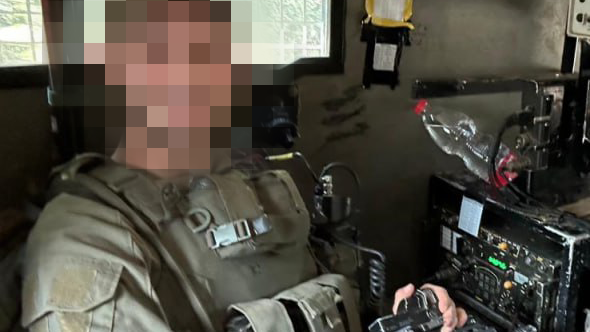
Staff Sgt. (res.) Kfir
“My draft class was released just six months before the war began,” he said. “Some are just waiting for the war to end, stuck in limbo. A friend who wants to apply to medical school keeps postponing his psychometric exam because he keeps getting called up. I realized we have no choice—we must study and serve at the same time. That’s our reality. I say this with a wink to our ultra-Orthodox brothers: we’d be happy if they, too, found a way to combine study and service.”
Kfir chose a hybrid program with online and evening courses to accommodate his reserve service. “A regular schedule is almost impossible for us,” he said. On the new government plan for reservist students, he added: “It’s nice that after more than two years, the Council for Higher Education realized there’s a difference between someone who served 30 days and someone who served 300. What I lose most during service is time. I expect more flexibility for reservists, bereaved families, and career soldiers.”
Master Sgt. (res.) Tomer, 26, from Kochav Yair, serves as a combat soldier in the 11th Brigade and has completed over 300 days of reserve duty since the war began. He’s now starting his second year studying life sciences and medical sciences at Tel Aviv University.

Master Sgt. (res.) Tomer
“In my first year, I missed almost an entire semester while deployed in the north,” he said from Khan Younis, where he’s serving another tour. “Now I’ll miss another two or three weeks of the new semester. It’s more of a mental challenge than a practical one—you feel stuck in an endless loop of studying, serving, and going back to studying. I even thought about stopping my reserve service, but when the call came, I went. It’s hard to plan or commit to anything long-term.”
Staff Sgt. (res.) Tal, 24, from Rehovot, served around 250 days during the war as a combat soldier in the 8114th Battalion. He’s now about to begin his law degree at Ono Academic College.

Staff Sgt. (res.) Tal
“I planned to start studying much earlier,” he said. “The war broke out while I was on my post-army trip, which I cut short when I was called up. My studies were delayed again and again.”
Just after enrolling, Tal received another call-up order that will overlap with the start of his semester. “There’ll be a one- or two-week overlap,” he said. “No one wants to miss those first days when you meet classmates and get your bearings. I’ll have to make it up myself. The war isn’t over—I know I’ll be called again. I just hope the academic support will be enough.”
According to the Council for Higher Education, 254,580 students began undergraduate studies this year, 68,700 began master’s degrees, and 12,370 began doctoral programs. Women make up 59% of undergraduates, 64% of master’s students, and 54% of doctoral candidates.
The most popular undergraduate fields are engineering (17.7%), social sciences (17.2%), and education and teaching (14.4%). Notably, 35% of undergraduate students come from low socioeconomic backgrounds.