

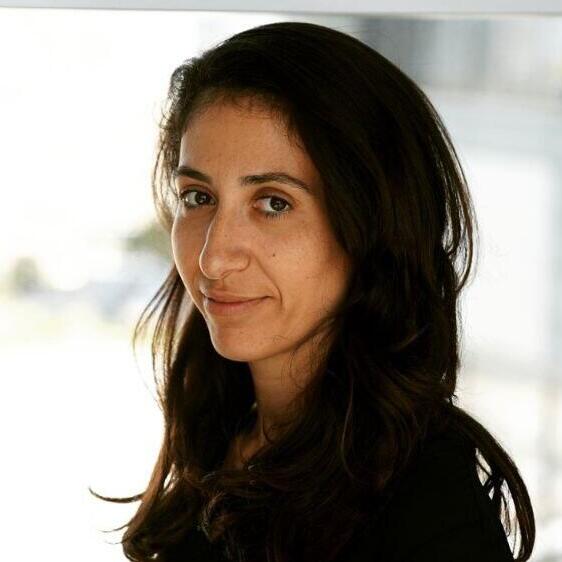
The Houthi government in Yemen, led by Prime Minister Ahmed Ghaleb al-Rahwi until his killing on Thursday in an Israeli airstrike, had survived barely a year before collapsing under the rubble.
The strike in Sanaa killed al-Rahwi and several ministers, according to Arab media reports. The Houthis confirmed his death along with “several ministers,” but did not release a full list of casualties.
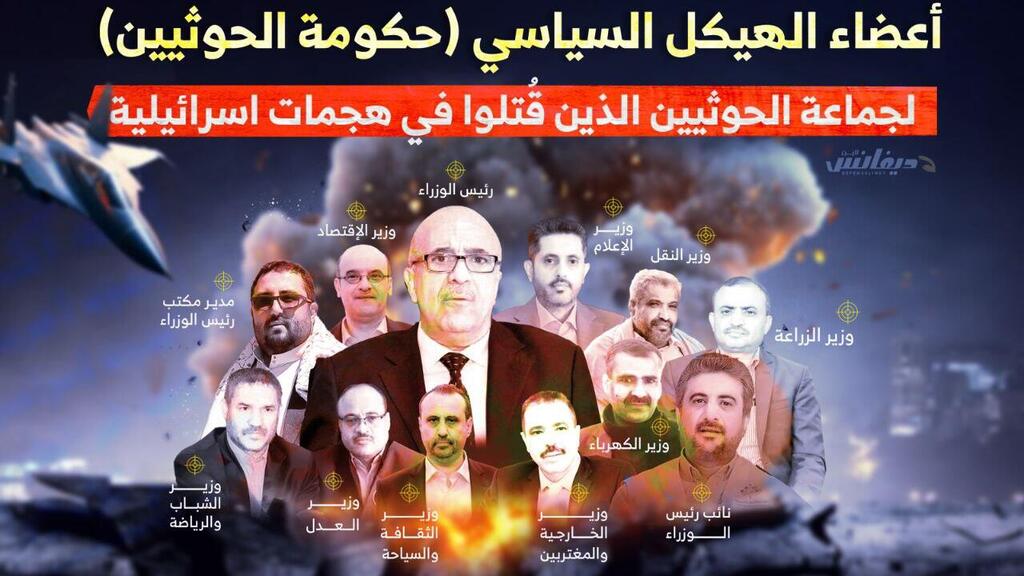
The Saudi-owned Al-Arabiya network reported that ministers of economy, justice, youth, and social affairs were among those killed, along with senior deputies. Other reports varied, with some claiming Deputy Prime Minister Jalal Ali al-Rowaishan and other top officials were either killed or wounded.
The Houthis’ current government, established in August 2023, was meant to replace a transitional administration led by Abdel-Aziz bin Habtour. Branded the “government of change and construction,” it was touted as a fresh start. Senior Houthi figure Mohammed Ali al-Houthi even declared on social media at the time that “22 ministers face a great mission, ambitious goals and challenges requiring patience and dedication.”
In practice, the administration deepened repression and hardship. Schools were turned into indoctrination and child recruitment camps. English studies were banned. Hospitals were starved of resources, with health workers accusing leaders of siphoning off salaries and appointing loyalists with no qualifications. A public dispute between al-Rahawi and Health Minister Abdul-Karim Ali Sheiban last summer paralyzed the capital’s main hospital. Epidemics spread while citizens struggled to access basic care.

Slain Houthi Prime Minister Ahmed Ghaleb al-Rahwi
(Photo: Mohammed Huwais/ AFP)
Economically, the Houthis doubled taxes even as poverty and hunger worsened, while diverting funds to military campaigns and religious celebrations. A report in the Saudi daily Asharq Al-Awsat said money was funneled into green-light decorations for the Prophet’s birthday while families could not afford electricity bills.
The Israeli military confirmed it struck “a site hosting a gathering of senior Houthi military and government figures” in Sanaa, saying the operation was enabled by rapid intelligence collection and execution “within hours.”
The Houthis, an Iran-backed militia that seized the capital in 2014, are not internationally recognized and remain locked in conflict with Yemen’s legitimate government. Despite the devastating strike, the group’s leader, Abdul Malik Badr al-Din al-Houthi, and other senior commanders remain in place. Surviving officials vowed retaliation and renewed support for Hamas in Gaza, pledging escalation “until the attacks stop and the siege is lifted.”
The strike represents one of the most significant blows to the Houthis’ political leadership in years. For Yemenis long neglected by the militia, it may offer some relief. Yet analysts caution it is unlikely to halt the group’s rocket and drone fire toward Israel.